
Idea 1
Taming the Urgency Trap: Turning Reactive Chaos into Meaningful Productivity
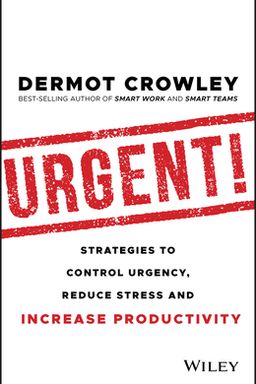
Have you noticed how every email, meeting, and message now seems urgent? Dermot Crowley’s Urgent!: Strategies to Control Urgency, Reduce Stress and Increase Productivity begins with this very question. In an age where being busy is worn like a badge of honor, Crowley argues that our obsession with urgency has become toxic—derailing productivity, burning out employees, and eroding workplace wellbeing. His mission? To help us moderate urgency—not to eradicate it, but to use it purposefully, sparingly, and sustainably.
Crowley’s central idea is that urgency itself is not the enemy—unchecked urgency is. Modern technology, endless communication streams, and reactive leadership cultures have created what he calls the urgency trap: a loop of constant reactivity where everything feels critical, leaving no space for deep, important work. The author explains that businesses and individuals must learn to find what he calls the Goldilocks zone of urgency—neither too hot (reactive panic) nor too cold (complacent stagnation). In this balanced middle zone, we can create traction, deliver results, and sustain energy.
The Anatomy of Modern Urgency
The first part of the book diagnoses where all this speed comes from. Crowley takes readers back to a simpler business era in the 1970s through memories of his father—an accountant who worked nine to five, always took lunch, and rarely seemed rushed. Comparing that calm era with today’s hyperconnected workplace, Crowley identifies technology as the main culprit in amplifying urgency: smartphones, instant messages, and emails that ping 24/7 have compressed communication cycles and blurred the boundary between work and rest. As he writes, the speed of today’s business world has bred chronically reactive cultures, where leaders use urgency like a blunt instrument to get movement. Unfortunately, this constant sense of crisis doesn’t improve performance—it destroys focus and morale.
Yet Crowley insists that urgency is not all bad. When used right, urgency can create momentum. It helps teams overcome inertia and drives people to act on what matters. The real challenge, he says, is moderating urgency—just like adjusting dials to hit the right balance between tension and calm. This moderation mindset shapes everything that follows in the book.
The Cost of Unchecked Urgency
Crowley paints a vivid picture of what happens when urgency becomes the default state: inefficiency, rework, stress, and burnout. He describes common workplace archetypes that fuel the problem—the Hard Driver who pushes too hard, the Last-Minute Delegator who offloads in panic, the Over-Committer who says yes to everything, and the Reactor who jumps on every email ding. By humanizing these patterns with names and scenarios, Crowley shows us how easily well-intentioned people create chaos for others. He likens chronic urgency to anxiety during a mountain climb—once your body has been wired for panic too long, even minor challenges trigger overreactions. The more we normalize panic, the harder it becomes to reset.
The damage isn’t abstract. When teams operate constantly in the reactive zone, quality drops, people burn out, and good employees quit. As Crowley puts it, people don’t just leave bad managers—they leave bad cultures. This insight reframes urgency not merely as a time-management issue but as a cultural one. Leaders, he argues, must take accountability for the environments they create.
The Urgency Playbook and the “Active Zone”
To help teams recalibrate, Crowley introduces the Urgency Playbook—a set of ten behavioral principles designed to cultivate mindful urgency. The rules include commonsense practices such as “Don’t cry wolf,” “Tell them when you need it by,” “Avoid creating unnecessary urgency for others,” and “Be responsive, not reactive.” These may seem simple, but as Crowley notes, when codified and practiced consistently, they can transform culture. The playbook becomes a social contract—an agreed way of working that prevents reactivity from spiraling.
He also visualizes the three urgency zones we live in: the inactive zone (complacency), the reactive zone (frenzied overdrive), and the active zone (balanced productivity). Great teams, he says, learn to stay mostly in the active zone—dialing urgency up and down as needed to sustain progress without burning out.
A Book for the Conscious Professional
Ultimately, Urgent! is as much a philosophy as it is a productivity guide. Crowley blends evidence-based strategies with personal anecdotes—from missed flights to mountain climbs—to offer a humane model for working smarter, not faster. His approach sits in conversation with thinkers like Stephen Covey (7 Habits of Highly Effective People) and Cal Newport (Deep Work): all emphasize deliberateness over busyness. What sets Crowley apart is his focus on moderation—an equilibrium approach that resists extremes, perfect for our burnout age.
If you feel trapped in endless busyness, Crowley’s message is simple but radical: stop reacting and start responding. Define your urgency instead of letting it define you. Because in a world moving faster than ever, the most productive people aren’t those who rush—they’re the ones who know when not to hurry.