
Idea 1
Proof That People Are Good
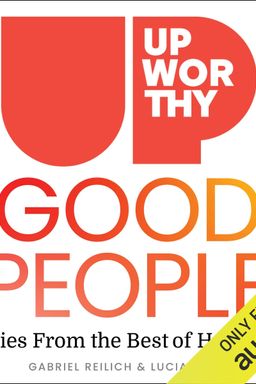
When was the last time a small act of kindness changed the trajectory of your day—or your life? In Upworthy: Good People, editors Gabriel Reilich and Lucia Knell argue that goodness is not rare or random; it’s everywhere once you know where (and how) to look. Drawing on 101 first-person accounts curated from the Upworthy community and organized into six themes, they contend that everyday people—strangers, teachers, kids, neighbors, caregivers, travelers—consistently choose compassion, often with split-second decisions that reverberate for years. The book makes a countercultural claim: in a media ecosystem optimized for outrage, story is a powerful antidote. Tell true stories of care, and you recalibrate what people expect from one another.
The editors’ core contention is simple and bold: people are fundamentally good at heart, and a single, well-timed gesture can become a lifeline. But to see this clearly, you have to notice what goodness looks like in the wild—what it feels like to be the recipient (or giver), and why certain moments matter so much. That’s what this collection offers: a field guide to the anatomy of kindness.
What This Book Covers—and Why It Matters
The book’s six sections map where goodness most often shows up. In “The Kindest of Strangers,” you witness instant, decisive care—like the anonymous businessman who sat beside law student Amy B. after her father’s sudden death, moved her to an earlier flight, and held her hand all the way home. In “Learn by Heart,” teachers and mentors transform identity with a sentence, a system tweak, or a well-placed smile: Mrs. Bean normalizes a kindergartner’s eye patch by saying his “eye is on vacation,” and Mr. Ashman lets a speech-anxious student whisper quiz answers at his desk. “It’s the Little Things” reframes minor gestures as major medicine: a janitor shares his lunch with a starving recruit; a shop owner forgives a trumpet rental and leaves a note—“Tough times never last. Tough people do.”
“The Kids Are All Right” shows young people leading with instinctive empathy—from a grade-schooler who tells her mom “I’m staying awake in case you need an emergency hug” on the night of a funeral to the vote that crowns two girls prom “queens” at a Catholic school. “When I Needed It Most” is the book’s quiet center of gravity—nurses, neighbors, landlords, and taxi drivers step into grief and medical crisis with life-giving practicality. And “Away From Home” takes kindness global: a Yucatán farmer rides buses across Mérida to return a lost bag; a San Francisco stunt double takes a stranded teen home for the night; a New Yorker shelters an Australian backpacker for a week.
A Counterweight to Doomscrolling
Why do these stories land so hard? Because they restore your “social expectations” (behavioral scientist Nicholas Epley has shown we underestimate how much strangers value connection; this book is living proof). They also embody Barbara Fredrickson’s “broaden-and-build” theory: positive emotions widen your sense of possibility and build durable resources like trust and resilience. Read enough of these and you start scanning for chances to help, not threats to avoid.
The editors present goodness without varnish. These aren’t savior myths; they’re granular, name-rich moments that feel verifiable because they’re ordinary. A Costco parking-lot meltdown ends with a stranger quietly stacking toilet paper. A biker in leather retrieves a toddler’s broccoli plushie in a busy crosswalk. A florist’s driver offers a crying law student a spare bouquet at a red light. These are “small stakes” scenes with high emotional leverage.
From Anecdote to Invitation
Importantly, the anthology functions less like a highlight reel and more like a user manual. You see patterns: good people notice, ask, and act. They preserve dignity (the man who waited 45 minutes in his car beside a crash victim, eyes averted to grant privacy). They lend their reputation (a gate agent re-seats a nervous flyer; a neighbor leaves a note—“We will adjust together”). They turn private burdens into public rituals (a widowed couple’s friends invent “Shabbirthday” to celebrate their daughter’s short life; a surfer invites thousands to add their loved ones’ names to his board for “One Last Wave”).
Thesis in a Line
“The book of human decency continues to be written every day. Let’s all keep adding stories to it together.”
How to Read This Book (and This Summary)
You can treat these as bedside stories or as design patterns for doing good. In the pages ahead, you’ll see: (1) how strangers become lifelines in minutes; (2) why educators are disproportionate changemakers; (3) how “little things” produce outsize benefits; (4) what kids model about courage and kindness; (5) what compassion looks like under maximum pressure; and (6) how hospitality travels across borders. We’ll also extract practical moves you can use tomorrow, connecting the book’s micro-moments to broader research (compare Rutger Bregman’s Humankind and Adam Grant’s Give and Take).
If you’ve ever suspected the world is kinder than your feed suggests, these accounts will feel like confirmation. More than a mood boost, they offer a playbook: notice the person at the edge of the room, default to help, preserve dignity, and let small acts compound. This is optimism with receipts.