
Idea 1
Magic, Risk, and Reinvention
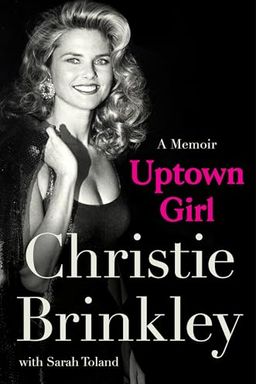
How do you turn early harm and public scrutiny into a generative life? In this memoir, Christie Brinkley argues—through story rather than manifesto—that imagination, rigor, and risk, scaffolded by love and craft, can turn trauma into agency. She contends that the same forces that once protected you (fantasy, ritual, intuition) can later power reinvention across fields—art, fashion, film, music, activism, even Broadway—if you pair them with discipline and a circle of trustworthy people.
You move from a childhood with a violent father (Herb Hudson) to safety and curiosity with Don Brinkley, a Paris apprenticeship that becomes a launchpad for discovery, and an industry ascent that demystifies the mechanics of modeling (photographers, agents, go-sees, editorial versus commercial work). You then ride along for a globe-spanning career defined by daring travel, love stories that enlarge and break the heart (Jean-François, Houlès, Olivier), grief that nearly stops time, and a partnership with Billy Joel that fuses creativity with domestic life. Finally, you face the crucible of a helicopter crash, the vulnerabilities of trauma bonding and financial betrayal, and a late-career pivot that reclaims the narrative through activism and live theater.
Origin wound, protective magic
The book starts where many lives quietly get decided: in childhood. Herb’s cruelty—belts, soap, threats of orphanages—meets a child’s survival ingenuity (hiding Life magazines in pajamas to cushion blows) and a mind that can float above a cornfield when terror spikes. That “floating” is not make-believe; it’s a proto-skill: reframing reality to endure it. Later, a Chimayo dirt charm recovered after a helicopter crash functions like a personal ritual of protection that steadies the psyche in chaos. (Note: This links to trauma literature that treats dissociation and ritual as adaptive strategies before they become creative fuel.)
Safety that expands you
Don Brinkley’s arrival flips the palette from gray to Technicolor. The stable soundtrack of his typewriter, a move to Malibu’s tide pools and rocks, and a mantra—“You write your own script”—seed curiosity and courage. Music, French, travel, and activism flow into daily life, turning art into a viable path. This is the first structural lesson: emotional safety and cultural exposure compound into opportunity.
Craft before commerce
Paris becomes the crucible. Christie immerses—Lycée French, La Coupole nights, figure drawing at the Académie de la Grande Chaumière, and an Air France illustration gig. The romance with Jean-François doubles as apprenticeship: critique, deadlines, and community. When serendipity knocks—Errol Sawyer spotting her at a Paris post office with her puppy Bianca—she’s camera-ready because craft came first. (In creative careers, this echoes the pattern in Patti Smith’s Just Kids: community + discipline precede “discovery.”)
The industry engine
The book then demystifies modeling. Agencies (Elite with Johnny Casablancas, Ford with Eileen Ford, Nina Blanchard in LA) run on relationships and leverage. Editorial covers build prestige; commercials fund the life. A Brown Derby lunch yields multiple TV spots (Noxzema, Max Factor), and eventually a decades-long CoverGirl run. The model wars of 1977 show how talent lives between competing power centers. You learn to see the business beneath the glamour.
Adventure, intuition, and cost
Travel is both passport and peril: Crete’s near-assaults, Rome’s tear gas and gunfire, Senegal and Morocco’s creative highs (Albert Watson, Helmut Newton), Seychelles’ Sports Illustrated cover, Alaska’s glaciers, Japan’s Kabuki kits. Intuition keeps her alive—a balky knee spares her a jump when a chute had a “Mae West” malfunction; a bad-sea reading off Capri prevents catastrophe. You feel how thrill and caution must co-exist.
Love, grief, and reinvention
Romances animate and test her: artist lovers, a count and race-car driver (Olivier Chandon) whose death shatters normal time, and later Billy Joel, whose steadiness, songs, and shared creativity build a family and a cultural life. But partnership in the spotlight strains under absences, money betrayals, and coping habits. Reinvention becomes a repeated act: from magazine icon to film cameo (National Lampoon’s Vacation), to music video archetype (Uptown Girl), and finally to Broadway’s Roxie Hart.
A through-line to hold
"Your image is a bridge, not a box. Pair imagination with preparation, and you can cross into new work without abandoning who you were."
Public life, private boundaries
The final movement faces the costs of visibility—paparazzi at the driveway, internet smear loops, courtroom theater—and the remedies: a loyal inner circle, legal systems, and activism that reorients attention (STAR’s anti-radiation efforts, Smile Train, environmental work). A near-fatal crash in Telluride triggers PTSD and, briefly, a risky rebound marriage and financial losses; the reckoning that follows is practical and moral, not just emotional.
What you take away is not a celebrity scrapbook but a life manual built from story. If you’ve ever needed to climb out of a bad beginning, launch a craft into commerce, love bravely after loss, or reset your public-private ratios, these pages show how to do it: trust your gut, train your skills, choose your circle, steward your money, and when the plot breaks, write your next script.