
Idea 1
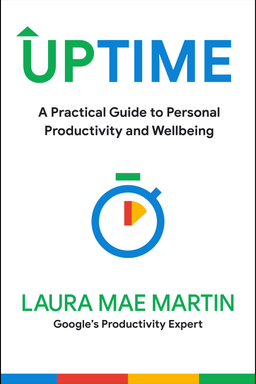
Uptime: Redefining Productivity for Balance and Flow
When was the last time you felt fully in control of your workday—not rushing between meetings or checking boxes, but calmly accomplishing what mattered most? In Uptime, Laura Mae Martin—Google’s Executive Productivity Advisor—invites you to rethink what it means to be productive. She argues that true effectiveness isn’t about grinding harder or filling every minute with activity, but about aligning intention with action. Her concept of Uptime redefines productivity as a state of energized flow where the right things happen at the right time, in balance with meaningful rest.
Throughout the book, Martin blends lessons from coaching Google executives with practical tools and mindset shifts. She dismantles the old myth that busyness equals success and replaces it with actionable systems grounded in clarity, focus, and personal sustainability. Whether you’re a manager, student, parent, or entrepreneur, Martin’s message is the same: productivity must serve your life, not consume it.
Throwing Out “Old Productivity”
Martin begins with a provocative example: one of her most productive days was spent binge-watching a TV show on the couch. The irony is intentional—her goal was relaxation, and she achieved it fully. By aligning intention (to rest) and action (to unwind), she reached genuine productivity. This redefinition frees you from guilt around downtime and introduces a holistic perspective: Uptime includes both focused achievement and restorative relaxation. Productivity isn’t about quantity—it’s the quality of energy and focus you bring to what matters.
The Formula: Vision + Execution = Productivity
The core principle of Uptime is Martin’s formula: Productivity = Vision + Execution. Vision opens loops—ideas, creative problems, new goals—while execution closes them through focused action. You’re not truly productive unless you’re cycling between both. Many people spend their days closing loops—answering emails, finishing tasks—without ever opening new ones through rest, creativity, or reflection. Others generate endless ideas but fail to ground them in execution. Uptime thrives at the intersection: the clarity of vision and the discipline of completion. Martin organizes this rhythm through her 5 C’s of Productivity: Calm, Create, Capture, Consolidate, Close.
Balance Over Busy
In a world obsessed with constant activity, Martin urges you to replace the brain-drain of busyness with healthy balance. Drawing on years coaching leaders at Google, she noticed that executives who seemed calm and unhurried often accomplished more than those working endless hours. Balance is the new prestige, she argues—it’s the new busy. Like the rubber-band metaphor she uses throughout the book, you must pull back before launching forward. Strategic rest fuels productivity by restoring creativity and mental clarity. (This echoes Cal Newport’s Deep Work and Daniel Pink’s When, which both highlight cyclical rhythms between peak effort and recovery.)
Time as Energy Currency
Unlike traditional time management, Uptime treats time as a bank account of energy. You don’t freely give away hours; you allocate “energy points” where they produce the best return on investment. Instead of saying yes to every meeting that requests your presence, you must ask: what am I taking time from? What will yield the highest impact for my energy today? This mindset sharpens decision-making, defends boundaries, and helps you prioritize strategically instead of reactively.
Designing for Flow
Martin rejects the myth that focus happens spontaneously. Flow and focus must be designed. Time blocks only matter when matched with energy and attention. That’s why she champions identifying your personal rhythms—your Power Hours and Off-peak Hours—and building plans around them. Instead of scheduling strategically demanding tasks at your low-energy times, tailor your calendar to align with your peaks. This alignment transforms scattered days into seamless flow.
Planning for “Future You”
Psychological research shows we often act against our own future interests—agreeing to commitments Current You can’t realistically handle. Uptime’s forward-thinking framework teaches you to plan for Future You. Whether scheduling a meeting or setting priorities, always ask, “What will Future Me wish I had done?” This approach ties together decision-making, goal setting, and boundary enforcement under the same umbrella of intentional awareness. You learn to protect your best self by forecasting energy and attention.
Why Uptime Matters
Modern productivity is at an inflection point. Remote and hybrid work blurred boundaries; overstimulation diluted focus. Martin wrote Uptime to restore simplicity and joy to getting things done. It’s equal parts operations manual and mindfulness guide for the digital age—bridging mental clarity with high performance. Her framework helps you feel “in control and calm while excelling,” turning the fragmented chaos of modern work into ordered flow. Uptime is not about doing more, Martin reminds us—it’s about doing the right things, at the right time, for the right reasons.