
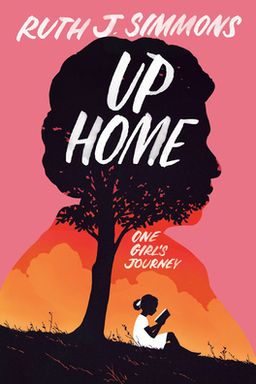
Up Home cover

Up Home

by Ruth J. Simmons

The journey of a woman who went from being the 12th child of sharecroppers in Texas to becoming the first Black president of an Ivy League university.

Becoming Who You Weren’t “Supposed” to Be

When your past keeps trying to tell you who you are, how do you write a different future? In Up Home, Ruth J. Simmons argues that you can transcend the limits of poverty, segregation, and even family expectations when caring adults, rigorous learning, and deliberate self-fashioning conspire to re-route your destiny. She contends that she was “born to be someone else”—a Black sharecropper’s daughter whose life would be circumscribed by Jim Crow Texas—but educators, kin, and a stubborn love of language intercepted those expectations and redirected her life toward scholarship and leadership.

The memoir’s core claim is both bracing and hopeful: the most decisive inflection points in your trajectory may be quiet human investments—a teacher’s precise diction (Miss Ida Mae Henderson), a brother’s unwavering support (Wilford), an aunt’s fierce ambition (Erma Mae Hicks), a drama coach’s high standards (Vernell “Miss Lillie” Lillie)—combined with your own appetite for books and hard work. Simmons shows how these forces helped her move from the dirt roads of Daly near Grapeland to New Orleans’s Dillard University, Mexico and France, a formative visiting year at Wellesley, and ultimately to Harvard and the presidencies of Smith, Brown, and Prairie View A&M.

What You’ll Learn

You’ll first step into East Texas in the 1940s and 50s—sharecropping country where the Campbell family’s sixty acres, the buzzards’ roost in Grapeland, and creeks used for baptisms framed Simmons’s earliest lessons about dignity and danger. You’ll see how church life at Greater New Hope, the coded rules of Jim Crow (like being forced to listen to a piano recital through a window), and the beauty and brutality of the land forged early discernment. Then you’ll meet the mentors who “intercepted” her fate: Miss Ida Mae, who crowned a big-eyed country girl “precious” and turned a desk, a pencil, and careful speech into a portal; Mrs. Modria Caraway, whose sharp wit and relentless standards fixed Simmons’s study habits; and Miss Lillie, the drama teacher who coaxed out a voice strong enough to play Antigone.

Why This Matters Now

If you’ve ever wondered whether structural limits—race, class, geography—can be overcome by individual effort, this book offers a nuanced “yes.” But it’s not the bootstrap myth. It’s a network of boats: family kinship, Black churches, Hester House’s neighborhood library, public schools staffed by extraordinary Black educators, and scholarships from strangers. Simmons’s journey echoes the educational liberation themes of Tara Westover’s Educated and Michelle Obama’s Becoming, while anchoring them in the specifically Southern Black experience of the mid-20th century (compare also to Bryan Stevenson’s Just Mercy on the moral landscape of the South).

The Big Ideas Ahead

We’ll trace how place and prejudice taught Simmons to read the world closely (“discernment” becomes a survival skill), how grief over her mother’s death became a forge for identity, and how voice—first in hymns and church recitations, then on stage and radio—became her engine of self-creation. We’ll watch “drama” give way to “languages” as a vocation: a switch from stagecraft to French and Spanish widened her imagination, connected her to global cultures, and led to study in Mexico, Wellesley, and France (note the intellectual current here aligns with Paulo Freire’s idea of education as praxis—learning that transforms the learner and the world).

Key Idea

“I was born to be someone else.” Simmons reframes this not as fatalism but as an invitation: others may script your beginning; mentors, learning, and your decisions can revise the plot.

How to Use This Summary

As you read, ask: Who are my Miss Ida Maes—those who dignified me early? What practices (reading widely, refining speech, telling my story) can I double down on now? Where might crossing a border—literal or intellectual—expand my agency? Finally, how can I “pay forward” interception for someone born to be someone else?

By the end, you’ll grasp a pattern: place teaches; people rewire; practice builds power; crossing borders compounds it. Simmons’s life becomes a template you can adapt—especially if you’re navigating constraints others assume will define you.


Up Home: Roots, Land, Early Lessons

Simmons begins where identity is braided with soil: Daly and Grapeland, East Texas. You watch a child absorb the rhythms of sharecropping life—corrugated roofs, wood stoves, cotton sacks sewn by a mother, and creeks that baptize and flood. The Campbell family’s sixty acres—won through ambition and grit by her grandparents Emma and Richard—anchor both pride and possibility amid Jim Crow’s humiliations.

Land, Labor, and the Long View

Owning land matters. It is proof that Black striving can outlast terror. Even when Simmons’s family doesn’t live on the Campbell plot, the land symbolizes continuity. As a reader, you’re reminded that your “up home”—even if unromantic—can be a compass. Simmons returns as an adult to the red clay roads not to glamorize hardship but to remember what boundaries she resolved to stretch beyond.

The Crossroads as Classroom

Grapeland’s original name—The Crossroads—mirrors Ruth’s life. Trips “to town” on unsteady wagons reveal a caste tableau: white shoppers in store-bought clothes glide through front doors; Black families eat summer sausage and crackers by the “buzzards’ roost,” a slur made spatial. Her brother Elbert, invited to hear a white girl play piano, must stand outside at a window. These vignettes teach you how place encodes power—and how early witnessing seeds both fear and resolve (think of James Baldwin’s observational apprenticeship in Notes of a Native Son).

Danger and Discernment

Under Jim Crow, everyday encounters with whites carry peril: eye contact, tone, even pride can invite retribution. Simmons learns the choreography of deflection. Yet, the same terrain trains discernment. Watching worshippers “get happy,” she wonders: performance or authentic rapture? The analytic habit—asking what sits beneath behavior—becomes the foundation of her leadership style. You can borrow this move: when stakes are high, slow down and read the room; interpret before you act.

(Context: This habit echoes the “double consciousness” W.E.B. Du Bois named—the necessity of seeing yourself and others through multiple lenses to survive and thrive.)

Family Lore and Complicated Lineage

Simmons’s paternal line includes the white Beazleys—miscegenation hiding in plain sight—and a grandmother, Flossie, whose fair skin made the hypocrisy of segregation visible. On her maternal side, Emma wears long cotton dresses and a headwrap, carries water on her head, and tells a shiftless stepfather to “Get thee things and get out!” These ancestors transmit steel. You see how intergenerational contradictions—deference and defiance—coexist and equip you to navigate complexity.

Key Idea

Place can be both constraint and curriculum. If you treat your beginnings as a seminar—on power, dignity, danger, and humor—you can extract tools that travel with you.

Even the animals teach: Old Dan the horse chases gleeful, slobbering children; Minnie the mare provokes Simmons’s father and escapes the shotgun. These stories carry laughter that becomes resilience fuel. In a world that tries to shrink you, humor expands your interior room. You will need that room for what comes next.


The Gospel of Mentors

In Simmons’s retelling, mentors don’t just advise; they reroute destinies. Again and again, an adult takes her seriously—often before she does—and lends reputation, standards, and language. You can’t miss the pattern: interception happens in ordinary rooms by people who decide you matter.

Miss Ida Mae: Dignity by Diction

First grade at W.R. Banks School is Simmons’s hinge. Miss Ida Mae Henderson greets a girl with thick plaits and bacon-fat lotion as “precious,” seats her at her own desk, and pronounces words with precision: not “Grapelin” but “Grapeland,” not “chilren” but “children,” not “Rujean” but “Ruth Jean.” The message: your mind is worthy of order and nuance. Those gentle corrections give you a script to speak yourself into rooms your clothes can’t enter yet. (Compare to Tara Westover’s first exposure to academic language as liberation in Educated.)

Wilford: A Brother’s Quiet Provision

When Simmons’s gentle brother Wilford enlists, Mama weeps on the porch. He survives Korea, comes home, and becomes Simmons’s surrogate parent—funding shoes, dresses, prom, even a college gown. He attends her plays and cheers her radio spots. His dependable yes offsets a father’s frugal no. If you’ve ever underestimated what small, steady giving accomplishes, Wilford’s presence corrects you.

Erma Mae & Mrs. Caraway: Ambition and Finish

Sister-in-law Erma Mae Hicks insists her daughters (and Ruth) aim high, stay in school, and carry themselves like future professionals. Ninth-grade social studies teacher Mrs. Modria Caraway—glamorous, exacting, and unfiltered—pushes Simmons beyond the curriculum, talks frankly about sex and history, and parades her through Houston’s third-ward shops and lunches, modeling middle-class life. She holds contradictions (colorism and generous mentorship) without apology; Simmons learns to harvest the gift and challenge the bias (see Frantz Fanon on internalized racism).

Miss Lillie: Stage as Voice School

At Wheatley High, drama teacher Vernell Lillie turns a grieving teenager into an actor capable of bearing Sophocles. “Dahhh…ling” affectations and over-enunciation become practice for calibrated, public voice. Miss Lillie opens museums, debate circuits, and a weekly KYOK radio slot, widening Simmons’s orbit. The lesson for you: mentors don’t just advise; they ferry you across town and into different air.

Key Idea

Mentorship is specificity: a pronunciation corrected, a ride offered, a dress loaned, a standard enforced. The cumulative effect is destiny-level.

Your move? List three “specificities” someone gave you—and three you can give away this week. Interception scales when you act.


Church, Voice, and Moral Compass

Greater New Hope Baptist Church is Simmons’s first stage and ethics lab. Sunday school trains memory (“Jesus wept” to full Beatitudes), choirs build harmony, and deacons’ mournful devotionals stir a young ear. The picnic grove under hickories becomes a social commons—food vetted by Mama’s mysterious standards of “good families.”

Performance, Reverence, and Reading Motives

As congregants “get happy,” ushers fan and steady bodies. Simmons wonders: spirit-moved or spotlight-seeking? The question doesn’t foster cynicism; it matures empathy. “If they were denigrated during the week, why would they not strut on Sundays?” You learn to ask what suffering a behavior compensates for—useful in any leadership role (this echoes Brené Brown’s invitation to assume people are doing their best while holding them accountable).

Finding Voice in Hymns and Recitations

Ruth, Azella, and Ozella form a girls’ trio led by their father, belting “Talk About Jesus,” with Ruth dropping a comic bass line to applause. She recites James Weldon Johnson’s “Creation” with solemn gestures. These early trials teach you stagecraft, timing, and the dignity of communal traditions. Even the smallest performances train courage for future podiums.

Faith, Hypocrisy, and Integrity

Simmons’s father, Ike, is called to ministry but remains a complex figure—alternately tender and tyrannical, bombastic in the pulpit and harsh at home. As a teen, Ruth questions the gap between profession and practice. Later, existentialists at Dillard (Sartre, Kierkegaard) will sharpen this into a creed: live so your actions and claims rhyme. You’re challenged to audit your own gaps with grace and rigor.

Key Idea

The church gave Simmons a lexicon (scripture), a metronome (hymns), and an ethic (service)—and the courage to interrogate all three. Voice grows where reverence and inquiry meet.

If you’re searching for your compass, consider Simmons’s practice: commit to a tradition that enlarges you, and reserve the right to ask hard questions of it—so you can ask honest ones of yourself.


Grief as Forge, Not Finish

At fifteen, Simmons’s center collapses. Her mother, Fannie—quiet, devout, self-forgetting, the family’s dawn-to-dusk engine—dies of kidney failure. The funeral in Cedar Branch, the muddy grave filling with rainwater, and a sixteenth birthday the next day become the memoir’s most searing pages. If you’ve carried loss into adulthood, you’ll recognize the chest-tightening ache that won’t leave.

Rage, Silence, and A New Home in Theater

Simmons’s grief mutates into sarcasm and over-articulation at home, but in Wheatley’s Stagecrafters, pain finds form. Under Miss Lillie, she pours sorrow into Antigone—learning courage against unjust power and the cost of moral insistence. Theater becomes refuge and rehearsal: a place to try on strength until it fits. (Think of Viktor Frankl’s insight: meaning helps you suffer differently.)

A Father’s Absence and Sibling-as-Scaffold

Ike keeps eating eggs and bacon at 4:30 a.m., but emotional caregiving abdicates to older siblings. The girls sew dignity from scarcity—three outfits, swapped artfully—and the boys are deferentially excused from chores. You see how unequal rules harden girls’ resolve to lead. Ruth leans on Wilford, Nora, and Elbert, who show up to graduations and stand in hospital doorways—all small rescues you can emulate.

Rituals of Continuity

To break the paralysis, Ruth immerses in reading—Jane Eyre, Ivanhoe, Anne of Green Gables—and community projects at Hester House. She doubles down on diction and debate, even lands a weekly radio slot. The pattern you can copy: after rupture, construct routines that affirm identity and extend your world.

Key Idea

Grief will try to make you small. Art, study, and service can make you spacious—enough to carry the loss and still advance.

Simmons never stops missing Mama—tears return at each milestone, even as Brown’s president—but grief becomes an ethic: live in a way your beloved would recognize as worthy.


Language as Passport

Simmons’s life turns on speech. As a child, she mimics hymns; as a teen, she fixes every consonant, earning the label “seditty.” On stage, she tries on voices—from Ionesco’s absurdism to halftime monologues about Wheatley pride. Then, a pivot: at Dillard, theater disappoints (think grave-robbed flowers and theory without fit), and languages beckon. Spanish with Dr. Ulysses Saucedo and French with Yvonne Ryan become the new passport.

From Stagecraft to Worldcraft

Under Saucedo’s polyglot joy (and even Quechua grammar), Simmons discovers that mastering another tongue expands who you can be in your own. Words become vehicles across borders and biases. If you want your future bigger than your zip code, learn a language; it will change your inner weather as much as your itinerary.

Diction as Agency

Precision in speech is not pretense—it’s agency. Miss Ida Mae’s “Grapeland,” not “Grapelin,” becomes a lifelong discipline. That discipline gets Simmons on KYOK, into debate rooms, and through Wellesley’s French-only classes where “Ne vous inquiétez pas! Ayez patience!” feels like indifference until, weeks later, comprehension clicks. You’re reminded: fluency often arrives after the moment you wanted to quit.

Voice and Belonging

Even when mocked for “proper” English, Simmons persists. The payoff is mobility: professors take her seriously; fellowships listen; rooms open. The lesson for you is not to mimic someone else’s dialect but to own a voice that lets you navigate multiple worlds without apology. (Compare to Austin Channing Brown’s Both/And fluency navigating white and Black spaces.)

Key Idea

Language expands identity. Every verb you conjugate in a new tongue gives you one more way to move, to empathize, to lead.

If you’ve been told your voice is “too much” or “not enough,” let Simmons’s stubborn elocution encourage you: craft it anyway; you’re building a vehicle you’ll drive for decades.


Education as Liberation

From Fifth Ward’s Atherton Elementary to E.O. Smith Junior High to Phillis Wheatley High, Simmons’s schools become a lattice lifting her skyward. These were segregated institutions, yet they housed extraordinary Black educators who refused small horizons for their students. If you’ve ever doubted public schools’ power, Simmons’s experience reaffirms it.

Hester House and the Commons of Care

Across from Atherton, the Julia C. Hester House offers sports, dances, and—most crucially—a library. Little Women and Jane Eyre arrive like contraband futures. A modest community center becomes Simmons’s launching pad (a living example of Bryan Stevenson’s argument that proximate institutions produce outsized change).

Wheatley’s Ethos: We Are Makers

At Wheatley, teachers dress sharply, expect much, and rehearse students into leadership. Mr. Sanders’s suavity, Miss Farnsworth’s elegance (and later, her donated college wardrobe), and Mrs. Washington’s off-syllabus algebra prime Ruth for rigor. Their pride and polish say, “This is who you are becoming,” years before she becomes it.

Fair Dillard: A Wider Green

Arriving at Dillard—“gleaming white and spacious green”—Simmons meets activist faculty (the Greenhoes, Professor Roger Ward), the chapel requirement she boycotts on principle, and a core of humanities that will send her abroad. She stumbles in theater, pivots to languages, and applies relentlessly for fellowships. When Sarah Lawrence offers no aid, she stays, reframing disappointment into detour—an advanced skill you can practice: “Keep goal, change path.”

Key Idea

Education is a relay. Community centers hand you books; public-school teachers hand you standards; colleges hand you methods. Your job is to run your leg—and hand the baton forward.

Simmons’s senior-year haul—Fulbright, Danforth, Harvard—starts in a tiny library and a teacher’s careful enunciation. If you work in a school or live near one, this is your nudge: become someone’s Hester House, someone’s Miss Ida Mae.


Crossing Borders, Expanding Self

Borders (geographic, cultural, intellectual) are Simmons’s growth accelerators. Each crossing widens competence and complicates identity. If you feel stuck, her sequence—Mexico → Wellesley → France—offers a playbook.

Mexico: Learning Amid Hostility

In Saltillo, Simmons studies Spanish while some southern classmates hurl “The South shall rise again!” in class. She opts for low profile and high mastery, returns to her host courtyard to drill grammar, and finishes the program unbowed. Lesson: a hostile environment can still be a productive classroom if you guard your energy and keep learning.

Wellesley: Proof of Capacity

As a visiting junior, Simmons lands in French-immersion courses she can’t track—until one day, she does. That “click” resets her internal narrative: “I can do elite work.” A southern host family, the Browns, models allyship without condescension. Meanwhile, a South African classmate’s defense of apartheid pushes Simmons to voice her own truths in rooms where she is the only Black student. You can borrow both moves: persevere past incomprehension and practice respectful dissent.

France: The Experiment in Living

Placed with a family in Metz, photographed in Le Républicain lorrain, then biking through Provence from Avignon to Arles, Simmons rides into yet another self. She worries about losing touch with Houston even as she tastes Camargue salt and Roman stone. That tension—loyalty to origin vs. appetite for elsewhere—becomes a throughline she ultimately resolves by “paying it forward” at home (Prairie View) and beyond.

Key Idea

Borders test and teach. Cross them with intention; return with skills, not superiority.

By year’s end, Simmons’s world is permanently wider, her French good enough to win a Fulbright to Lyon and to read Proust on memory—the perfect companion for a woman braiding “up home” with everywhere else.


Agency, Leadership, and Paying It Forward

The final movement of the memoir connects private formation to public leadership. Simmons reframes setbacks (no Sarah Lawrence aid, Yale rejection, paternal indifference) as prompts to find alternative routes (Dillard scholarships, Harvard acceptance, Fulbright + Danforth pairing). Her method becomes yours: don’t deny the loss; extract the opening inside it.

Principle with Practice

At Dillard, Simmons boycotts compulsory chapel on conscience grounds, even at risk of graduation. When the university sees her Fulbright/Danforth/Harvard trifecta, the standoff dissolves. It’s not a triumphal gotcha; it’s a lesson in holding principle while keeping excellent at the work. Excellence, in her telling, doesn’t silence critique; it strengthens it.

From Student to Steward

Simmons’s later presidencies (Smith, Brown, Prairie View A&M) don’t parade through the narrative, but their seeds are visible: the habit of discernment; a love for rigorous language; respect for tradition without idolatry; a bias for inclusion and border-crossing. Her epilogue distills the credo: “One path foreclosed is an invitation to consider other opportunities.” If you lead, embed this in your culture—coach your teams to scan for alternate doors.

Your Turn to Intercept

Up Home ends where it began—on other people’s investment. Simmons points to public school teachers as hope’s last line in communities starved of opportunity and urges you to be someone’s interception: correct a name with respect, lend a book, show up at the play, write the check, open the network. Like Miss Farnsworth’s gift of a college wardrobe, your specific generosity can become part of someone’s commencement speech decades later.

Key Idea

Agency compounds when excellence and ethics travel together—and when you deliberately invest in the next traveler.

If you came to this book wondering whether early constraints define you, you can close it with a practiced answer: they instruct; they don’t imprison. Your job is to turn instruction into leadership—and to make sure someone after you can say the same.

Dig Deeper

Get personalized prompts to apply these lessons to your life and deepen your understanding.

Go Deeper

Get the Full Experience

Download Insight Books for AI-powered reflections, quizzes, and more.