
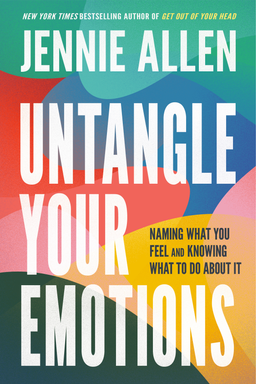
Untangle Your Emotions cover

Untangle Your Emotions

by Jennie Allen

Untangle Your Emotions is a spiritual guide that redefines emotions as pathways to divine connection and personal growth. Jennie Allen combines biblical wisdom with scientific insights to help you understand, express, and embrace your emotions, fostering deeper relationships with God, yourself, and others.

Untangling the Beautiful Mess of Your Emotions

What if your feelings—those unpredictable, inconvenient, sometimes overwhelming emotions you try to manage—were not enemies to be subdued but divine messengers pointing you toward healing, connection, and even God Himself? In Untangle Your Emotions, Jennie Allen invites readers to stop fighting their emotional lives and instead learn how to notice, feel, and steward them as sacred connectors—to themselves, to others, and to God. Rooted in Christian theology, psychology, and Allen’s raw personal stories, this book dismantles the myth that emotional people are weak or unspiritual and replaces it with a new vision of emotional wholeness anchored in both science and Scripture.

Allen contends that most of us are deeply tangled up inside. Conditioned from early life to suppress or distrust feelings, we react to emotional pain by controlling, coping, or concealing. We end up numb, overreactive, or disconnected from real life—the “empty shells with smiley faces” that Peter Scazzero once described (from Emotionally Healthy Spirituality). Allen argues that our feelings are not moral failures; they are God-designed systems of self-awareness intended to guide us toward connection and growth. The paradox she explores is that to get healthy, we must stop trying to be fixed and instead learn to feel.

Why Feelings Matter

At the heart of the book is a conviction backed by both neuroscience and Scripture: emotions are not accidents—they are indicators. In the same way pain tells us something is wrong in the body, emotions reveal what’s happening in the soul. Allen weaves her story of fear when her daughter Kate planned to move away, tracing that panic back to her past trauma when her husband Zac almost died. Such moments show how emotions often carry echoes from earlier wounds. Our reactions often aren’t just about the current event but about what remains unhealed beneath it. By acknowledging this, we begin to listen to what our hearts are trying to say instead of silencing them.

Science reinforces this divine design. The brain’s limbic system—where emotions reside—was built to inform our decisions and connections. Emotional suppression, studies show, increases illness, heart risk, and relational breakdown. Spiritually, ignoring feelings robs believers of intimacy with the God who feels: Scripture portrays Him as compassionate, jealous, joyful, grieving, loving. If God Himself feels, Allen asks, why would feeling deeply make us less spiritual?

From Numb to Wholehearted

Allen divides the journey into four parts. Part One (“We’re a Bit of a Mess”) explores why we are emotionally tangled—why control feels safer than vulnerability and why many Christians confuse faith with emotional repression. In Part Two (“Why We’re So Tangled Up”), she locates the mess in how we were taught to avoid, distrust, or idolize our feelings—whether by stoic families, cultural conditioning, or misguided church teaching. The middle centuries of church history, she observes, treated emotions with suspicion, encouraging ascetic detachment. Modern culture has swung to the opposite extreme: feelings are sovereign, truth is subjective, and “follow your heart” has replaced “follow Christ.” Allen proposes a third way—a redeemed emotional life where feelings are submitted to God’s truth but never denied.

Part Three (“How to Untangle Our Insides”) becomes deeply practical. Using a five-step framework—Notice, Name, Feel, Share, and Choose—Allen provides a spiritual and psychological roadmap for emotional regulation. Each step represents a move toward connection: to sense what’s happening within, label it precisely, allow it to be felt, bring it into safe community, and finally decide how to act in alignment with values and faith. These steps mirror both modern therapy (emotional awareness and regulation) and biblical discipleship (confession, truth-telling, community, and choosing life). Part Four (“Feeling Our Way Forward”) ties it all together, showing how this process opens the door to creativity, hope, and freedom.

Why This Work Matters

Allen reminds readers that suppressing emotions doesn’t make them disappear—it just displaces them. Buried feelings leak out as anxiety, perfectionism, anger, or relational isolation. Whether you’re a control addict or a chronic coper, your emotional evasions cost you connection. “Feelings were never meant to be fixed,” she insists. “Feelings are meant to be felt.” Only when we stop labeling emotions as good or bad, spiritual or unspiritual, do we learn to steward them wisely. Emotional honesty creates space for empathy, deeper friendship, and vibrant faith. “To live,” she writes, “is to feel, and to feel is to live.”

The book also speaks prophetically to a generation trapped between mental-health crisis and spiritual burnout. Our screens feed anxiety, our doctrines sometimes shame it, and our culture offers only distraction. Allen calls for the church to reclaim emotional discipleship—to teach believers how to bring their entire selves, including their messy feelings, before God. Borrowing the language of psychiatrist Curt Thompson (The Soul of Shame), she describes emotions as “ropes of connection” between God, others, and self. When tangled, they suffocate; when untangled and held to the light of Christ, they become lifelines.

Ultimately, Untangle Your Emotions is less a self-help manual than a spiritual formation guide for the modern soul. It’s Jennie Allen’s manifesto for whole-hearted living—one that dares to say that tears, rage, fear, and delight all belong in the sanctified life. The goal isn’t to feel better but to live better—to become people who can connect deeply, love freely, and reflect the emotionally rich heart of God. As Allen prays in her epigraph, quoting Ezekiel: “God, we want our hearts to be whole, living, beating, feeling, full, connected to You and to one another.” That’s the invitation of this book: to recover your full, feeling heart and let it lead you home.


Feeling Was God’s Idea

Allen begins by dismantling the myth that feelings are unspiritual or inherently deceptive. Many Christians, she argues, misquote Jeremiah’s warning that the heart is deceitful and conclude that emotions can’t be trusted. But she points out that the Bible portrays an emotional God—a Creator who feels joy at creation, grief over sin, anger at injustice, compassion at human suffering, and love overflowing through redemption. If we are made in God’s image, our emotions are part of that image, not blemishes on it.

God Feels—and So Do We

Throughout Scripture, God expresses emotions directly. Jesus, fully divine and fully human, weeps at Lazarus’s tomb, feels anguish in Gethsemane, and experiences joy as He ministers. The Holy Spirit is described as grieved and jealous. These passages show that emotional life is not a symptom of sin but a feature of divine love. “We do not have a high priest who cannot sympathize with our weaknesses,” Allen quotes from Hebrews. God’s own passion undergirds our human capacity to feel.

Emotions as Gifts, Not Sins

Feelings, Allen teaches, are morally neutral—they simply signal movement in the soul. What we do with them can lead us toward connection or destruction. Anger can become righteous justice or bitter revenge; sadness can birth empathy or collapse into despair. The key is response, not repression. “Be angry and do not sin,” Paul wrote. Likewise, joy, fear, jealousy, and regret can all serve redemptive purposes when surrendered to God’s direction. Emotions are like instruments that must be tuned by grace.

Neuroscience supports this. Emotional centers in the brain trigger physiological responses that prepare us to act—fight, flee, protect, comfort. Suppressing them confuses our bodies, while processing them through awareness and prayer restores balance. Allen draws from psychologist Daniel Siegel’s dictum: “Name it to tame it.” Recognizing an emotion out loud integrates thought (left brain) with feeling (right brain), aligning heart, mind, and body—exactly the holistic life God intends.

The Church’s Emotional Confusion

Allen critiques how church history shaped believers’ confusion about feelings. Early ascetics equated emotion with the sinful flesh; Enlightenment thinkers exalted reason over passion; and modern evangelicalism often prizes positivity over authenticity. This evolution trained generations to hide their pain behind platitudes. Yet Jesus models the opposite—lamenting openly, embracing fatigue, and feeling heartbreak without shame. Instead of judging our emotions, Allen invites readers to imagine God saying, “Of course you feel that way.”

By reconnecting emotional life with spiritual life, she reclaims tears, fear, and even anger as sacred. Faith and feelings don’t compete—they collaborate. When we let emotions draw us closer to God rather than drive us into guilt or pretense, they become catalysts for deeper faith. In her words, “Emotions aren’t meant to control us or be controlled by us; they’re meant to connect us.” Recognizing that truth reframes your emotional world from battlefield to meeting place with God Himself.


The Tangled Myths of Control, Cope, and Conceal

Allen identifies three primary defensive habits people use to avoid uncomfortable emotions: controlling, coping, and concealing. These “Three Cs” feel productive but ultimately disconnect us from God, others, and ourselves. She shares her own story of managing life through fixing—solving everyone’s problems while suppressing her own sadness. Her epiphany came when her emotional detachment left her feeling numb even toward God.

Control: The Illusion of Safety

Many people, especially high achievers, respond to pain by tightening their grip. Controlling emotions or circumstances offers an illusion of power in a chaotic world. But Allen notes that while control mimics health externally—think calm temperament, tidy plans—it silently shuts down the capacity for intimacy. You can’t both control and connect. Her self-assessment quiz helps readers notice whether emotional regulation has turned into internal policing. “The problem with control,” she writes, “is that it costs us wonder, worship, and joy.”

Cope: The Art of Avoidance

Coping mechanisms—binge-watching, drinking, scrolling, overeating, overworking—promise relief but deliver numbness. Allen humorously confesses her preference for queso and Netflix yet warns that “our little escapes” eventually become prisons. Whether the addiction is comfort food or chronic productivity, coping replaces real healing with distraction. She references Psalm 38, reminding readers there is a divine alternative: bringing every ache and frustration before God instead of sedating it.

Conceal: Hiding Behind the Pants

In a vivid story about losing her toddler in Banana Republic, Allen’s son hid behind clothing racks because he feared punishment. That fear mirrors how adults hide emotionally. We minimize, say we’re “fine,” or spiritually mask our distress. But as Allen tells her son later, nothing good happens behind the pants. Concealment isolates us from the help we need. Freedom requires vulnerability—a willingness to speak truth about what hurts. “You don’t have to tell everyone,” she says, “but you have to tell someone.”

Using humor, science, and Scripture, Allen reframes these survival tactics as signals that healing is needed, not character defects. The alternative she offers—honesty shared in safe community—requires courage but leads to immediate relief. Like her son-in-law Charlie’s first therapy session, where he took a five-hour nap afterward, feeling feelings can be exhausting—but it’s the exhaustion of release, not repression. Beneath every control, coping strategy, or concealment is a cry for connection. Recognizing that cry is the first step toward untangling it.


The Five Moves to Untangle Your Soul

At the book’s heart is Allen’s simple yet transformative framework: Notice, Name, Feel, Share, Choose. Each word represents a deliberate step away from emotional evasion toward emotional wholeness. She models these moves through her own marriage, parenting, and ministry stories, showing how they align with both neuroscience and spiritual formation.

1. Notice

The first move is awareness. Instead of steamrolling through life saying “I’m fine,” Allen teaches readers to pause and ask, “Am I okay or not okay?” She describes standing at her stove feeling an “itch in her soul” until she realized she was sad with a hint of despair. Research shows that emotional suppression increases health risks by 30 percent and cancer risk by 70 percent. So noticing is not soft—it’s survival. Allen encourages readers to tune in both mentally and physically, asking where you feel tension: chest, jaw, shoulders. Like Jesus stopping to notice the bleeding woman in Mark 5, noticing is the gateway to compassion.

2. Name

Naming brings authority. Drawing from Daniel Siegel’s “Name it to tame it” concept, Allen outlines four core feelings—joy, anger, sadness, fear—then details their nuanced range (e.g., contentment to ecstasy; irritation to rage). Emotional granularity, or the ability to describe feelings precisely, correlates with stronger mental health. Using examples from her counseling journey, Allen shows how identifying a feeling—“I feel unappreciated”—opens pathways for understanding and healing. “Words bring order to the chaos inside,” she writes.

3. Feel

To feel is to heal. Allen’s practical rhythm—pause, permit, look back, persist—guides readers through emotional waves without drowning. She recalls her sister’s panic in an airport triggered by past trauma; once her sister recognized the connection, the fear lost power. Feeling an emotion doesn’t mean indulging it—it means allowing it to move through you so it no longer controls you. “The healthy expression of emotion,” writes Dr. Gabor Maté, “is itself stress-reducing,” a truth Allen embraces. Faith, she insists, is not the absence of feeling but the courage to face it with God’s companionship.

4. Share

Emotions heal best in community. Allen describes sitting in a therapy cohort where she finally expressed anger toward God and felt misunderstood—until her friends responded, “I feel sad that you feel misunderstood.” That empathetic exchange changed everything. Sharing moves emotions from isolation to integration. When we bear one another’s burdens (Galatians 6:2), neural pathways actually reconnect. Safe sharing literally rewires the brain toward healing and trust.

5. Choose

After awareness, naming, and shared honesty comes discernment. Like a train led by the will (engine) followed by thoughts and emotions (cars), Allen reminds readers that emotions inform but shouldn’t drive. The final move—choice—means asking, “God, what do You want me to know? What do You want me to do?” These questions realign feelings with faith. Even Jesus, sweating blood in Gethsemane, expressed fear yet chose submission: “Not my will but Yours.” That posture, Allen concludes, is true emotional maturity.

Together, these five moves form a rhythm of daily discipleship for your emotional life. Each step invites freedom from chaos and deeper intimacy with God. The goal isn’t emotional control or indulgence but connection—feeling your feelings and following truth through them.


Healing Through Connection

In Allen’s framework, connection is both the method and the outcome of emotional health. Human souls, she writes, are created with a triangular rope linking God, others, and self. Emotional dysfunction tangles that rope; untangling restores flow between the three anchors. This theology of connection is the antidote to modern isolation and religious stoicism alike.

Connection to God

Emotions serve to pull us closer to God—the source of truth and comfort. Sadness leads to His compassion; fear to His protection; joy to His praise. Allen reminds readers that even despair can be prayer. Through David’s psalms of lament or Jeremiah’s tears, Scripture shows believers crying before a God who stays. When we hide our feelings, we lose intimacy. “God is not waiting for us to pull it together,” she writes. “He is waiting for us to fall apart with Him.”

Connection to Others

Allen’s own healing unfolded through relationships that refused to leave the room. Her counselor Dr. C became a model of steadfast presence, reminding her, “I will not leave.” In group therapy, when participants learned to respond with “I feel” statements instead of advice, empathy replaced judgment. These practices echo research from Curt Thompson (Anatomy of the Soul): being seen, soothed, and safe within community rewires shame into belonging. Even her teenage son’s simple confession—“Mom, I feel sad”—illustrates how shared emotions cultivate resilience.

Connection to Self

Many readers will recognize themselves in Allen’s earlier description of living numb. She frames self-connection not as self-absorption but self-honesty—the courage to acknowledge what’s happening inside without judgment. Through noticing bodily cues, journaling, and prayerful reflection, we regain access to parts of ourselves long silenced. This self-knowledge, grounded in grace, becomes the platform for authentic relationships.

By holding emotions “up to the light”—her metaphor for surrendering them to God’s truth—we loosen the knots of shame and fear. Connection then becomes circular: as we connect with God, we’re empowered to connect with others; as others mirror compassion, we experience God’s love more deeply. Emotional healing, in Allen’s vision, is communal sanctification—the practice of untangling together until the rope runs clear.


The Body, the Brain, and the Spirit

Allen devotes a powerful section to the physical dimension of emotion. Our bodies, she insists, are not the enemies of our faith—they are the sacred vessels through which emotional healing happens. Many stubborn knots, she notes, remain because we separate what God joined: body, mind, and spirit.

The Physiology of Feeling

Every emotion shows up in the body first: tight shoulders reveal anxiety, clenched jaws conceal anger, fatigue often masks grief. Allen encourages practical care—visiting doctors, checking hormones, moving daily, staying hydrated, and eating mindfully. She humorously calls these tasks “holy maintenance.” Physical neglect often mimics depression, and simple alignment between body and spirit can widen the “river” of emotional resilience. Exercise, sunlight, and community meals become spiritual disciplines.

Technology and Emotional Numbness

Allen warns that constant digital exposure dulls both empathy and awe. Our brains cannot distinguish between virtual trauma and reality; repeated screen exposure overstimulates the emotional centers, creating fatigue and apathy. To feel again, we must limit input, seek silence, and reconnect with nature. Silence, she quotes Blaise Pascal, is the chamber where happiness begins. In a noisy world, retreat becomes worship.

Spiritual Integration

Real transformation, Allen teaches, happens when physical practices and spiritual presence meet. Brisk walks become prayers; sleep becomes surrender; community becomes the body of Christ in action. God knit our nervous systems and dwells within them through His Spirit. To neglect the body is to ignore one of His languages. Emotional untangling, at its core, is embodied spirituality—grounding divine truth in humanity’s design.

In a culture that treats anxiety only as a brain glitch or purely as lack of faith, Allen bridges both views. The body keeps the score (as Bessel van der Kolk notes), but grace writes a new one. Healing involves medication and meditation, movement and mercy, nutrition and prayer. Caring for the body, far from self-indulgence, is how we give space for the Holy Spirit to restore the soul.


Freedom, Hope, and the Full Life

In her final chapters, Allen invites readers to the ultimate fruit of emotional health: freedom. She describes sitting in her small group, finally confessing her fears—professional pressure, jealousy, exhaustion—and finding unexpected relief. “I feel better,” her sister-in-law said afterward, and Allen realized she did too. Emotional honesty turned community into sanctuary. That moment became her vision for us all: to live free to feel, free to love, free to connect.

The Gifts of Emotional Health

  • Hope – Emotional honesty births hope because it engages reality rather than denial. Hope, unlike optimism, survives hardship; it believes God is present in the process.
  • Grace – Emotional awareness softens judgment toward self and others. When everyone is in process, grace flows freely. “These things happen,” theologian Brennan Manning once said. Allen echoes him: maturity is learning to forgive frequently.
  • God Himself – The reward of feeling isn’t peace of mind but intimacy with God. Psalm 91’s image of hiding under His wings captures the safety we seek. We don’t need to fix emotions; we need to feel them under His covering.
  • Creativity – Psychiatrists like Curt Thompson note that healing unlocks creativity. Allen affirms this through her life: as she healed, new visions and projects flowed effortlessly. When emotions are no longer suppressed, their energy becomes innovation.

Living the Untangled Life

For Allen, emotional freedom doesn’t mean constant joy; it means capacity—to contain both fear and faith, pain and gratitude, in the same moment. She quotes Solomon: “For everything there is a season… a time to weep and a time to laugh.” Wholeness lets us embrace the rhythm of being human without shame. It’s the spiritual art of holding both/and, not either/or.

Her closing metaphor—a zip line ride—captures the joy of release. Untangled, she writes, we can finally soar. The journey of noticing, naming, feeling, sharing, and choosing isn’t about self-improvement but spiritual surrender. It leads you back to the heart God promised in Ezekiel: alive, beating, feeling, and free. In that wholeness, confession and laughter, tears and courage coexist—and that is how we truly live.

Dig Deeper

Get personalized prompts to apply these lessons to your life and deepen your understanding.

Go Deeper

Get the Full Experience

Download Insight Books for AI-powered reflections, quizzes, and more.