
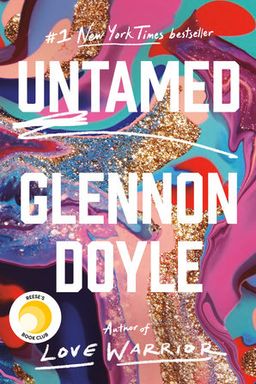
Untamed cover

Untamed

by Glennon Doyle

In ''Untamed,'' Glennon Doyle shares her transformative journey of self-discovery and love, illustrating how embracing authenticity and listening to one''s intuition can lead to profound personal freedom and fulfillment. Her candid narrative inspires readers to break free from societal expectations and create a life that truly reflects their inner desires.

Becoming Untamed: Living Free and Wild

When was the last time you questioned whether the life you're living is actually yours—or one you inherited from the world's expectations? Glennon Doyle’s bestselling memoir Untamed asks that very question and offers an electrifying answer: to live fully, you must stop asking for permission and start listening to the wild voice inside you. Doyle argues that many of us have been tamed since childhood, conditioned to please, obey, and adapt at the expense of our own knowing. Her book isn’t just her story—it’s a revolutionary guide to reclaiming intuition, truth, and freedom.

Drawing from her own life—addiction recovery, motherhood, a highly publicized divorce, and falling in love with the soccer legend Abby Wambach—Doyle presents what she calls the process of “untaming.” This is a journey from conditioning to authenticity, from the cages of good-girl expectations to the wilderness of self-trust. Through short, vivid vignettes, she explores themes like identity, desire, motherhood, faith, and social justice. Each story serves as a lesson in how women can navigate the tension between who they were told to be and who they really are when they dare to feel, know, imagine, and let it burn.

The Core Argument: Listening to Inner Knowing

Doyle insists that the path to peace and power lies not in external validation but in an internal source she calls the Knowing. This is the quiet voice beneath the noise of culture and fear—a sacred intuition that guides each person toward what is true and beautiful for them. The world teaches women to distrust this voice, especially by labeling them emotional or irrational. Untamed therefore becomes a manifesto for self-trust: for turning inward when uncertainty arises and deciding based on what feels warm and alive, rather than cold or obligatory. It echoes teachings from authors like Brené Brown (on vulnerability) and Elizabeth Gilbert (on creative courage), but Doyle’s version is visceral, spiritual, and radically feminist.

Why It Matters: The Cultural Cage

Doyle situates her personal liberation within broader systems—patriarchy, religion, motherhood myths, and consumer culture—that depend on controlling women’s bodies and silence. The central metaphor is the cheetah, introduced in the prologue story where Doyle watches a captive cheetah named Tabitha run in a zoo. The cheetah is powerful but domesticated; she has forgotten her wildness. Doyle sees herself in Tabitha and declares, “You are a goddamn cheetah.” This line encapsulates the book’s rallying cry: reclaim the wild instinct that knows life was meant to be more beautiful than this.

From there, Doyle dismantles memos of modern womanhood—the unwritten rules dictating that mothers must vanish in service, that success requires exhaustion, and that goodness means pleasing others. She uses raw, often humorous stories to expose how living by others’ expectations leads to anxiety, addiction, and self-abandonment. Untaming means turning away from these scripts and instead writing new ones—ones authored by the individual rather than inherited from institutions.

The Structure: Four Keys to Freedom

The memoir is organized around four transformative practices, which Doyle calls the “Keys”: Feel, Know, Imagine, and Let It Burn. These steps form the foundation of her philosophy. First, feeling everything—without numbing pain—is how one becomes fully human. Second, knowing comes from stillness and listening to inner truth rather than crowdsourced opinions. Third, imagining invites radical creativity: picturing what life could look like beyond indoctrination. And finally, letting it burn means destroying what is “not true enough”—whether that’s a dead marriage, toxic religion, or gender roles—to make room for the real.

Throughout these sections, Doyle uses inspiring imagery and humor, such as her story of hot yoga (“The door wasn’t even locked”) to illustrate the freedom of simply walking out of systems that cause suffering. She redefines bravery—not as pushing through fear to please others, but as trusting oneself even when the world disapproves. Her insights about motherhood—teaching daughters to disappoint others rather than themselves—and her reflections on social justice build toward a holistic idea of freedom that encompasses body, spirit, and community.

A Book for Our Time

More than a memoir, Untamed is a cultural awakening. In an age of burnout and comparison, Doyle’s message is both deeply personal and universally urgent. She calls readers—especially women—to return to their Knowing, to stop abandoning themselves, and to trust that truth and beauty require dismantling the “good enough” life. Through stories of breaking and rebuilding, family evolution, and self-reclamation, she invites you to see not only her transformation but also your own possibility of becoming untamed. Because according to her, freedom is not something we find—it’s something we remember.


Feel It All: The Courage to Be Human

Doyle begins the untaming process with the first key—Feel. After years of addiction and numbing, she learned in recovery that feelings are not errors or obstacles—they are data. Early in sobriety, she experienced overwhelming pain and confessed to her group that she must be doing life wrong because everything hurt. A fellow woman told her, “You’re just becoming human again.” That became a turning point. Feeling everything, even agony, is not proof of weakness—it’s a sign of awakening.

The Fire of Transformation

For Doyle, pain is magical, not tragic. She compares life to alchemy: emotions are the fire that turns us into gold. Avoiding pain only delays growth; embracing it enables evolution. This idea parallels teachings by Pema Chödrön (“the only way out is through”) and echoes philosopher Carl Jung’s insight that “there is no greater burden on a child than the unlived life of a parent.” Doyle insists that women must stop using happiness as the measure of success. Human wholeness involves sadness, rage, fear, and joy—all sacred flames of transformation.

Consumer Culture and Numbing

One of the most striking sections examines how consumer culture exploits our fear of pain. We’re taught that discomfort means something is wrong, and that the fix lies in purchases—better jeans, countertops, or diets. Doyle dismantles this lie, reminding readers that no sale can substitute for the becoming that discomfort brings. She likens this modern escape to addiction: a clever economy but a disastrous life strategy. Instead, she offers a mantra she keeps on her mirror: “Feel It All.”

Pain, Waiting, and Rising

Every transformation, Doyle says, follows a pattern: pain, waiting, rising. This sequence mirrors spiritual traditions—from Jesus’s crucifixion and resurrection to Buddhist enlightenment. She urges readers to let themselves burn when life demands it, trusting that the rising will come. Her own journey from addiction to motherhood proves the point: pain marked both her destruction and her rebirth. In fact, she tells her children not to fear life’s fires but to walk toward them, because “we are fireproof.”

Feeling it all, Doyle concludes, is the first radical act of untaming. Once you stop avoiding emotions and begin burning in them, you discover your resilience—your power to rise again and again. This practice may make life hard, but it will also make it real.


Be Still and Know: Trusting Inner Wisdom

The second key, Know, is Doyle’s invitation to return to inner authority. She describes a sleepless night spent Googling: “What should I do if my husband is a cheater but also an amazing dad?”—a moment of radical insight. By seeking answers online, she realized she had outsourced her own wisdom. This revelation led her to the phrase “Be still and know.” The Knowing, she discovered, doesn’t come from experts or institutions but from quiet communion with yourself.

From Searching Outward to Sinking Inward

Every morning, Doyle practiced sitting silently in her closet, resisting the urge to check her phone or plan. At first, it felt unbearable—itchy, hungry, endless. But eventually, she learned to drop beneath the noise of her mind. There she discovered a peaceful depth—a place she calls “the nudge and the gold.” When she poses questions in this stillness, she senses a warm, guiding presence. Whether you call it God, intuition, or source, she says, it always leads gently toward the next right thing, never the five-year plan.

The Practice of Sinking

Doyle compares this practice to sinking below the surface of chaotic waves. Just as divers find quiet beneath the ocean’s swirl, you find clarity beneath life's frenzy. Down there, the Knowing circulates like “warm liquid gold.” She even tattoos Be Still on her wrist to remind herself that answers are as close as her breath. This is a practice of radical self-trust—choosing your own Knowing over others’ approval. Every life, she says, is an unprecedented experiment, and no one can give directions to a place they’ve never been.

The Gap Between Knowing and Doing

Doyle urges readers to shorten the gap between Knowing and action. Once you sense the nudge, do the next right thing—without explaining or asking permission. “Explaining,” she writes, “is fear preparing its case.” This principle transforms decision-making from consensus-seeking to courage-lived. It means trusting that inner guidance will accompany you wherever you go. In modern terms, this chapter reads like a counteroffensive to mental overload culture: fewer searches, more silence.

Following the Knowing may appear illogical, but as Doyle’s life proves—from leaving her marriage to embracing queerness—it ultimately leads to integrity, peace, and freedom. When you learn to trust that deep voice, she concludes, you’ll stop living someone else’s life and start living your own.


Dare to Imagine: Creating the Beautiful Life

The third key, Imagine, expands Doyle’s teaching from personal awakening to creative vision. Imagination, she argues, is not escapism—it’s reclamation. Using the recurring metaphor of the cheetah, Doyle explains that while Tabitha was born in captivity, she still sensed the wild. Likewise, women may never have known freedom, but they feel it pressing within them. Imagination is how we remember and give birth to that unseen order.

Personal Imagination

Glennon shares how she first imagined herself as a sober mother—despite all evidence to the contrary—and later as Abby’s partner. Her stories of “No, not you” moments turning into “Yes, me” awaken the reader to imagination’s role in transformation: seeing truth before the facts affirm it. She also reframes faith as belief in the “unseen order of things” rather than obedience to outdated dogma. Like Martin Luther King Jr.’s “I have a dream,” imagination becomes the bridge between vision and reality.

From Indoctrination to Imagination

Doyle distinguishes between two languages: indoctrination (should, right, wrong) and imagination (true, beautiful). Indoctrination activates minds trained to obey. Imagination activates souls yearning to create. She coaches women to replace the question “What should I do?” with “What story do I want to tell with my life?” This shift turns conformity into consciousness. Through stories of readers who wrote their “truest, most beautiful stories,” Doyle shows how imagination catalyzes healing—from addiction to broken marriages to grief.

From Dreaming to Doing

The moment that makes imagination practical comes when women put pen to paper. Doyle calls this the architectural stage of creation—the unseen order must become two-dimensional before manifesting. She invites you to write down your “truest, most beautiful life” and consider it your blueprint, not a fantasy. Doing so transforms dreamers into builders. This process parallels Julia Cameron’s The Artist’s Way: daily writing as spiritual awakening.

Imagination, Doyle concludes, is how revolutions begin—personal and cultural. If women dare to imagine their own reality instead of inheriting one, the world must reorder itself around their truth. In essence, imagining is not just seeing possibilities—it’s birthing them.


Let It Burn: Destruction as Creation

In the final key, Let It Burn, Doyle delivers her most radical message: building the true and beautiful always costs the good-enough life you have now. Transformation demands destruction. This principle applies to beliefs, relationships, and institutions alike. When inner truth burns through false structures, ashes become fertile soil for new creation.

Rewriting Old Memos

Doyle exposes what she calls cultural “memos”—rules about womanhood and motherhood that pretend to be sacred but are actually instruments of control. The most damaging memo equates selflessness with love. For generations, women have been praised for disappearing, but Doyle argues that a mother’s true responsibility is to model aliveness, not martyrdom. “Selfless women make for an efficient society but not a beautiful one.” Letting this memo burn allows women to be “full of themselves”—not conceited but complete.

Wholeness Over Structure

Another memo she torches is that family wholeness depends on keeping its original structure. Through her divorce, she learned that a broken family is not one that changes form but one that demands its members break themselves to fit. Her definition of a whole family is revolutionary: one where everyone can bring their full humanity to the table, “both held and free.” It’s a tender, modern vision of relational freedom—rooted in love rather than obligation.

Faith Without Middlemen

Doyle also burns the memo on religion. She replaces external allegiance with internal Knowing, defining faith as private surrender rather than public dogma. To her, God isn’t a judge outside but the gold inside—echoing mystics like Hafiz and Rumi. She even titles a later poem “Dropping Keys,” envisioning women who free others from cages by living untamed.

Ultimately, “letting it burn” means lifelong evolution. Each day’s truth might contradict yesterday’s—but that’s growth. Doyle’s purpose is perpetual rebirth: “My goal is not to remain the same but to live in such a way that each moment calls me to become.” In this fiery philosophy, destruction is not loss—it’s liberation.


Love, Family, and Bravery Reimagined

Untamed isn’t just about personal freedom; it’s about how love and family transform under truth. Doyle redefines concepts like motherhood, marriage, and bravery so they align with authenticity rather than obedience. This section of the book—the heart of her narrative—explores how her family evolved after she left her husband and married Abby Wambach.

Motherhood as Modeling, Not Martyrdom

Doyle’s insights on motherhood are among the most quoted from Untamed. She confronts the cultural script that teaches mothers to sacrifice themselves “in their children’s names.” She warns that teaching daughters that love means disappearance traps them in the same pattern. In one stirring moment before leaving her marriage, she looks into her own eyes and asks, “Would I want this marriage for my little girl?” That question becomes her compass—and her call for mothers to demonstrate courage by living fully alive.

Bravery Means Self-Trust

One of Doyle’s most powerful redefinitions is of bravery. It’s not blindly defying fear—it’s staying loyal to oneself despite external pressure. She tells her daughter Tish that true confidence is refusing to abandon your Knowing to please others. In this world, sometimes bravery means quiet and waiting, not loud and rushing in. That reframing offers readers a liberating alternative to performative courage.

Family as Island

Her metaphor of the “island” encapsulates boundaries and unconditional love. With Abby, Craig, and their children, Doyle constructs a family guided by “Only Love In, Only Love Out.” The island stands for self-defined belonging—where fear and shame are kept outside the drawbridge. It’s a lesson in protecting love from fear, even when that fear comes from those closest to you. This idea, she tells readers, marks the moment one becomes a responsible parent rather than an obedient child.

By reframing love through truth rather than sacrifice, Doyle proves that relationships—romantic or familial—thrive when built from inner freedom instead of conformity. Love, in her world, is not disappearance but emergence.


The Wild Revolution: Social Awakening and Activism

Throughout Untamed, Doyle expands personal liberation into social awakening. She connects women’s personal cages to the world’s larger injustices. Her activism shines through chapters on religion, race, and collective empathy—asserting that becoming untamed inside naturally ignites activism outside.

Faith and Authority

Having been raised in evangelical Christianity, Doyle recounts her excommunication after embracing same-sex love. She dissects how religion became a tool of control rather than liberation. Tracing political history, she reveals how conservative leaders weaponized faith to maintain power. Her reinterpretation of Jesus as a symbol of radical inclusion rather than hierarchy echoes liberation theologians and feminist thinkers. “All the devil has to do to win,” she writes, “is convince you he’s God.”

Racism and Sobriety

In “Racists,” Doyle compares waking up to racial injustice to recovery from addiction. America, she says, is a family in denial—addicted to privilege. She confesses her own complicity and urges healing through inner confrontation rather than performance. Using her father’s story and Martin Luther King Jr.’s writings, she illustrates how admitting collective sickness—without moral defensiveness—is the first step toward justice. “We become the air we breathe,” she writes, “and racism is in our lungs.”

Imagination as Activism

For Doyle, activism starts with compassion powered by imagination. When witnessing migrant children at the border, she transforms despair into action through Together Rising, her nonprofit that channels everyday heartbreak into effective help. Her storytelling of reunifying families reminds readers that empathy without imagination breeds paralysis; imagination converts pity into partnership.

Doyle’s revolution is thus twofold: untaming individuals and unleashing systems toward truth. She believes the freer each person becomes, the freer the world can be. Freedom, in her vision, is contagious.

Dig Deeper

Get personalized prompts to apply these lessons to your life and deepen your understanding.

Go Deeper

Get the Full Experience

Download Insight Books for AI-powered reflections, quizzes, and more.