
Idea 1
The Empathy Advantage
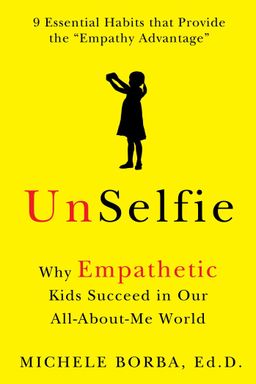
How can you raise children who lead with compassion rather than self-interest? In UnSelfie, psychologist Michele Borba argues that empathy is not a soft skill but a power skill—a teachable, repeatable capacity that predicts happiness, resilience, success, and moral courage. She insists that empathy gives children a measurable advantage across life domains from academics to relationships to leadership.
Borba’s core claim is bold: empathy can be systematically cultivated through daily habits. She dismantles the myth that empathy is innate, showing through research and real-world programs that it can be learned just as literacy or math can. In fact, she names this developmental capacity the Empathy Advantage, arguing it’s the antidote to what she calls the Selfie Syndrome—a cultural drift toward narcissism and isolation fueled by overvaluation and screen immersion.
Why Empathy Is Urgent
Empathy decline among youth is measurable: studies show a 40% drop over three decades, with narcissism up nearly 60%. The consequences are evident—rising bullying rates, mental-health struggles, and loneliness. Borba warns that a generation absorbed in self-promotion risks losing the capacity for genuine connection. (Note: This mirrors arguments from Sherry Turkle’s Reclaiming Conversation, which also ties digital life to empathy erosion.)
Empathy predicts far more than kindness. Longitudinal data show that emotionally attuned children perform better in school, display greater moral reasoning, and later emerge as collaborative leaders—the exact traits top employers seek according to Harvard Business Review. Borba thus repositions empathy as a practical life asset, not sentimental virtue.
Empathy Is Teachable
Evidence from globally recognized programs proves the point. The Seeds of Peace camp transformed Israeli and Palestinian teens through guided perspective-taking sessions and collaborative tasks, producing sustained trust and peacebuilding attitudes confirmed years later by University of Chicago researchers. The Roots of Empathy program built by Mary Gordon uses baby visits in classrooms to teach emotional literacy and compassion. Follow-up evaluations show lasting gains in prosocial behavior and declines in aggression.
These examples illustrate Borba’s thesis: empathy grows when children repeatedly experience emotion-rich, face-to-face interactions that help them read windows into other minds and hearts. Such interactions cannot be replaced by digital simulations or text-only exchanges because they rely on microcues—body language, eye contact, tone—that develop neural empathy circuits.
What the Empathy Advantage Looks Like
Children who cultivate empathy are healthier, happier, and more resilient. They approach conflicts by asking what others feel, cooperate in teams, and make ethical choices when faced with bystander dilemmas. Borba predicts that empathy will become a top leadership differentiator in the 21st century, shaping workplaces, communities, and even international relations. In her view, empathy is both compass and currency—the skill that underwrites every human-capital outcome from innovation to civic engagement.
The Heart of the Book
Teaching empathy is a national survival skill. Borba argues that communities who deliberately model and instruct caring prevent cruelty, reduce bullying, and strengthen social resilience. Empathy isn’t innate goodness—it’s trained attention turned outward.
From Ideas to Habits
The remainder of the book translates this philosophy into practice—nine habits that build empathy from the inside out. These habits include emotional literacy, perspective taking, moral imagination, moral identity, self-regulation, kindness, teamwork, courage, and changemaking. Each habit connects evidence, stories, and actionable routines parents and educators can use.
You’ll see how daily rituals—from breathing exercises and kindness jars to literary discussions and team play—convert abstract values into embodied behaviors. Borba’s message is clear: empathy can be taught, strengthened, and lived. When you make compassion habitual, you give your child—and society—the ultimate competitive edge.