
Idea 1
Escaping the Modern SCRIPT
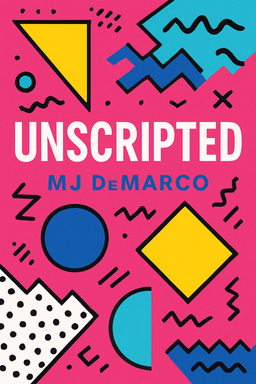
Why does everyday life feel subtly programmed—like your choices were made for you? MJ DeMarco’s UNSCRIPTED argues that most people live inside a silent operating system—the SCRIPT—that governs how you work, spend, and believe your life will unfold. The SCRIPT tells you to go to school, get a safe job, buy a house, and wait for freedom at retirement. DeMarco’s premise is radical: this is not real life but a software installed by society’s institutions to keep you obedient and economically useful.
The book unfolds as both manifesto and manual. First, it reveals how cultural and financial systems seed obedience through education, media, and markets. Then it exposes the psychological cost—what DeMarco calls temporal prostitution: trading the best years of your life for promises of future stability. Finally, it presents a counter-framework—UNSCRIPTED entrepreneurship—where value creation and time ownership replace programmed submission.
The Cultural Operating System
The SCRIPT acts like software: it distributes beliefs, rewards conformity, and reproduces itself through family, school, and corporate pipelines. Parents pass on the same formula they inherited—study hard, work for someone else, save for retirement. Schools reinforce permission-seeking habits and risk avoidance. Corporations and financial institutions profit from long-term dependency. The cycle sustains itself through social norms, fear of deviation, and the illusion that obedience equals safety.
Core insight
When you follow conventional wisdom uncritically, you become a product, not a participant. Every routine—work five days, live two—is engineered for someone else’s profit.
The Twin Paths of Mediocrity
The SCRIPT offers two deceptive life paths: the Sidewalk and the Slowlane. The Sidewalk promises instant gratification—consume now, pay later. The Slowlane, cloaked in prudence, promises freedom decades away through saving and compound interest. Both keep you captive: consumerism binds you financially; deferred living binds you temporally. In both cases, “freedom” is postponed until age or circumstance make it meaningless. The real jailer isn’t debt—it’s the belief that later is safer than now.
Awakening: Recognizing Temporal Prostitution
DeMarco’s lens of temporal prostitution reframes every transaction: when you spend $500 at Sears, you’re exchanging 100 hours of life at $5/hour. Your hours are not renewable; they vanish forever. This math clarifies how the SCRIPT tricks you into trading peak vitality for distant promises. You don't lack time—you’ve leased it to systems that reward you for future hope while consuming your present life.
Breaking the Hold
At the center of the book is the Fuck This Event (FTE), the emotional rupture where the pain of stagnation outweighs the fear of change. The FTE is the inflection that separates curiosity from commitment. Without it, awareness stays theoretical. DeMarco’s own FTE began in a frozen Illinois blizzard, broke and humiliated in a limo—an hour that rewrote his trajectory. The FTE turns passive reader into active reprogrammer.
Reprogramming: The UNSCRIPTED Framework
Once awakened, you rebuild. DeMarco’s TUNEF formula—FTE, Beliefs & Biases, Meaning & Purpose, Fastlane Entrepreneurship, Kinetic Execution, and the Four Disciplines—operates like a system reboot. You replace received beliefs with examined ones, channel purpose into scalable business models, and discipline yourself through process rather than passion. The goal is self-authored life design.
Across these elements, UNSCRIPTED maintains one thesis: freedom comes from control, creation, and scale—not compliance. The book’s language, stories, and math are built to shake comfort. You can stay inside the SCRIPT and live scheduled by institutions, or uninstall it and author new code. Awareness gives clarity, but action—entrepreneurial, purpose-based, disciplined—gives liberation.
Final Takeaway
The SCRIPT sells you survival. The UNSCRIPTED life demands creation. Where the world profits from your labor, you must profit from your leverage. Awareness is the spark; building systems that buy back time is the flame.