
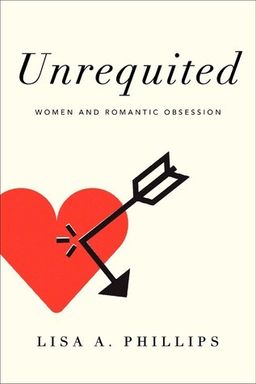
Unrequited cover

Unrequited

by Lisa A Phillips

Unrequited by Lisa A Phillips explores the complex world of romantic obsession, offering insights into its psychological roots and societal perceptions. This compelling guide reveals how unrequited love can inspire creativity, challenge norms, and uncover deeper emotional needs. With practical therapeutic strategies, readers can navigate the tumultuous journey of heartache and find personal growth.

The Power and Peril of Longing

Why do you keep returning to the person who doesn’t want you, refreshing their feed, re‑reading their texts, letting their silence script your days? Lisa A. Phillips’s Unrequited: Women and Romantic Obsession argues that longing—especially unreciprocated desire—is more than just pain. It is a psychological engine, an old story template, and a mirror that can reveal who you are becoming. Phillips weaves neuroscience, literature, psychology, and her own experience into a study of how pursuit takes root, why it becomes addictive, and how you can transform its power without letting it destroy you.

Longing as Elevation and Story

Across cultures, the “not yet” of desire has been treated as an enlightened state. You may feel more alive when you want more than you possess. Courtly love valued unattainability; modern dramas thrive on the tension of “will they or won’t they.” Phillips borrows from Stendhal’s idea of “crystallization”—a stick encrusted with imagined jewels—to show how you polish the ordinary into brilliance. When you fall into longing, the beloved becomes a projection screen for your better self. You plant zinnias, change playlists, or write differently because each act rehearses a future that stays just out of reach.

The Scripts That Hold You

Stories teach you how to wait. From Nicholas and Alexandra’s endurance to the lyrics of pop ballads, a cultural script whispers that persistence conquers all. Behavioral science maps why this feels true: each small sign of attention acts as intermittent reinforcement, keeping you hooked like a gambler chasing the next win. Goal‑linking intensifies it—you tie the beloved to your sense of safety or meaning, so giving up feels like losing purpose itself. Phillips asks you to notice when this script stops inspiring effort and starts imprisoning you in recycled hope.

The Biology of Pursuit

Neuroscience frames obsession as a physiological loop. Dopamine floods the ventral tegmental area when you anticipate contact; serotonin drops like in obsessive‑compulsive disorder, driving rumination. Helen Fisher’s and Donatella Marazziti’s studies show love’s overlap with addiction and stress systems. Attachment theory fills in the emotional side: early patterns of anxious bonding transform separation into panic, prompting a “protest response” of checking phones, reappearing, or traveling overnight for reassurance. Knowing these mechanisms helps you replace shame with strategy. You are contending not with moral weakness but with strong survival circuitry.

From Illness to Insight

What earlier centuries called lovesickness was once treated with leeches or prayer. Today you might call it limerence—a state Tennov named to legitimize yet confine it. Phillips urges balance: medical terms clarify the chemistry yet risk erasing meaning. Obsession can teach you about unmet needs, projection, and creativity if you can observe it without surrendering to it. Cases like Samara’s recovery through therapy or Rina’s transformation of longing into music illustrate how reflection turns illness into education.

Gender, Power, and Invisibility

Cultural double standards complicate the picture. Men who fixate are feared; women who do often get a “gender pass.” Phillips’s examples—Patricia vandalizing a lover’s property, Dara faking an attack on Luke—expose how female aggression is minimized while male victims are silenced. She asks you to strip away gendered excuses and see pursuit through behavior, not sex. Equal empathy and accountability protect everyone.

Transformation Through Endings

Ultimately the book insists that desire is not the enemy—it’s the misuse of desire. When you redirect the same intensity that once fueled fantasy into art, service, learning, or authentic relationships, longing becomes generative. Mary Wollstonecraft’s heartbreak births political travel writing; Phillips’s own failed affair births this investigation. Ending obsession requires distance, truth, and new investment: therapies like CBT and DBT help retrain the loop, while creative discipline converts suffering into purpose. Unrequited love, handled consciously, becomes less a wound than a workshop for becoming whole.


The Thrill of the Not Yet

Phillips opens with the idea that desire’s suspension—the interval before possession—feels more vivid than fulfillment. Like great storytelling, longing gains power from uncertainty. When you crave someone unavailable, you live in heightened perception: colors sharpen, songs gain secret meanings, minor gestures become signs. This state can be intoxicating precisely because it’s unresolved.

Cultural and Literary Roots

In medieval courtly love, Dante’s distant Beatrice or Petrarch’s Laura gave men a reason to refine language and soul. Modern dramas—from classic novels to binge‑able series—follow the same rule: tension is stronger than conclusion. Phillips’s own moments outside her beloved’s door, the zinnias planted by a friend mid‑crush, and the imaginative labor of one‑sided affection all echo this heritage. You become an author of your own suspense.

The Psychological Payoff

Longing elevates imagination but also masks projection. You may attribute creativity to another person’s magnetism when it actually arises from your mind’s expanded field. Stendhal’s “crystallization” captures how you construct beauty to justify desire. Recognizing that your beloved acts as a mirror for potential selfhood lets you reclaim authorship of the story rather than staying its captive.

The paradox of longing

The very uncertainty that torments you is what keeps the emotional world alive; the problem begins only when suspense hardens into fantasy treated as fate.

Phillips concludes this section by urging reflection: ask what part of your longing is about the beloved, and what part is about the self you hope to grow into. When you separate the two, desire loses its tyranny and regains its beauty.


Biology and Attachment

Under the surface of romance lie primal systems—chemical, hormonal, and developmental—that dictate how you pursue. Phillips translates neuroscience and attachment research into insight about your own patterns.

The Brain’s Reward Loops

Seeing your beloved activates the same reward centers that fire with addictive drugs. fMRI studies show the ventral tegmental area lighting up; dopamine release reinforces craving, while serotonin dips drive intrusive thoughts similar to OCD. Cortisol spikes under stress, so heartbreak becomes both emotional and physiological withdrawal.

Attachment Styles and the Protest Response

Attachment theory explains why you panic at rejection. Anxious types—often shaped by inconsistent caregiving—react to separation with vigilance and bids for contact. Phillips compares this to a baby mammal calling for its mother. Adults replay that pattern as repeated texts, sudden travel, or emotional meltdown. Avoidant types, by contrast, detach through denial or blame. Recognizing your style offers leverage to respond rather than react.

Compassion Through Understanding

Knowing that hormones and neural circuits play a role doesn’t excuse harmful acts—it allows self‑compassion and practical planning. Techniques like mindfulness, reduction of contact triggers, and behavioral substitution interrupt the cycle. Angela’s midnight train ride to Berlin shows the protest impulse at full speed; later, therapy helps her redirect it toward secure connections. You can’t outwill biology, but you can work with its rhythms until desire no longer controls you.


Scripts, Gender, and the Myth of Persistence

Phillips dissects the cultural scripts that suggest love conquers all if you just hold out. From fairy tales to rom‑coms, the narrative praises the pursuer’s faith and patience. Yet persistence, when untethered from reciprocity, mutates into compulsion.

The Holding‑Out Script

The psychological engine beneath persistence is intermittent reinforcement: unpredictable affection keeps you trying. Janey’s ex who texting occasionally, or Sonya’s revived crush after a brief reconciliation, illustrate how minimal stimuli maintain obsession. The same principle drives addictive gambling. Once your mind links the beloved to ultimate life goals—security, meaning, identity—quitting feels impossible. Phillips calls this “goal‑linking” and urges conscious decoupling through reflection and therapy.

Gendered Expectations and The Gender Pass

Social norms shape how pursuit is judged. Men’s obsession provokes fear and legal action; women’s often earns ridicule or pity. The “gender pass” trivializes female aggression while erasing male suffering. Luke’s story—nearly arrested after Dara falsely accused him—shows the real risk of that bias. Phillips calls for one moral standard: persistence without consent is invasion, whatever the pursuer’s gender.

Rewriting the Story

To replace the old script, adopt a new plot: when someone says no, the hero’s task is not conquest but integrity. Perseverance remains admirable only when aimed at growth, not possession. As Phillips notes, knowing when to redirect effort—to art, activism, or new community—is the turning point between tragedy and transformation.


From Romantic Illness to Self-Awareness

The middle sections treat obsession as both symptom and revelation. Once considered a literal sickness, lovesickness carried moral judgment and fear of female sexuality. Phillips traces that lineage to modern attempts to pathologize—or sanitize—limerence.

Historical Diagnoses and Modern Neuroscience

Physicians like Galen once read elevated pulses as proof of desire. In later eras, women’s yearning was dismissed as hysteria; yet Romantic writers elevated it as creative fever. Contemporary research confirms love’s alteration of neurochemistry: the same data that explain addiction explain devotion. The point, Phillips insists, is not to medicate longing out of existence but to integrate its lessons.

Treatment Without Erasure

Some sufferers need clinical support: Samara’s relief via Lexapro and therapy validates pharmacology’s place, but Phillips warns about emotional flattening. The healthier model treats obsession as information about unmet emotional needs. Through structured therapies—CBT disputing catastrophic thoughts, DBT teaching distress tolerance—you learn presence instead of pursuit. Those tools mirror addiction recovery: avoid triggers, replace the ritual, build meaning elsewhere.

By reframing obsession not as shameful but instructive, you reclaim agency. What once looked like illness becomes the first chapter in emotional intelligence: identifying what you crave, what you fear, and how to express both without self‑destruction.


When Desire Turns Dangerous

Not every story of pursuit stays poetic. Phillips charts the continuum from ardent interest to criminal stalking and the psychological tipping points that signal risk.

Recognizing Crossing Points

What distinguishes romance from harassment is consent and repetition. Actions that ignore a clear “no” transform attention into intrusion. Examples include Patricia’s property damage and Sylvia’s physical confrontation—acts minimized socially but breaching ethical and legal lines. Emotional cues like fixation, surveillance, or fear of abandonment often precede escalation. Phillips uses research on Obsessive Relational Intrusion to define the gray area before violence.

The Narcissistic Trance

At the heart of danger lies narcissism: the self so consumed by humiliation that empathy collapses. Whether in Lisa Nowak’s infamous cross‑country pursuit or Tillie’s self‑sacrifice for a dying man’s love, the beloved becomes an object to restore pride. Phillips calls this “the masochistic zone.” Recognizing it early—when shame morphs into entitlement or despair—is crucial for safety.

Accountability and Help

If you sense rage or thoughts of harm, intervention is non‑negotiable. Therapy, legal boundaries, and trusted allies are essential. Society must also confront biases that excuse female perpetrators or mock male victims. Removing the gender pass and emphasizing mutual respect redefine pursuit as ethical only when reciprocal and safe.


Crushes, Adolescence, and Cultural Learning

Phillips devotes space to the tender apprenticeship of crushes. What adults dismiss as trivial can be the rehearsal ground for identity formation. Early infatuations teach emotional literacy before sexuality fully awakens.

The Developmental Value

For teenagers like Nikki or Marissa, crushes offer safe laboratories of feeling. Fantasizing about a teacher or classmate helps define admiration and aspiration—what psychologist Carl Pickhardt calls “identity crushes.” These experiences allow exploration of values, imagination, and autonomy without the risks of real dependence. Parents who listen without judgment help teens decode meaning instead of shaming emotions.

Cultural and Digital Pressures

Social media blurs fantasy and exposure. Posting about a crush can feel like control or confession; algorithms encourage surveillance masked as curiosity. Phillips notes how platforms turn yearning public, amplifying obsession. Yet online communities also mobilize against exploitation, as seen when fans expose predatory creators. The lesson: design deliberate digital habits—limit checking, establish peer rules, seek offline anchors.

Handled consciously, crushes cultivate empathy and creativity. Left unchecked, they mirror adult obsessions. The goal is not to suppress passion but to teach boundaries, humor, and self‑reflection early, before longing hardens into compulsion.


How Obsession Ends and Transforms

Endings in Phillips’s world are not sudden miracles but disciplined rewiring. Recovery from unrequited love unfolds through distance, therapy, new attachments, and creative redirection.

Breaking the Chemical Loop

Physical separation and no‑contact rules starve the dopamine system of triggers. Phillips’s own turning point comes when her beloved’s final words—“We can never speak again”—remove hope’s oxygen. For others, deliberate avoidance of places or objects linked to the beloved initiates brain rest, a prerequisite for clarity.

Therapeutic and Behavioral Rebuilding

Cognitive‑behavioral methods challenge catastrophic beliefs (“He’s my only chance at love”), while Dialectical Behavior Therapy teaches distress tolerance through mindfulness and opposite actions—writing a letter never sent, joining a class, helping others. Studies show these techniques reduce relapse of stalking behaviors by retraining impulse control.

Redirecting Energy

Many survivors transmute loss into creative force. Mary Wollstonecraft’s post‑suicidal journey birthed lasting literature; Rina transformed rehearsal panic into operatic mastery. Modern parallels—from Chris Kraus’s autofiction to Sophie Calle’s art—demonstrate how publicly reframed heartbreak becomes agency. Phillips emphasizes that you reclaim power not by winning affection but by owning narrative.

Integration and Growth

When obsession yields reflection, you retain love’s best quality—its capacity for focused attention—without its tyranny. The process ends not in erasure but in integration: longing evolves into awareness of your needs and creative direction. Unrequited love, once destructive, becomes the forge in which a more autonomous self is made.

Dig Deeper

Get personalized prompts to apply these lessons to your life and deepen your understanding.

Go Deeper

Get the Full Experience

Download Insight Books for AI-powered reflections, quizzes, and more.