
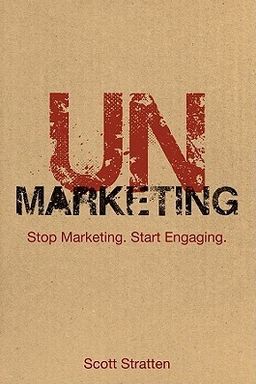
UnMarketing cover

UnMarketing

by Scott Stratten and Alison Stratten

UnMarketing revolutionizes the traditional marketing landscape by focusing on relationship-building and engagement over cold calls and ads. Scott and Alison Stratten provide actionable insights into creating meaningful customer interactions, leveraging social media effectively, and establishing expertise to naturally attract and retain loyal customers.

UnMarketing: Stop Pushing, Start Engaging

Have you ever been turned off by a brand that wouldn’t stop shouting its message at you? In UnMarketing, Scott and Alison Stratten ask you to imagine an alternative—a world where marketing isn’t about constant interruption but about connection. They argue that in the digital age, relationships, authenticity, and relevance matter far more than traditional push marketing. The core argument is simple: marketing is every moment when anyone interacts with your company, and real success comes from earning trust, not demanding attention.

Scott and Alison contend that most businesses are addicted to what they call “push-and-pray” marketing—old-school tactics like cold-calling, generic ads, and forced promotions that interrupt people rather than engage them. They offer a different approach: UnMarketing, which focuses on natural, ethical, human-centered engagement with your market. Their thesis echoes the shift from broadcasting to conversation, from audience targets to relationships (a theme also developed in Seth Godin’s Permission Marketing and Simon Sinek’s Start with Why).

The Meaning of UnMarketing

UnMarketing isn’t about doing no marketing—it’s about unlearning bad habits. Rather than blasting messages, you build relationships by focusing on every point of contact: from how your front-line employees greet a customer (like the carpet cleaner Wes at the Wynn Hotel) to how you handle complaints on Twitter. In this approach, everyone in your organization is the marketing department. The idea is both radical and refreshingly simple: If you believe business is built on relationships, make building them your business.

The authors argue that in today’s world of immediacy and transparency, your brand is what people say about you when you’re not in the room—or online. You can no longer control customers through PR or paid messaging. What you can control is how you show up, listen, and respond. “Everything has changed,” they admit, “and nothing is different.” The tools have changed—now it’s tweets and videos instead of flyers—but the core of trust, authenticity, and value remains timeless.

From Attention to Engagement

Through numerous case studies—like Zappos’ radical approach to customer service, Lush’s contagiously passionate salespeople, and Domino’s heartfelt apology campaign—the book demonstrates that true marketing begins only when the transaction ends. Your goal is not to sell once but to create such meaningful experiences that customers become evangelists. The Strattens call these interactions the “UnMarketing cycle,” where engagement leads to trust, trust leads to sales, and sales lead back to engagement.

They take on key themes such as the trust gap—the space between skepticism and confidence in your brand—and the experience gap—the difference between your customer’s best and worst experiences. Filling those gaps defines the health of your relationships. When a McDonald’s drive-through worker named David offers a positive, consistent experience or FreshBooks sends a customer cupcakes for her birthday, that’s marketing more powerful than any ad buy.

Why This Matters Now

The internet and social media have democratized communication. A single tweet from a dissatisfied customer can echo louder than an entire PR department’s messaging. UnMarketing equips you to thrive in this transparent world by building social capital—what the authors call “social currency.” Like a bank account, you must deposit value, generosity, and attention long before trying to withdraw a sale. Push too soon, and you overdraw trust. Engage thoughtfully, and customers become your promoters.

This mindset helps you rethink everything—from how you use Twitter (a conversation, not a broadcast) to how you write newsletters (teach and serve, don’t sell). It’s marketing as service, not seduction. It’s about creating “fans, not followers”—people who care about you because you cared first. In this world, marketing is no longer a department. It’s the way you do business.

What You’ll Learn Ahead

In the key ideas that follow, you’ll uncover how trust and expertise matter more than advertising, how social media transforms conversations, and why authenticity, transparency, and even humor are essential tools. You’ll see why companies like Zappos and FreshBooks thrive through human touch, how viral and video marketing really work, and what happens when you’re unprepared for success. Ultimately, UnMarketing is a guide to building a business that feels good—one where your actions, ethics, and enthusiasm lead naturally to growth. Because in the end, everything has changed, but the heart of good business—listening, caring, and serving—hasn’t changed at all.


The Hierarchy of Trust and Buying

If you want customers who come back again and again, Scott and Alison Stratten argue, you need to move up the “Hierarchy of Buying.” Their survey of over a thousand business owners reveals one clear truth: people buy from those they know, like, and trust. The higher you are on that pyramid, the less you compete on price and the more you stand out for value and connection.

From Cold Calls to Trusted Relationships

At the top sits your current satisfied customer. Below that are referrals from trusted sources—friends, colleagues, or online networks. At the bottom are the desperate tactics: random searches, ads, and cold calls. As Stratten jokes, “Cold-calling is telespam.” Every step down the pyramid increases competition and decreases profit margins. When you rely on cold outreach, you’re fighting for attention among everyone else selling the same thing, usually ending in price wars and frustration.

The message is clear: focus on relationships in the middle of the pyramid—those who already know you but haven’t yet purchased, or who see you as a recognized expert. It takes longer, but building trust pays off far more than chasing strangers.

Trust as the Ultimate Currency

Trust can’t be faked or forced. It builds over time through consistency and transparency. Companies like Zappos, which allows 365-day returns and trains its employees to “deliver WOW through service,” show that trust doesn’t just make people buy—it makes them advocates. Trust compounds like interest: every honest interaction adds value, while every misstep depletes your balance.

Interestingly, Stratten also sees technology reshaping the hierarchy. Platforms like Google and Facebook blur levels of trust. You can now retarget ads to people who already engaged with your brand or saw your page—a digital version of staying top-of-mind. But even the smartest ad algorithm can’t replace genuine connection. As he notes wryly, “Sure, you can pay for clicks, but you can’t buy care.”

For any entrepreneur, the hierarchy is a reminder: effort spent deepening trust is never wasted. Invest time in delighting your existing customers. Thank referrers personally. Share useful insights, not pitches. As Stratten puts it, “People don’t care about your business until they know you care about them.” That’s where loyalty—and profit—really begin.


Building Real Relationships Through Social Media

Social media, the Strattens insist, isn’t media at all—it’s conversation. It’s not about posting ads but about building social currency. You can think of it as a trust account: you make deposits through generosity, dialogue, and authenticity before you ever try to make a withdrawal through promotion.

Conversations, Not Campaigns

Using Twitter only to blast updates or Facebook to post discounts, they warn, is like showing up to a party and handing out flyers. People want validation and connection, not ads. When Web 2.0 arrived, many companies forgot this. Writing a blog without allowing comments, for instance, “is like printing an article—it’s not social at all.” Whether you’re commenting on someone else’s post, replying to a tweet, or thanking a new follower, engagement must come first.

Scott models this approach himself. Before ever pitching a product on Twitter, he sent more than 10,000 tweets—replying, joking, and helping others. When he finally promoted his “UnBootcamp,” it sold out within a day. That was social currency at work: years of value built before a single sale.

Giving Before You Take

The analogy is powerful: you wouldn’t open a bank account and ask to withdraw money before depositing anything. Yet many companies open social accounts and immediately ask for attention or sales. Every retweet, comment, and helpful post is a deposit. Only when you’ve proven you care do others invest trust in return. The authors’ formula mirrors Gary Vaynerchuk’s Jab, Jab, Jab, Right Hook—give value repeatedly, then ask sparingly.

They also acknowledge the evolving platforms. Facebook comments may now happen offsite, Instagram depends on visuals more than words, and moderating blog discussions has become harder. But the principle endures: participation beats automation every time. “You can’t take before you give,” Stratten reminds us. Social media is your opportunity to humanize your brand every single day.

For businesses, that means shifting from content calendars to conversations. Respond to people. Highlight their accomplishments. Share work that inspires you. As the authors put it, “Twitter isn’t social media if you use it just to talk. It’s social when you listen.”


Authenticity and Transparency in Action

In the age of public everything, fake friendliness and spin are instant deal-breakers. The Strattens argue that authenticity—being yourself in business—is the simplest and most effective differentiation strategy you have. “Your competition can’t be you.”

Authenticity: Being Real, Not Overexposed

Being authentic means aligning your public and private selves. Don’t try to sound like a corporate robot if your natural style is conversational. Outsource your weaknesses, but never your personality. However, authenticity isn’t oversharing. The authors warn: anything you post should be something you’d be comfortable seeing “on a billboard with your face next to it.” Your values, humor, and beliefs are part of your brand—but remember that public alignment comes with responsibility.

Scott shares an anecdote about unfollowing someone who retweeted a message opposing gay marriage. Even though it wasn’t their original post, retweeting aligned them with those views. Transparency and authenticity require awareness: what you share says who you are.

Transparency: Honesty Over Perfection

Transparency, meanwhile, isn’t about revealing every secret—it’s about being open and ethical in how you do business. That includes disclosing paid testimonials, affiliations, or free products (the FTC even codified these guidelines). The authors highlight examples of shady practices like “freebooting”—stealing videos from YouTube and uploading them to Facebook to earn likes. Such tactics may gain vanity metrics but erode integrity. “Integrity is not a renewable resource,” they warn.

Companies like Zappos thrive precisely because of their transparency: call center employees have no time limits, even sending flowers to grieving customers. Their openness in operations matches their marketing message of service. On the flip side, Bell Canada’s fake app reviews—written by employees—illustrate how deception backfires, costing the company a $1.25 million fine and a damaged reputation.

In short, people don’t expect perfection; they expect honesty. Mistakes happen, but how you handle them defines your brand. Own errors, be human, and treat customers with respect. That’s what authenticity looks like when lived out loud.


The Experience Gap: Where Loyalty Is Won or Lost

The Strattens describe an “experience gap” as the chasm between your customer’s best and worst interaction with you. Companies invest heavily in the first impression—flashy ads, attractive stores—but loyalty is won by consistency. “Your service is only as good as your weakest link,” they write. If your customer’s everyday experiences vary wildly, you’re building fractures in trust.

Consistency Creates Confidence

Scott’s experience buying coffee captures this vividly. After twenty years as a loyal Tim Hortons drinker, he switched to McDonald’s because of small frustrations: poorly stirred coffee, long waits, no debit acceptance. Each minor annoyance was a drop in the trust bucket. When McDonald’s offered faster service, debit payments, and an upbeat drive-through employee named David, the shift happened easily. The price or taste hadn’t changed much—experience had.

Brands like Cirque du Soleil and Lush demonstrate the reverse: every staff member embodies the same energy and care. From ushers in costume to store associates who treat a first-time buyer like an old friend, they eliminate the gap between expectation and delivery.

Closing the Gap with Feedback

The simple tool of “Stop, Start, Continue” surveys exemplifies how to close the experience gap. Ask customers what you should stop doing, what to start doing, and what to continue doing. When a private school applied this method to parents, it uncovered both minor and critical issues. Prompt acknowledgment and follow-up raised retention and satisfaction. Feedback isn’t an admission of weakness—it’s the route to improvement.

The lesson is blunt: people rarely complain directly; they simply leave. Your job is to spot the cracks before they widen. Ask, listen, act—and make excellence predictable.


Viral Marketing and Video That Moves People

What makes content spread? The Strattens’ answer: emotion. Whether through laughter, awe, or heartfelt tears, shareability depends on feeling, not frame rate. Scott learned this through his own viral success The Time Movie—a simple slideshow about valuing time that became an Internet phenomenon. Shot on a shoestring budget, it reached millions because it struck an emotional chord, not because of production polish.

The Four Secrets of Going Viral

  • Emotion rules. Funny, surprising, or moving content spreads effortlessly.
  • It’s not about you. Create for your audience, not your ego.
  • Define success. Do you want awareness, relationships, or sales? You can’t have all three at once.
  • Be ready for attention. Viral growth exposes weaknesses; be prepared for bandwidth, orders, and customer response.

When The Time Movie exploded, Scott’s $9 hosting plan crashed. He paid $1,400 in fees before he learned to scale. His story cautions creators: make sure your tech and systems can handle success before it arrives.

Video in the Age of Attention Scarcity

By the second edition, video marketing had transformed. Viewers scroll past videos after two seconds; 85% of Facebook videos are watched without sound. The key takeaway: start strong and communicate emotion instantly. Focus on story, not spectacle. A shaky selfie that makes people laugh beats a glossy ad no one finishes. Scott’s speaking clips like “Millennials Rant” illustrate this point—authentic, quick, emotional, and shareable.

Sound quality now outranks resolution, and attention trumps perfection. Whether recording live Q&As or pre-produced content, always ask, “Why would viewers care?” The vanity metric of “views” means little; what matters is engagement that moves the business needle—sign-ups, sales, or meaningful conversations.

As the authors summarize: “Just because your phone can film doesn’t mean you should.” But when you do, do it because you have something worth saying—and a way to say it that moves us.


Lessons from Brands That Get It Right

UnMarketing is filled with real-world examples showing both failure and mastery. Companies like Zappos, Lush, FreshBooks, and Domino’s reveal how human touch turns ordinary interactions into extraordinary loyalty, while tone-deaf organizations illustrate the cost of indifference.

Zappos: Service as Brand

Zappos isn’t known for shoes—it’s known for service. Allowing 365-day returns and unlimited call times, the company empowers employees to prioritize care over scripts. Stories like sending flowers to bereaved customers or offering competitor links when out of stock prove the company values people over policy. That authenticity isn’t a stunt; it’s culture.

Lush and FreshBooks: Every Employee a Marketer

At Lush, a soap store that smells like heaven, enthusiastic staff transform browsing into belonging. When Scott walked in “just to look,” an associate named Jessica greeted him with passion and knowledge—and he left with $65 of soap and a smile. Similarly, FreshBooks’ team embodies engagement: replying to tweets, sending surprise cupcakes, and ensuring even their CEO answers support calls. Their motto says it best: “We wouldn’t do it if it didn’t make business sense.”

Domino’s and Tassimo: Listening Pays Off

When a Chicago Domino’s customer complained on Twitter, franchise owner Ramon De Leon responded not with excuses but with a personal apology video. It went viral for all the right reasons—proof that care scales faster than commercials. Similarly, Kraft’s Canadian Tassimo launch used social media to gift coffee machines to local influencers, sparking authentic buzz without ads. Listening and generosity built conversation that money couldn’t buy.

The thread through these stories is clear: people remember how you make them feel. Whether it’s a supportive tweet, an unexpected gift, or showing up with empathy, good business is still profoundly human.


From Cold Calls to Connection: The UnMarketing Mindset

At its heart, UnMarketing is a mindset shift: from forcing attention to inviting connection. Stratten began his journey after witnessing a friend rant about being cold-called—then turn around and make cold calls himself. “Why,” he asked, “do we market to people the way we hate being marketed to?”

Old-school marketing is about interruption: phone spam, direct mail, billboard noise. New-school UnMarketing focuses on earning permission through engagement. Whether it’s a free event for locals, a community blog, or a conversation at a conference, you invest in relationships long before expecting return. The authors capture this shift with humor and practicality—reminding us that hard-selling drains authenticity, while service-based generosity multiplies it.

The same logic applies beyond sales. A local artist or retailer, instead of waiting for spontaneous visits, can implement “pull and stay” strategies: invite visitors to join a VIP list, share art tips, and keep in touch with empathy. This personal, continuous contact replaces luck with loyalty.

Ultimately, UnMarketing is the antidote to lazy marketing. It demands patience, consistency, and humanity. The payoff? A business that attracts rather than chases, where every handshake, email, and tweet deepens a relationship instead of closing a deal.

Dig Deeper

Get personalized prompts to apply these lessons to your life and deepen your understanding.

Go Deeper

Get the Full Experience

Download Insight Books for AI-powered reflections, quizzes, and more.