
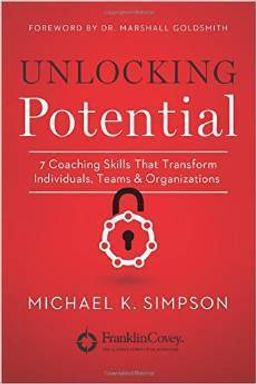
Unlocking Potential cover

Unlocking Potential

by Michael K Simpson

Unlocking Potential offers comprehensive coaching strategies for leaders to elevate team performance and transform organizations. Discover how to build trust, inspire growth, and maintain a balance between daily tasks and long-term goals to achieve remarkable results.

Unlocking Human Potential Through Coaching

Have you ever wondered what truly unleashes a person’s best self—their motivation, creativity, and greatness? In Unlocking Potential by Michael K. Simpson, the author argues that the answer lies in effective coaching, not as a managerial technique but as a transformative relationship built on trust, purpose, and commitment. Simpson contends that coaching is not about giving orders or fixing others—it is about unlocking the potential of human beings so that they perform at their best and live with clarity, meaning, and engagement.

Written as a practical yet deeply philosophical guide, Simpson integrates insights from leadership legends like Dr. Stephen R. Covey, Marshall Goldsmith, and Peter Drucker into a simple but powerful framework for all leaders who want to bring out greatness in themselves and in others. He sees coaching as the cornerstone of leadership effectiveness: the art of communication that helps people move from one level of performance to another while igniting trust, vision, and accountability. The book blends real-world corporate examples, personal stories, and actionable tools from his decades working with Fortune 500 leaders and global organizations.

Why Coaching Matters Now More Than Ever

Simpson opens by showing how modern workplaces are filled with disengagement. Gallup’s studies reveal that an immediate manager has the most profound influence on an employee’s engagement and success—more than pay, perks, or mission statements. Yet countless leaders fail here. They often have technical competence but not coaching competence. Coaching, Simpson explains, is the skill that bridges the gap between functional expertise and human engagement, transforming managers into mentors and performance drivers.

At its essence, coaching is about helping others choose to change from the inside out. It is the process of aligning four foundational principles—trust, potential, commitment, and execution—to bring about self-directed growth. These principles form the heart of Part One of the book. When leaders model trust and integrity, recognize and challenge potential, create authentic commitment, and help people execute goals effectively, they build high-performing, motivated teams.

The Coach as Catalyst, Not Commander

Simpson reframes the idea of authority. Great coaches do not command; they catalyze transformation through curiosity, empathy, and powerful questioning. The author reminds us that the word “coach” originally referred to a horse-drawn carriage—a vehicle designed to carry someone from one place to another. Likewise, coaches today carry individuals toward a better version of themselves, facilitating performance breakthroughs rather than dictating solutions.

This notion contrasts with the outdated industrial model of management, which relied on micromanagement and control. Simpson calls for a paradigm shift toward what he terms Knowledge Age leadership—where trust and empowerment replace fear-based tactics. By adopting this mindset, managers become enablers of learning and performance rather than mere enforcers of rules and metrics.

The Core Structure of Unlocking Potential

The book is divided into two major parts. Part One outlines the Four Principles of Coaching—Trust, Potential, Commitment, and Execution—which serve as moral and functional cornerstones for every relationship. These principles define the internal compass from which coaching effectiveness grows. Part Two transitions into Seven Coaching Skills: Build Trust, Challenge Paradigms, Seek Strategic Clarity, Execute Flawlessly, Give Effective Feedback, Tap into Talent, and Move the Middle. These skills are presented as a progression—from establishing credibility and insight, to aligning strategy, to elevating team performance.

The book closes with an epilogue that scales coaching from individual conversations to systemic organizational impact. Here, Simpson introduces tools like the Organizational Effectiveness Cycle to help leaders diagnose, design, and transform company cultures from good to great. This move from the micro to the macro demonstrates how personal leadership habits create ripple effects across entire enterprises.

Coaching as Ethical and Emotional Leadership

Throughout the book, Simpson insists that coaching is not manipulation nor therapy—it is a moral act grounded in integrity, confidentiality, and genuine concern for others. Trust, he writes, is “the lifeblood of truly great coaching.” Without it, conversations fail, and potential remains locked behind fear or skepticism. In vivid anecdotes—from his wife coaching him through a professional betrayal, to leaders transforming toxic corporate cultures—Simpson shows that coaching begins with the heart before the process.

He also draws deeply from psychology and emotional intelligence frameworks (echoing Daniel Goleman’s work on empathy and self-regulation). Effective coaches listen with “the head, the heart, and the eyes”—not just the ears. They sense beyond words to discover hidden beliefs, paradigms, and emotional roadblocks. In this way, coaching becomes both science and art: a disciplined yet humanizing practice.

A Promise of Mutual Growth

For Simpson, coaching is reciprocal. As you help others grow, you grow yourself. The reward is not simply improved metrics—it’s transformation. Successful coaches build environments of trust, uncover talents people didn’t know they possessed, and help teams move from mediocrity to mastery. As Dr. Covey said, “Coaches are neither born nor made. Great coaches choose to be great coaches.”

By the end of Unlocking Potential, you understand that coaching is less about teaching others what to do and more about creating the conditions for them to discover it themselves. Simpson offers leaders a roadmap to elevate engagement, accountability, and purpose—giving managers and organizations alike the tools to unlock not only performance, but humanity.


Building Trust as Leadership Foundation

Simpson begins with trust because every other coaching principle rests on it. Without trust, no advice, feedback, or vision can stick. He explains that trust is both moral and practical—it flows from character and competence. A coach must be a model of integrity, authenticity, and skill. Stephen M.R. Covey (author of The Speed of Trust) calls it the key leadership competency of the new global economy, and Simpson agrees wholeheartedly.

Trust Comes from Character and Competence

Character is who you are; competence is what you do. Both matter equally. A leader with high character but low competence is nice but ineffective. A leader with competence but poor character may deliver results but destroy morale. The combination builds credibility. The coach’s commitment to confidentiality, empathy, and honesty must be absolute—betrayal of trust can undo weeks of progress in seconds.

In a powerful story, Simpson recounts being fired unjustly by a CEO who broke promises and manipulated people. He was consumed by anger until his wife coached him to let go of vengeance and focus on future opportunity. Her questions—“What have you learned? What are the benefits of moving forward?”—helped him reframe his pain and regain clarity. That moment taught him that trust allows reframing and renewal. Coaching must aim at healing and forward motion, not blame.

Practical Ways to Build Trust

Simpson lists behaviors that build credibility: showing genuine concern for the coachee’s welfare, keeping confidences, talking straight, listening empathetically, and staying present. Coaching collapses if the leader is distracted or self-serving. The coach’s mindset should always be: “Be on their agenda, not yours.” Leaders can build trust by catching people doing things right instead of indulging in the “Whack-a-Mole” style of management that punishes mistakes.

“Trust is hard to earn but easy to lose. It can take months to build and one moment to destroy.”

Modeling High-Trust Leadership

Simpson shares examples like Stephen M.R. Covey’s leadership during the FranklinCovey–FranklinQuest merger, which began in distrust but evolved into excellence through integrity and transparency. Covey’s focus on win–win interactions, empathy, and empowerment built a culture of trust and engagement. Contrast that with Simpson’s previous CEO who led through fear and manipulation—his company collapsed, unable to sustain results. These paired stories illustrate how trust shapes organizational destiny.

Simpson’s lesson is clear: discipline yourself to build trust deliberately and daily. When coaching, honor every confidence, check motives, and show both good intent and proven results. Trust isn’t a bonus skill—it’s the foundation. Without it, potential remains locked behind guarded hearts.

When you consistently act from character and competence, you create safety. Safety opens the door to creativity, commitment, and high performance. That’s why trust isn’t simply the first principle—it’s the oxygen that allows all other coaching to breathe.


Recognizing and Growing Potential

To coach effectively, you must not only see who someone is but also who they could become. Simpson emphasizes that potential is infinite yet personal—it requires curiosity and attentiveness. Coaching, he writes, is like custom tailoring. You can’t fit someone into a ready-made suit; instead you measure, listen, and design for the individual’s story, goals, and strengths.

Listening for the Story Behind the Person

Every person has a narrative—their hopes, disappointments, and future aspirations. A coach’s job is to hear this story deeply, uncover patterns, and help the person reframe limiting beliefs. Often the clues to potential appear in repeated themes or emotional reactions. Simpson encourages coaches to listen with the heart, ears, and eyes—to pick up verbal and nonverbal signals that reveal hidden perspectives.

In one story, a client confides openly about frustrations with her boss and culture. She feels safe, and therefore honest. This vulnerability gives the coach access to the real issues behind performance—something that’s impossible in typical corporate conversations. The act of being listened to with empathy can itself awaken potential. When people feel seen, they transform.

Challenging Paradigms that Restrict Growth

Potential often hides beneath faulty paradigms—deeply held assumptions that limit choice. Simpson calls this the most vital coaching opportunity: Challenge paradigms gently but firmly. Whether it’s fear of failure, self-doubt, or identity biases, paradigms can become self-fulfilling prophecies. Using Socratic questioning (similar to the GROW model used in coaching), a coach helps reframe experiences through new lenses.

He illustrates this with Caroline Casey’s story. Born blind, she only discovered her disability at seventeen because her parents never treated her as disabled. Instead of despairing, she became a world explorer and advocate for disability inclusion. Her paradigm—that she was capable—empowered her. Similarly, Randy Pausch (author of The Last Lecture) transformed terminal illness into a legacy of optimism and purpose. Both examples show how belief systems shape potential more than circumstance.

Recognizing Cues and Reframing Reality

Simpson teaches coaches to observe three types of behaviors: physical (eye contact, posture), verbal (repeated topics or avoidance), and emotional (strong feelings tied to certain memories). These are diagnostic windows into a person’s internal narrative. By spotting them and responding empathically—without judgment—you help individuals examine their “point of view through binoculars,” adjusting lenses to focus on reality rather than distortion.

Unlocking potential is more art than technique. It starts with presence and leads to reframing paradigms from self-protection to self-expansion. Simpson concludes that each person’s untapped potential can only be accessed when they feel safe enough to tell their truth and challenged enough to see it differently. That’s the delicate balance every great coach must master.


Creating True Commitment

You can motivate people briefly with rewards or fear, but lasting commitment must come from within. Simpson argues that internal commitment—not compliance—is what drives enduring change. Great coaches create it through powerful questions, not commands. Drawing from executive coach Marilee Adams’s idea that “Life’s toughest issues are solved by the right questions,” Simpson teaches leaders how to advance conversations from vision to genuine ownership.

Three Stages of the Commitment Conversation

Borrowing from Columbia University’s coaching structure, Simpson introduces three question frameworks: Engaging with Purpose, Advancing to Commitment, and Obtaining Commitment. Each stage deepens motivation.

  • Engaging with Purpose: Ask big-picture questions that surface aspiration—“What do you want to accomplish?” or “What contribution can you make?” This helps people define their direction and legacy.
  • Advancing to Commitment: Explore barriers and possibilities—“What are the obstacles? What resources do you have? What would success look like?” These inquiries transform vague goals into actionable commitments.
  • Obtaining Commitment: Narrow the focus—“What will you do in the next 24 hours? How motivated are you to act?” The coach confirms concrete next steps and accountability.

Simpson illustrates that when leaders dictate solutions, ownership shifts to them; when they ask questions, ownership rests with the individual. Real change happens only when the performer says, “I choose this.”

Change Happens from the Inside Out

Simpson cites Stephen R. Covey’s wisdom: “Real change comes from the inside out.” You can’t hack at the leaves of attitude—only strike at the roots of character and thought. Coaches therefore help individuals do the “heavy lifting” of reflection. Commitment cannot be pushed from outside; it is born through inner clarity. When people shape their own story—own their words, goals, and reasons—commitment becomes natural.

These conversations are deceptively simple but profoundly effective. Leaders who practice them regularly build teams that show ownership instead of dependency. By asking rather than telling, they turn coaching from supervision into partnership—a relationship rooted in respect and self-discovery.


Executing and Finding Flow

Once commitment is in place, execution determines success. Simpson insists that coaching is empty without action and accountability. Here, he connects performance with the psychological concept of flow from Mihaly Csikszentmihalyi’s research—the state of total immersion where time disappears and peak productivity feels effortless. Coaches help individuals reach this state by discovering meaningful goals, forming habits, and sustaining rhythm.

From Commitment to Consistent Action

Execution bridges intention and accomplishment. Coaches must guide individuals to set measurable targets and hold themselves accountable. Simpson emphasizes that great coaching links every conversation to clear performance indicators. Without follow-through, coaching is only talk therapy. He urges leaders to ask practical questions like, “What will you do daily? How will you measure success?”

Flow: The Joy of Sustained Excellence

Flow arises when challenge and skill align perfectly—neither too easy nor overwhelming. Simpson uses inspiring stories to demonstrate this principle: Richard Branson’s creative energy at Virgin, pianist Glenn Gould’s unique study routines, and swimmer Dara Torres’s unconventional Olympic training at forty-one. Each found their own path to “flow”—blending joy, effort, and mastery into habit.

“Flow becomes habitual, and habits sustain flow.”

How Coaches Sustain Flow

Simpson offers practical questions to help others discover their flow behaviors: “What activities make time fly for you? What have others told you you’re good at? What legacy do you want to leave?” These questions shift focus from external pressure to intrinsic motivation. Coaches guide individuals to replace draining habits with energizing ones, fostering sustainable performance.

Execution isn’t just the repetition of tasks—it’s the alignment of purpose, passion, and productivity. When coaches help people reach flow, they don't just help them hit targets; they help them become the best version of themselves, performing with grace and fulfillment.


Seven Skills of Effective Coaching

After establishing foundational principles, Simpson presents seven actionable coaching skills. These skills transform theory into daily leadership practice. They are: Build Trust, Challenge Paradigms, Seek Strategic Clarity, Execute Flawlessly, Give Effective Feedback, Tap into Talent, and Move the Middle. Each represents a critical lever for unlocking both individual and organizational potential.

1. Build Trust

This skill returns to character and competence but within everyday interaction. Coaches earn trust through transparency and reliability. Simpson reminds leaders to model the right motives. When employees trust intent, communication flows freely. Without it, skepticism stalls growth.

2. Challenge Paradigms

Using Socratic questioning, coaches help people test assumptions and see new possibilities. Simpson frames this as mental agility—the art of moving from entrenched thinking to creative insight. He draws on how leaders in chemical firms and tech organizations reframed their “Whole Person Paradigm” to rediscover meaning and intellectual challenge.

3. Seek Strategic Clarity

Clarity dispels confusion—the “fog” that Florence Chadwick described when she quit her swim without seeing the shore. Coaches help clients articulate their mission, goals, and direction. Simpson introduces the phrase “From X to Y by When” to define measurable outcomes. Clarity transforms busyness into aligned action.

4. Execute Flawlessly

Execution bridges dreams and results. Simpson cites Harvard’s Michael Porter: “It is better to have Grade B strategy with Grade A execution.” Coaches teach four disciplines—focus on one to three Wildly Important Goals, act on lead measures, keep scoreboards visible, and create weekly accountability rhythms. These disciplines keep strategic priorities alive amid daily chaos.

5. Give Effective Feedback

Feedback should build hope, not injury. Simpson’s SARAH model describes emotional stages—Shock, Anger, Rejection, Acceptance, Humility/Help. Coaches guide people through these stages, encouraging balance between courage and consideration. Feedback is most effective when invited, reflected, and acted upon with humility.

6. Tap into Talent

Talent is an organization’s ultimate advantage. Coaches unleash it by recognizing strengths, aligning roles, and “clearing the path” of obstacles. Simpson references servant leadership thinker Robert Greenleaf: true leaders serve first, empowering autonomy. Recognition and trust fuel contribution far more than micromanagement.

7. Move the Middle

Finally, Simpson challenges leaders to coach not just the top performers but the “middle”—the 60–70% who are good but not yet great. Improving this group yields exponential gains. Through mentoring, rotation, and feedback, coaches create a pipeline of future leaders. As Peter Drucker noted, developing others is the ultimate function of leadership.

Mastering these seven skills transforms everyday leadership interactions into coaching moments—where each conversation becomes a catalyst for trust, clarity, and growth.


Coaching the Organization Systemically

In the epilogue, Simpson scales coaching beyond individuals to the entire organizational ecosystem. He argues that organizations, like human bodies, often suffer not from inability but blindness—they can’t fix what they can’t see. His solution is the Organizational Effectiveness Cycle (OE Cycle), a diagnostic framework that helps leaders view the organization as a whole, interconnected system of vision, strategy, structure, culture, and talent.

Diagnosing Organizational Health

Similar to a physician treating an entire body, a coach must look beyond symptoms (low morale, declining profits) and identify root causes. The OE Cycle encourages leaders to analyze purpose, customer needs, strategic goals, structures, and values holistically. As Simpson paraphrases management expert Arthur Miller, “All organizations are perfectly designed to get the results they get.” To change results, redesign the system.

The Elements of the OE Cycle

  • Understand customer and stakeholder needs
  • Clarify vision, mission, and values—define the organization’s “true north”
  • Formulate strategy and a simple “strategic narrative”
  • Translate strategy into Wildly Important Goals with measurable outcomes
  • Align systems, structures, and processes around these goals
  • Build culture and talent systems that model high-trust behaviors
  • Measure results and continuously refine

Each stage is driven by coaching questions rather than directives, fostering participation and clarity. By asking leaders to map strengths, misalignments, and opportunities for improvement, coaches turn diagnostics into conversation, and conversation into transformation.

From Diagnosis to Transformation

Simpson describes using the OE Cycle at a global accounting firm to help partners navigate cultural change. They established a “burning platform” for transformation, communicated a clear vision, engaged people in two-way dialogue, and sustained transparency throughout. The outcome was improved alignment, morale, and ultimately profitability. The process showed that coaching an organization means coaching its collective mindset as much as its mechanisms.

In the end, Simpson’s framework shows that coaching scales from personal improvement to systemic excellence. By teaching leaders to see instead of react—to ask rather than tell—coaching becomes not just a tool for individual performance but a catalyst for organizational evolution.

Dig Deeper

Get personalized prompts to apply these lessons to your life and deepen your understanding.

Go Deeper

Get the Full Experience

Download Insight Books for AI-powered reflections, quizzes, and more.