
Idea 1
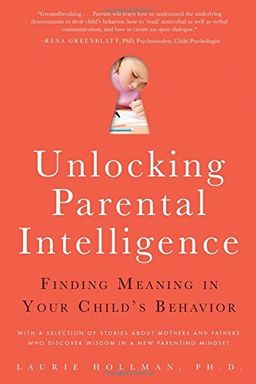
Unlocking Parental Intelligence: Finding Meaning in Behavior
Why do children do what they do—and why do parents often feel lost trying to understand them? In Unlocking Parental Intelligence, psychoanalyst Laurie Hollman, PhD, argues that behind every behavior is a story waiting to be understood. She contends that effective parenting doesn’t begin with discipline or punishment—it begins with curiosity, empathy, and reflection. When you learn to ask why instead of reacting to the what, you unlock what Hollman calls Parental Intelligence: the ability to interpret your child’s behavior as meaningful communication rather than mere defiance or chaos.
Hollman’s core argument is both psychological and practical. Parenting, she writes, is not instinct alone but a discipline that requires self-awareness. She invites parents to stop viewing misbehavior as mistakes to correct and start viewing them as clues to be decoded. Through her clinical experiences, she shows how every tantrum, defiance, or withdrawal from a child mirrors an emotional reality that, once understood, transforms relationships. In essence, the book is about replacing reaction with reflection and fear with empathy.
The Five Steps that Transform Parenting
The heart of Hollman’s method is a five-step process to cultivate Parental Intelligence: Stepping Back to pause before reacting, Self-Reflecting to understand your background and triggers, Understanding Your Child’s Mind to empathize with their perspective, Understanding Your Child’s Development to see what’s age-appropriate, and Problem Solving together to co-create solutions. These steps unfold gradually but prove transformative once internalized. They help parents move from chaos to clarity and from punishment to partnership.
For example, Hollman describes Clive’s father, who learns to look beyond his son throwing shoes in frustration to uncover an earlier humiliation at school. By stepping back and asking gentle questions rather than enforcing immediate consequences, he discovers that the child’s anger masked shame. Similarly, Olivia’s mother keeps calm when her teenage daughter shows up with a lip piercing, holding back judgment to create a space for authentic conversation. These stories reflect Hollman’s conviction that when parents hold both themselves and their children in mind, understanding blooms. Behavior transforms from chaos into communication.
Parenting as Emotional Literacy
In Hollman’s world, parenting is a practice of emotional literacy. She believes every child’s actions mirror an internal state of mind—anger, confusion, curiosity, or pain. When parents learn to interpret those signals, they teach their children empathy by example. Hollman draws on psychoanalytic theory, developmental psychology, and decades of therapy sessions to show that such emotional attunement is not esoteric; it’s teachable. Learning to think before reacting, to see multiple possible meanings behind a behavior, and to discern between physical and psychological reality nurtures a calm home life.
In this approach, parents also must understand themselves. Hollman emphasizes that our upbringing casts a shadow on how we parent. Unresolved childhood conflicts or generational habits can surface when we face difficult moments. A parent who was strictly punished as a child may overreact to defiance; one who grew up unseen may struggle with empathy. By self-reflecting—asking “Why did I react that way?”—parents liberate themselves to understand both their own and their child’s inner worlds.
Why Parental Intelligence Matters
The stakes are high. Hollman observes that reactive parenting often fractures trust, instills fear, and drives children toward avoidance rather than insight. In contrast, parental intelligence weaves safety into relationships. It fosters children’s resilience, self-confidence, and communication skills—qualities that last well beyond childhood. When a parent listens with empathy, their children learn to do the same, cascading emotional intelligence across generations.
Ultimately, Hollman envisions a cultural shift: a world where parents raise children who know how to think about others’ minds as well as their own. It’s not just a handbook for family life—it’s a philosophy for better relationships, communities, and future leaders. Hollman’s thesis echoes thinkers like Daniel Siegel (The Whole-Brain Child) and Mary Ainsworth’s attachment theory, aligning emotional understanding with secure bonding. Reading the book feels like an intimate act of slowing down—becoming present enough to witness what your child’s behavior truly means.
Core Message
Parenting is not about control; it’s about comprehension. Every moment of conflict is an invitation—if you step back, reflect, and listen with empathy, you and your child can grow together.
In short, Unlocking Parental Intelligence reframes family life around meaning-making. It helps you move from reacting to understanding, from fear to empathy, and from isolation to deep, generational connection.