
Idea 1
Unlocking Creativity: Rethinking the Mindsets That Hold Us Back
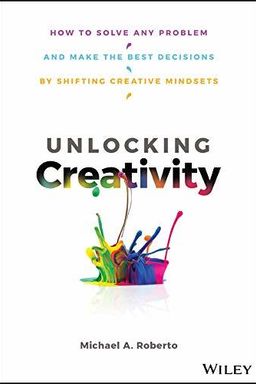
Have you ever wondered why so many organizations talk endlessly about innovation but seem to kill creative ideas before they take off? In Unlocking Creativity, Michael A. Roberto argues that the greatest threat to creativity isn’t a lack of talent or resources—it’s the collective mindset that shapes how organizations think, decide, and act. His central claim is that even brilliant teams can suffocate innovation when entrenched assumptions, rigid planning habits, and safe decision-making take hold.
Roberto contends that creativity isn’t something individuals are born with—it’s a capacity that flourishes (or dies) based on context. Instead of frantically recruiting “creative geniuses,” leaders should focus on removing the invisible mental and structural barriers that inhibit original thought. Using hundreds of vivid stories—from Manet’s rejected paintings to Pixar’s team meetings—he reveals how six pervasive organizational mindsets choke creative energy and what leaders can do to reverse them.
Escaping the Resistance to New Ideas
The book opens with a historical allegory that feels strikingly modern: Édouard Manet’s 1863 painting Le Bain was rejected by the establishment as “shameful” and “crude.” Today, companies mirror those Parisian jurors who dismissed the Impressionists—they reject new ideas that defy convention. Roberto shows that this pattern repeats across domains: scientists like Alfred Wegener (continental drift), Barry Marshall (ulcers and bacteria), and entrepreneurs like Airbnb’s founders all faced elite experts who scoffed at disruptive concepts.
Why? Experts, Roberto explains, fall prey to what Victor Ottati calls the “earned dogmatism effect”—the more expertise we gain, the more certain and close-minded we become. Familiarity gives us permission to stop questioning our assumptions. Drawing on Thomas Kuhn’s ideas about paradigm shifts, Roberto reminds us that revolutions in art, science, and business almost always come from outsiders who aren’t saddled with “the rules of the game.”
The Real Problem: The Situation, Not the People
One of Roberto’s boldest arguments is that corporate leaders misdiagnose their creativity crisis—they think they have a people problem, when they actually have a context problem. Most firms already employ talented, curious individuals, but their environment punishes risk-taking, rewards conformity, and prizes predictability over discovery. The author cites a famous psychology experiment: seminary students, even those preparing a talk on the Good Samaritan, ignored a suffering man in their path when they were told to hurry. The situation—not their morals—determined their behavior. Similarly, organizations blame individuals for lacking innovation while structuring work and rewards to discourage it.
This insight reframes creativity as a systemic leadership endeavor rather than an individual trait. When leaders obsess over forecasts, benchmarks, or performance control (themes explored in later chapters), they inadvertently quash experimentation. What teams need instead is psychological safety, permission to fail, and structures designed for curiosity rather than compliance.
The Six Mindsets Blocking Creativity
To help leaders recognize the traps that strangle innovation, Roberto introduces six mental models that dominate most organizations:
- The Linear Mindset – a belief that creativity follows tidy stages of plan–analyze–execute, when in reality, breakthroughs emerge through nonlinear trial and error.
- The Benchmarking Mindset – the tendency to imitate competitors’ best practices rather than forging new paths.
- The Prediction Mindset – obsession with forecasts and certainty, which discourages bold experimentation.
- The Structural Mindset – faith in reorganizations and hierarchy changes as a shortcut to innovation.
- The Focus Mindset – belief that creativity requires obsessive concentration, ignoring the importance of psychological distance and incubation.
- The Naysayer Mindset – misuse of critical thinking and devil’s advocacy that turns healthy dissent into idea killing.
Each mindset represents a subtle distortion of a good thing. Planning, benchmarking, focus, and critique all have legitimate value—but when embraced dogmatically, they suppress originality and risk-taking. Across the book’s case studies—from Google’s design sprints and Pixar’s “Braintrust” meetings to Trader Joe’s and Intuit’s design revolutions—Roberto shows how shifting these mindsets unleashes curiosity, iterative learning, and responsible experimentation.