
Idea 1
Designing a Life of Mastery
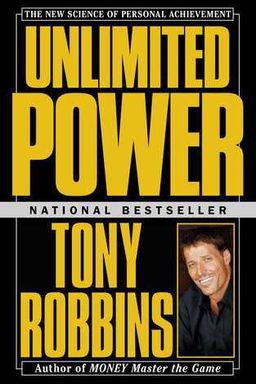
How can you systematically master success rather than hope for it? In their collaborative work, Tony Robbins and Joseph McClendon III argue that extraordinary results stem from reproducible internal and external strategies—not luck or talent. They present a practical, neuroscience-driven framework to take control of emotions, behaviors, and outcomes. Across its sections, the book develops a cohesive system: define precisely what you want, shape your beliefs and physiology, model expert patterns, manage your state, and communicate with precision so you build influence ethically.
At its core lies a conviction: anyone can learn the mechanical syntax of success. You don’t need superior genetics, networks, or timing; you need clarity of outcome, massive action, constant feedback, adaptive strategy, and consistent physiology. Robbins calls this the Ultimate Success Formula, and McClendon expands it through Neuro-Linguistic Programming (NLP) principles—techniques for modeling excellence, reframing beliefs, and mastering representational systems. Together they turn vague motivation into a process you can teach, assess, and replicate.
The Human Operating System
The authors explain that your brain and body form an integrated programming system. Beliefs act as scripts; physiology provides energy input; and mental imagery and language create the syntax that determines your experience. When you change any layer—belief, representation, or physical movement—you alter the whole cascade. This approach echoes the premise of NLP’s founders, Bandler and Grinder, that psychology can be structured like a language: change the grammar, and you change behavior.
To demonstrate, Robbins uses vivid stories: Arthur Ashe focusing on controllable factors rather than racial barriers; Robert Townsend funding his film via credit cards when Hollywood refused; and Joseph McClendon learning to model Robbins’ confidence to become a leading trainer. Their examples show the same loop—clarity, action, feedback, flexibility—applied across sports, business, and healing.
State and Strategy
Every decision you make emerges from your current state—your emotional and physical condition. The book teaches practical methods to shift states instantly: alter posture, breathing, and imagery to move from fear to power. State control becomes the doorway to strategy, because only when you’re resourceful can you access high-quality decisions. Robbins’s firewalk exercise demonstrates this principle: participants reframe fear as excitement and use physiological cues to override pain—a tangible metaphor for turning obstacles into propulsion.
Modeling, Syntax, and Feedback
Learning accelerates when you copy what already works. Modeling means observing beliefs, mental syntax, and physiology of experts and recreating them precisely. Instead of mimicry, you adopt the underlying order of internal signals. Syntax—the order of sensory and motor steps—explains why the same ingredients yield different outcomes. By eliciting and matching these strategies through observation and questioning, you move from intuition to repeatable knowledge. For professionals in teaching, therapy, or leadership, this procedure translates mastery into curriculum.
Communication and Influence as Leverage
The later chapters extend the system outward: once you control your inner code, you can shape interactions with others. Rapport and mirroring build trust; elicitation and meta-language patterns reveal decision filters; reframing dissolves resistance; and precision questioning transforms vague complaints into actionable steps. Together these tools create influence—used ethically, they foster empathy and leadership; used manipulatively, they produce conflict. Robbins insists that the same mechanics advertisers use to install desire can be redeployed for social benefit, as seen in public campaigns from Live Aid to Ebony magazine’s cultural empowerment.
Energy and Health Foundations
Physiology completes the framework. Breath patterns, posture, hydration, and food combining become the biochemical base supporting your mental clarity. Robbins’s health sections argue that cellular energy determines emotional energy: oxygen, movement, and water-rich foods cleanse and fuel your system. Physical mastery anchors psychological mastery—the body isn’t secondary but the vehicle for sustained high performance.
From Technique to Responsibility
Ultimately, the book isn’t about tricks; it’s about ownership. Whether installing empowering beliefs, designing precise outcomes, or anchoring confident states, the goal is agency. You learn to run your brain instead of letting external events program it. Leadership emerges naturally when influence is guided by ethics—when persuasion serves education, equality, and opportunity. The challenge to readers is explicit: use these neurological tools not just to achieve more, but to uplift others by teaching them the pattern. In this sense, the text evolves beyond self-help into cultural engineering, proposing that human systems—just like individuals—can be reprogrammed for excellence.
Key thread
Success, in Robbins and McClendon’s vision, is a learnable syntax of body, belief, and behavior—internal mastery that radiates outward into influence, health, and leadership.
When you read this book as a system, every technique—from firewalks to food combining—serves one aim: teaching you how to deliberately design your state, model excellence, communicate with precision, and live with sustained energy and purpose.