
Idea 1
The Power of Connection and Common Good
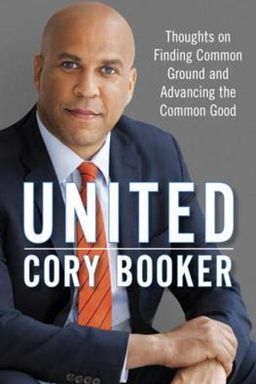
What does it really mean to live in a connected society—one where the common good matters as much as personal success? In United: Thoughts on Finding Common Ground and Advancing the Common Good, Senator Cory Booker challenges you to reimagine your role in your community and country. He argues that our deepest national strength rests not in wealth or technological progress but in our compassion, empathy, and unity. Booker contends that the lines dividing Americans—race, class, and ideology—are weak compared to the powerful ties that could unite us, if only we reclaim our commitment to shared humanity.
Reconnecting to Empathy and Shared Responsibility
As Booker explains, he came to understand our national interdependence through his years in Newark, working alongside everyday citizens dealing with poverty, crime, and systemic injustice. These experiences convinced him that the biggest threat to our democracy isn’t conflict—it’s indifference. Quoting Alice Walker, he reminds you: “The most common way people give up their power is by thinking they don’t have any.” His book is therefore a call to rediscover personal agency, empathy, and moral courage in a country that too often rewards cynicism over compassion.
Through stories of his mentors—ordinary people like housing advocate Frank Hutchins, tenant leader Virginia Jones, and waitress Natasha Laurel—Booker illuminates how change emerges from compassion and steadfast faith in the common good. His argument touches something profoundly relevant: that every citizen can become an activist by choosing to care. Booker’s journey—from privileged beginnings to the realities of Newark’s streets—reveals a transformation rooted in listening, service, and self-reflection.
Why Connection Matters Now
Booker’s premise feels especially urgent in an era of division. He insists that America’s challenges—poverty, criminal injustice, environmental decay, racial inequity—stem from disconnection: our failure to see that all prosperity and downfall are intertwined. He cites Martin Luther King Jr.’s powerful insight that “injustice anywhere is a threat to justice everywhere.” You can’t wall yourself off from another’s suffering without diminishing your own humanity. This realization transforms compassion from sentiment into civic duty. In Booker’s worldview, empathy isn’t optional—it’s patriotic.
The book reads like a moral manifesto as much as a memoir. Booker invites you to open your eyes to systems that exploit workers like Natasha, punish citizens through mass incarceration, and poison communities through environmental irresponsibility. But he balances outrage with hope, showing how the same systems can be redeemed when ordinary people act with courage and heart. His stories demonstrate that change doesn’t demand heroics, only consistency—the choice to help where you stand and use your influence for others.
A New Vision of Citizenship
Ultimately, Booker’s message is both spiritual and practical. He believes America’s founding ideals—liberty, equality, and justice—were designed for collective upkeep, not passive admiration. A nation that thrives must see itself as one organism, “an inescapable network of mutuality,” as King wrote. Booker’s vivid anecdotes—saving a man from a fire, fasting at Garden Spires, grieving a murdered teenager—illustrate the sacred urgency of standing with others. Each story reminds you that compassion isn’t weakness; it’s power transmuted into action.
By the end of United, you’ll see that the book isn’t only about policy or politics. It’s a moral reflection on what America can be when its people recognize that dignity doesn’t live in isolation but in community. The task Booker sets before you is simple yet revolutionary: to stop waiting for leaders and become one—for your neighborhood, your nation, and the future. The true measure of citizenship, he insists, is whether you’re willing to act on the belief that we belong to each other.