
Idea 1
The Erosion of Press Freedom from Within
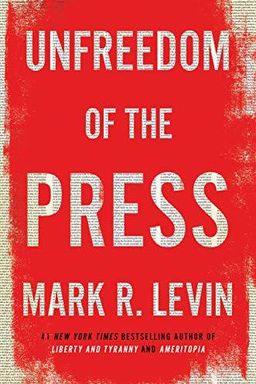
Have you ever wondered why so many Americans no longer trust what they read or hear in the news? In Unfreedom of the Press, Mark R. Levin argues that journalism in the United States has strayed so far from its original mission that it no longer functions as a free press. He contends that the greatest threat to press freedom today does not come from government censorship, autocratic power, or even verbal attacks from political leaders—it comes from the press itself. Modern American media, he argues, have become partisan activists, more devoted to ideological narratives than to factual, objective reporting.
Levin, a constitutional scholar and broadcaster, builds his case by tracing the dramatic transformation of the press from the revolutionary pamphleteers who stirred America’s founding to the politically aligned party-press of the 19th century, to the self-proclaimed objective professionals of the 20th century, and finally to the hyper-partisan, progressive, and self-reinforcing media institutions of the 21st century. He sees this evolution as a steady decline: while the early press championed liberty, today’s press, he asserts, has aligned itself with the ideologies of collectivism and progressivism, frequently echoing the positions of the Democratic Party.
From Watchdog to Advocate
Instead of serving as an independent watchdog of government power, today’s major newsrooms act as amplifiers for one side of the political spectrum. Levin doesn’t argue that journalism should be politically sterile—indeed, early American newspapers were often openly partisan—but he does insist that transparency and honesty about bias are essential. Now, however, the media claim to embody professional objectivity while simultaneously advancing a specific ideological program. This, Levin argues, is a betrayal not just of journalistic ethics but of the republic’s very foundation.
A History Rewritten by the Press
To ground his critique, Levin takes readers through key historical moments. He begins with the “patriot press” of the American Revolution—pamphleteers like Benjamin Edes and Thomas Paine—who used their printing presses to rally the colonists toward liberty. He contrasts them with the modern “activist press,” which no longer fights for freedom but for ideology. He follows how a once dynamic and pluralistic press evolved into what he calls a “Democratic Party-Press,” tracing its progressive roots to early 20th-century intellectuals like John Dewey and Walter Lippmann, who saw journalism not as a reflection of reality but as an instrument for social reform.
Along the way, Levin revisits forgotten episodes where journalists abandoned their duty of truth to serve political agendas—from The New York Times’ willful suppression of the Holocaust and Stalin’s genocidal famine in Ukraine, to the uncritical promotion of Woodrow Wilson’s and Franklin Roosevelt’s propaganda machines. These examples, in Levin’s view, demonstrate a recurring pattern: the press weakening itself by becoming a partner of power rather than its opponent.
The Pseudo-Press and the Age of Propaganda
Levin draws on thinkers such as Edward Bernays and Daniel Boorstin to reveal how modern journalism has become a producer of “pseudo-events” — manufactured spectacles that simulate reality rather than just report it. Whether through anonymous leaks, sensationalized stories, or the constant repetition of partisan talking points, he argues that today’s media often shape public perception rather than inform it. The so-called “Russia collusion” narrative surrounding Donald Trump serves, in Levin’s account, as one of the most striking recent examples of this phenomenon: a politically motivated story that devoured years of public attention, only to collapse under its own lack of evidence.
Why This Matters Now
For Levin, the consequences extend far beyond partisan politics. When the public loses faith in the press’s objectivity, civic trust itself collapses. The press, he reminds us, was intended to be the guardian of truth and a check on power, not an extension of political movements. He closes with a warning: unless journalists reclaim their foundational purpose—to inform the people rather than indoctrinate them—their credibility will continue to erode, and the republic itself may suffer.
In the chapters that follow, Levin explores the press’s transformation in greater depth: the founding era’s revolutionary journalism, the rise of the modern party-press, the myth of professional objectivity, the press’s historical complicity in censorship, and the self-destruction that comes with turning news into ideology. Whether you agree with him or not, Levin’s argument calls on every reader to question not just what the media tells us, but what it deliberately leaves unsaid.