
Idea 1
Building a Business Without Filters or Fear
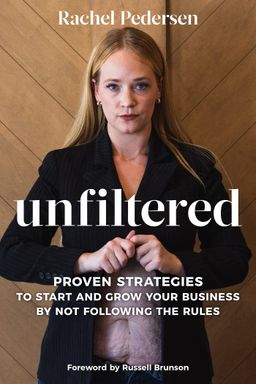
Have you ever wondered what it really takes to build a thriving business while staying true to who you are—messy life, real emotions, family obligations, and all? In Unfiltered: Proven Strategies to Start and Grow Your Business by Not Following the Rules, Rachel Pedersen argues that entrepreneurship doesn’t require perfection, pedigree, or relentless hustle. Instead, success comes from courageously removing the filters—being transparent about failures, defining your own version of success, and designing both business and life with intention and boundaries.
Pedersen contends that authenticity is an entrepreneur’s greatest asset. She believes that the polished “highlight reel” culture of business advice hides the messy middle that actually builds sustainable success. Through her own story—from single mom on food stamps to CEO of multimillion-dollar companies—she demonstrates that running a business is as much about mental strength, emotional honesty, and designing a life blueprint as it is about strategy or profit margins.
Unfiltered Beginnings: Why Vulnerability Wins
Pedersen opens the book with her first major failure—an unsuccessful crowdfunding campaign for a fried chicken restaurant. She had shared her big dream publicly, only to watch it collapse in real time. Instead of hiding the shame, she reframed that painful experience as a foundational moment: failure, when faced unfiltered, teaches resilience, humility, and adaptability. This story anchors her philosophy that transparency isn’t weakness—it’s the first step toward building authentic success.
She writes, “Every mistake becomes a lesson along the way.” Once she stopped pretending perfection, opportunities came from unexpected places—clients, mentors, partners, and even viral success on social media. The lesson: the world rewards the brave, not the flawless.
Defining Your Why and Designing by Intention
Pedersen continually returns to one essential question: “Why are you starting a business?” She argues that clarity around your personal motivation—the “why”—is your anchor when everything else feels chaotic. Whether your motivation is freedom, family time, or creative autonomy, understanding it helps you make decisions aligned with your values. She encourages journaling to uncover this deeper purpose and using a vision board to visualize the life and business you want to create. Drawing inspiration from mentors like Oprah Winfrey and Shonda Rhimes, she shows how visualization and intention create focus even amid uncertainty.
Rejecting Hustle Culture
One of the strongest threads in the book is Pedersen’s rejection of toxic “hustle” culture—the idea that entrepreneurs must grind 100 hours a week or sacrifice sleep, health, and relationships for success. She argues that true growth flows from hard work done with boundaries. She explains the difference between hard work and hustle: hard work is purposeful and focused, while hustle is fear-driven and frantic. Through tools like the “Power 10” (picking ten daily tasks divided among priorities, commitments, and one money-generating activity), she helps readers replace chaos with structure. (Similar to Cal Newport’s concept of “deep work,” Pedersen promotes intentional time blocks over constant reaction.)
Authenticity and Social Media Strategy
Pedersen’s viral post about her modest wedding ring—a story that reached 11 million people—epitomizes her “unfiltered” philosophy. That post succeeded not because it was slick but because it was real. She uses this example to explain how authenticity fuels social media growth. Her formula: be the producer, not the consumer. Post consistently, study patterns across platforms, and connect vulnerably with your audience. Success in marketing comes not from trying to look like everyone else but from speaking your truth and serving your “people” first.
Pedersen’s approach resonates with the organic style advocated by authors like Seth Godin and Simon Sinek—create trust, not clickbait.
Boundaries, Big Rocks, and Business-by-Design
Midway through the book, Pedersen introduces her cornerstone frameworks: Business-by-Design and the Big Rocks Theory. She teaches that the only sustainable business is one designed intentionally around your life, not the other way around. Drawing on Stephen Covey’s “Big Rocks” analogy, she challenges readers to prioritize family, health, and self-care—the large stones—before filling life with smaller pebbles like emails or client requests. Without doing so, Parkinson’s law ensures work expands endlessly to fill all available time. This philosophy transforms burnout into balance, reframing productivity as harmony between work and life.
Choosing Authenticity Over Professionalism
In later chapters, Pedersen confronts how “professionalism” can stifle creativity. Drawing from her TEDx talk “Professionalism Is Destroying Creativity,” she recounts how, early in her career, she suppressed her exciting personality—swapping glitter for blazers—in an attempt to fit corporate expectations. The result was burnout and boredom. Rediscovering her authentic self through Reese Witherspoon’s character in Legally Blonde became a turning point. She argues that success is not earned by blending in, but by embracing all the colorful, quirky parts of who you are. You’ll attract clients not in spite of who you are, but because of who you are.
Mentorship, Support, and Continuous Growth
Pedersen’s rise is rooted in relationships. She honors mentors like Russell Brunson and Jay Abraham and recounts generous supporters such as Jeannie and John Buttolph—people who believed in her long before she did. She emphasizes that mentorship doesn’t always mean paid coaching; it can begin with free learning through books, podcasts, and YouTube talks. A good mentor, she notes, is like a GPS you trust but still drive yourself. You must do the work while learning from their direction. She also introduces the idea of the “support system”—your tribe of peers, partners, and friends who keep you balanced when challenges hit.
Persistence Through Difficulty
Pedersen’s tone throughout is deeply human—she acknowledges depression, fear, imposter syndrome, and exhaustion as part of every entrepreneur’s experience. Yet she reframes obstacles as fuel for growth. Every failure—whether a lost client or bad mentor—is an opportunity for learning and self-trust. Her approach echoes Phil Knight’s reflections in Shoe Dog: business success emerges not from avoiding problems but from persisting through them with character and creativity.
Living and Working Unfiltered
In the end, Unfiltered is not just a business book—it’s a call to authenticity. It reminds you that entrepreneurship is never neat. You’ll cry, laugh, fail publicly, and rise again. But if you build your business from your values, manage boundaries, celebrate imperfect progress, and dare to show your real self, success will be inevitable. Pedersen’s message is clear: take off the filters, trust your gut, and design a business that supports the life you actually want—not the one others expect you to perform.