
Idea 1
The Hidden Mind of Justice
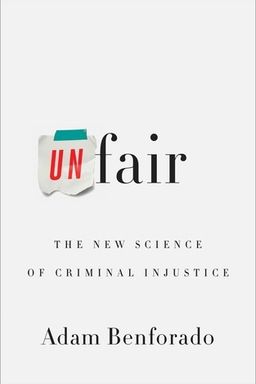
What if the legal system’s mistakes aren’t the result of corruption or bad faith, but of human psychology itself? In Unfair: The New Science of Criminal Injustice, Adam Benforado argues that the core dysfunctions of modern justice—wrongful convictions, inequitable punishment, prosecutorial misconduct, and harsh prison practices—stem from predictable cognitive and emotional biases that warp perception, memory, and moral reasoning. The book’s central claim is startling: law assumes rational actors, but people—including judges, jurors, police, and prisoners—are emotional creatures shaped by instincts, identity, and context.
From Bias to Behavior: The Architecture of Misjudgment
Benforado begins with everyday catastrophe—the death of journalist David Rosenbaum after being misidentified as merely drunk—to show how a single label can alter perception and kill. At every level, from first responders to prosecutors and jurors, psychological shortcuts decide outcomes. Labels attract confirmation bias; disgust triggers moral distancing; intuitive judgments trump analysis. These forces animate much of criminal procedure. Whether diagnosing guilt in interrogation, evaluating remorse in sentencing, or reading fear on a suspect’s face, professionals rely on mental models that their training rarely interrogates.
You learn that confessions—often treated as truth—can be products of coercion and compliance. Eyewitness memories, regarded as photographic, are in fact fragile reconstructions easily distorted by feedback and repetition. Technologies such as polygraphs and fMRI promise objectivity yet import their own illusions, magnifying jurors’ faith in neural images. Even judges and prosecutors, supposedly impartial, are shaped by hunger, fatigue, social pressure, and moral rationalization. The book maps a vast system of procedural formality built on faulty intuitions about the human mind.
Emotion’s Empire: Why Punishment Feels Right
Benforado reaches deeper into moral psychology. Retribution—the desire for payback—arises from disgust and outrage, not evidence-based reasoning. Studies by Haidt and Carlsmith show that people often punish even harmless acts when they offend emotion-bound taboos. This explains why Americans cling to harsh penalties, three-strikes rules, and solitary confinement even when science condemns their effectiveness. Punishment provides moral satisfaction, a ritual restoration of order, much like medieval trials of animals or symbolic revenge ceremonies. Emotion trumps utility.
The Lessons Across Levels of the System
Across chapters, Benforado pairs psychology with law to explore specific distortions: eyewitness mistaken identifications (John Jerome White); false confessions (Juan Rivera); prosecutorial rule-breaking (John Thompson). He reveals the influence of perspective bias in video evidence, the moral minimization that permits solitary confinement, and the neuroscientific seduction that skews courtroom credibility. Each episode incarnates the same pattern: humans act first through stories and emotion, then justify those acts with rational-sounding rules.
Beyond Retribution: Building Evidence-Based Fairness
Benforado is not a nihilist. He identifies structural remedies drawn from cognitive science and international practice: blind procedures, empathy training, multi-angle recordings, double-blind lineups, transparent prosecutorial checklists, and neutral interrogation models. He points to Norway’s Halden prison, which emphasizes rehabilitation and normalcy, and Hawaii’s HOPE probation model, which substitutes swift, certain penalties for long sentences. These examples illustrate how an empirically informed justice system can replace intuition with tested knowledge.
“We do not see the world as it is; we see it as we are.” Benforado’s research turns this truth into a challenge: design laws that account for human bias instead of pretending it doesn’t exist.
Ultimately, Unfair asks you to imagine justice not as procedure but as psychology. If we build systems that mirror our flaws, we will keep producing injustice even when following the rules. Reform begins by facing that the mind—not morality—decides most verdicts. Understanding cognitive bias, empathic limits, and emotional architecture is therefore more than academic: it’s the foundation of making law humane, rational, and truly fair.