
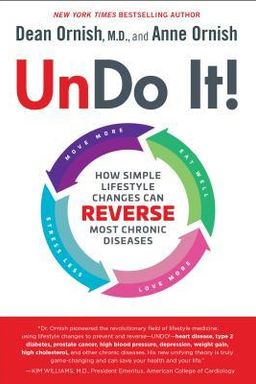
Undo It! cover

Undo It!

by Dean Ornish

Undo It! reveals the groundbreaking power of lifestyle changes to not only prevent but reverse chronic diseases. Backed by scientific research, this guide provides actionable steps in diet, exercise, stress management, and building social connections to transform health and well-being.

Lifestyle as Medicine

Imagine your daily choices—what you eat, how you move, how you manage stress, and how you connect with others—acting not merely as habits but as prescriptions that can reverse disease. In their groundbreaking work on Lifestyle Medicine, Dean and Anne Ornish argue that most chronic illnesses share common underlying biology, and therefore respond to the same simple, comprehensive lifestyle changes. The book’s thesis is revolutionary yet practical: you have far more control over your health and even your aging process than conventional medicine often suggests.

At its heart lies the Ornish four-part lifestyle program—eat well, move more, stress less, and love more. Each pillar works synergistically to influence gene expression, inflammation, and hormonal balance. In doing so, the program does not just prevent disease; it can measurably reverse conditions like coronary artery disease, type 2 diabetes, early prostate cancer, hypertension, and depression. Unlike most short-lived diets or fitness fads, this approach is backed by decades of peer-reviewed studies, national insurance approvals, and thousands of individual transformations.

From Fragmented Treatments to Unified Causes

Ornish reframes medicine around upstream causes rather than downstream symptoms. Instead of treating diabetes, cancer, and dementia as isolated problems, the program views them as products of shared disturbances—chronic inflammation, oxidative stress, sympathetic overdrive, and gene dysregulation. This unified perspective aligns with major epidemiological studies, including EPIC and Harvard cohorts showing that four simple healthy habits—exercise, plant-rich diet, nonsmoking, and normal weight—reduce chronic disease risk by nearly 80% and extend lifespan by more than a decade.

This holistic viewpoint challenges the hype of overly personalized diets or exotic gene-based interventions. Ornish’s data show that while personalization can fine-tune your plan, the essential lifestyle pattern remains universal: it heals by addressing the mechanisms most diseases share. (Note: This parallels Michael Greger’s and Caldwell Esselstyn’s findings on plant-based medicine, but Ornish’s program integrates emotional and spiritual dimensions more deeply.)

Reversing Aging — Genes, Telomeres, and Biology of Change

The book’s most empowering message is molecular: lifestyle literally changes your genes. Within three months, Ornish’s studies found downregulation of over 500 genes related to inflammation and cancer and upregulation of protective ones. In collaboration with Nobel laureate Dr. Elizabeth Blackburn, they documented telomerase increases and telomere lengthening, signaling reversal of cellular aging. Diet, exercise, meditation, and social support thus operate as biochemical medicine—turning destructive patterns off and rejuvenation on. You are not a prisoner of your DNA; your daily actions write new instructions for your cells.

Love, Connection, and Inner Balance

The Ornishes place the same scientific weight on emotions as they do on nutrition. Love and connection modulate inflammation and neural activity just as powerfully as drugs. Loneliness, in contrast, upregulates over a thousand pro-inflammatory genes. By creating structured group sessions and practicing compassionate communication, participants heal isolation and find emotional safety. This is not peripheral—it’s a physiological intervention. Research cited in the book shows improved survival among cancer patients with psychosocial support and even better cardiac outcomes for those who feel connected.

The philosophical frame deepens this idea. When you recognize your unity with others (“horizontal intimacy”) and with your inner self (“vertical intimacy”), homeostasis—the body’s natural equilibrium—returns. The book evokes Swami Satchidananda’s idea of being an “Undo,” emphasizing peace through letting go of separateness and striving. Health, in this view, is not created; it’s revealed by removing barriers such as fear, isolation, and stress.

Practical Application and Measurable Impact

This philosophy translates into a highly structured clinical practice reimbursed by Medicare under Intensive Cardiac Rehabilitation. Participants in nine-week programs experience tangible gains: ejection fractions improve, stents are avoided, and costs drop by thousands per patient. About 94% complete the program and most maintain habits beyond a year—proof of sustainability. Anne Ornish’s digital platform “Empower” extends reach through virtual modules, showing how technology can scale connection.

A Spiritual Yet Scientific Vision of Healing

Ultimately, this book unites rigorous data and timeless wisdom. Einstein’s reminder that the “delusion of separateness” is humanity’s prison appears alongside randomized trials and gene assays. The Ornish program becomes both clinical method and ethical practice: it heals bodies, softens hearts, and widens compassion. You discover that medicine is not only about surviving longer—it’s about living with greater love, meaning, and balance. This is the promise and practice of Lifestyle Medicine: reversing disease by restoring wholeness.


Eating for Healing

Your fork is a powerful instrument of medicine. The Ornish nutritional framework centers on whole, plant-based foods that naturally lower inflammation, cholesterol, and oxidative stress. This is not a rigid diet; it’s a pattern anchored in abundance—fruits, vegetables, legumes, grains, and spices—rather than deprivation. Over time, such eating patterns change metabolic and genetic pathways, supporting reversal of chronic illness.

What to Eat and What to Avoid

Include colorful plants, soy, whole grains, nuts, and spices like turmeric or ginger. Minimize animal protein, refined sugar, and added oils. For heart disease reversal, keep fat around 10–15% of calories, focus on omega-3s from flax and chia, and maintain high fiber (25–40g daily). (Note: This approach mirrors John McDougall’s and Esselstyn’s nutrient philosophy but with more culinary flexibility.)

Scientific Rationale

Animal-based diets elevate TOR and IGF‑1 signaling—pathways associated with cancer and accelerated aging. By contrast, plant-rich diets suppress these and activate protective genes. Sirtuins, the body’s longevity enzymes, thrive when meals are low in advanced glycation end products (AGEs)—typically produced by high-heat animal cooking. Thus, every bite recalibrates molecular balance.

From the Ornish Kitchen

Anne Ornish’s Ornish Kitchen teaches how to turn science into pleasure: oil-free sauces like Smoky Chipotle made with roasted peppers and prunes, tofu-based vegan mayo, and colorful curries. The goal is sustainability—you eat because it tastes good and makes you feel better. Convenience strategies (prepped plant meals, frozen veggies, pantry staples) bridge the learning curve. This culinary work transforms medicine into everyday joy.

Key insight

Eating plants is not a niche trend; it’s a biochemical intervention proven to reverse disease, extend life, and make you feel better quickly.

Case histories—from President Bill Clinton’s transformation to athletes in The Game Changers film—illustrate how vitality and even sexual health improve within weeks of switching to plants. You discover that food is pleasure, connection, and medicine in one plate.


Moving with Purpose

Movement is a physiological reset button. Ornish emphasizes exercise as one of the fastest and most reliable ways to boost mood, cognition, and longevity. You don’t need extreme intensity; modest consistency—walking, cycling, stretching—produces disproportionate gains. The book dismantles the notion that only strenuous workouts matter; healing begins as soon as you move more than before.

How Little Adds Up

Even 20–30 minutes of walking daily cuts early death risk by 20–30%. Runners in longitudinal studies lived three years longer, even with five-minute daily runs. Transitioning from sedentary habits to gentle activity triggers a cascade—better circulation, reduced inflammation, and longer telomeres. This means exercise actually slows biological aging.

Benefits Beyond the Body

Exercise stimulates neurogenesis in the hippocampus and raises brain-derived neurotrophic factor (BDNF), improving memory and mood. It lifts depression and treats anxiety as effectively as medication in many trials. Physical activity also magnifies the benefits of other program pillars by improving blood flow, insulin sensitivity, and sleep.

Practical Integration

  • Engage in brisk walking or gentle cycling 30 minutes most days.
  • Incorporate resistance training two to three times weekly using elastic bands or light weights.
  • Interrupt sitting with two-minute walk breaks every half hour to restore vascular and brain function.

(Note: The Ornishes advise working with clinicians for personalized heart‑rate goals if you have chronic conditions.) You learn that movement nourishes not only your muscles and heart but your brain’s chemistry and your sense of vitality.


Managing Stress and Rewiring the Brain

Stress not only affects how you feel—it reshapes how your genes behave. Chronic stress keeps the body locked in sympathetic (fight-or-flight) overactivity, leading to inflammation and disease. Ornish’s stress management pillar teaches practical tools—yoga, meditation, breathing, imagery—to reverse this pattern and rewire your physiological response.

Biological Effects

Harvard imaging studies show that chronic stress activates the amygdala and triggers inflammatory responses from bone marrow to arteries, explaining heart attack links. By contrast, meditation quiets the amygdala, strengthens vagal tone, and downregulates inflammatory genes. Compassionate practices even alter gene expression related to immune health.

Practice and Consistency

Start small—five minutes of slow breathing or brief meditation—and build up. Data show a dose-response: the more frequent the practice, the stronger the physiologic gains. Over time, stress hormones drop, telomeres lengthen, and empathy grows. You don’t need a monastery; you need regular attention to calm.

Simple Tools that Work

  • Breathing techniques: abdominal or alternate-nostril breathing for immediate relaxation.
  • Meditation styles: focused breath, mantra repetition, gazing, or mindful walking.
  • Guided imagery and gentle yoga sequences for sleep and body-mind repair.

Core takeaway

You can retrain your nervous system to interpret life’s challenges with less threat and more calm—and those shifts directly influence your biology.

Stress doesn't only vanish with rest; it’s transformed through awareness. As you learn these techniques, your inner physiology begins to mirror equilibrium and health.


Healing Through Love and Connection

Love is not sentimental—it’s biochemical medicine. The book presents overwhelming evidence that human connection lowers cortisol, reduces inflammation, and even changes gene expression. One-third of people in industrialized nations report loneliness, making isolation as damaging as smoking or obesity. The remedy is deliberate intimacy.

The Biology of Being Seen

When you feel genuinely seen and valued, stress pathways deactivate. Social connection buffers amygdala reactivity and sharpens immune function. The South African greeting sawubona (“I see you”) captures the book’s essence: recognition heals. In contrast, isolation triggers over a thousand pro-inflammatory genes.

Group Support as Therapy

In Ornish programs, group support is as therapeutic as diet or exercise. Structured weekly meetings help people express emotions safely and listen empathetically. Studies in oncology show that supportive groups double survival for certain cancers. Ornish participants often maintain bonds for decades, creating lasting accountability networks.

Communication That Connects

The program teaches loving communication—speaking in feelings rather than judgments, listening with empathy, and sharing mutual vulnerability. Neuroscience confirms this: labeling feelings reduces amygdala activity and increases prefrontal control. A conversation change—"I feel worried" instead of "You never pay attention"—can literally alter your brain’s stress response.

Bottom line

You heal in relationship. Connection and communication are clinical tools—every hug, conversation, and act of empathy is a dose of wellness.

From sexual intimacy to pet companionship, each form of love acts as medicine. Love isn’t an optional emotion; it’s a survival mechanism—literally capable of reversing disease and extending life.


Motivation, Meaning, and Self-Acceptance

To live differently, you must also think differently about yourself. Sustainable change flows not from fear but from love and purpose. The Ornish model cultivates self-acceptance and meaningful motivation, helping you connect healthy choices with your deeper "why." When your habits express what matters most—family, creativity, vitality—they endure willingly.

Beginner’s Mind and Openness

Borrowing the Zen concept of Shoshin, Ornish encourages curiosity over perfection. Begin as if seeing health anew. Like photographer Garry Winogrand’s advice—always ask what falls outside the frame—this mindset expands your possibilities. It keeps change flexible and playful, not punitive.

Finding Your “Why”

Ask: Why do you want to live longer? Whether it’s to watch children grow or dance at a wedding, these emotional anchors make lifestyle commitments joyful rather than restrictive. Reframing “I can’t eat that” as “I choose not to, because I feel better when I don’t” turns deprivation into empowerment.

Self-Compassion Practices

Exercises include touching your heart, asking “Heart, how are you feeling?” and acknowledging emotions without judgment. You identify old shame patterns and consciously release them. Joseph Campbell’s hero’s journey metaphor frames transformation as a voluntary passage through difficulty toward rebirth—a process of claiming aliveness.

Love, not fear, drives endurance

As Anne Ornish says, it’s a “love-based program.” Feeling better becomes its own reward. That feedback loop—pleasure reinforcing health—sustains commitment far beyond fear of illness.

Real stories—like participants who stayed on the “Ornish Highway” for their grandchildren—illustrate how meaning turns change into a lifelong gift. The program’s psychology merges compassion, creativity, and courage so you live not just longer but more fully alive.


Living in Balance and Oneness

The book concludes with a spiritual synthesis: health arises from restoring balance and remembering your connection to everything. Disease grows from the illusion of separateness—from chasing status, wealth, or perfection outside yourself. Healing comes through “undoing,” letting go of these external pursuits and realizing the wholeness already present within and around you.

The Paradox of Striving

Constant striving destabilizes homeostasis—the body’s natural equilibrium. When you stop running after fulfillment, the balance returns naturally. Swami Satchidananda’s teaching, “I’m an Undo,” captures the essence: peace isn’t achieved by doing more, but by letting go.

Horizontal and Vertical Intimacy

Healing unfolds through two forms of connection—horizontal intimacy (relationships with others) and vertical intimacy (connection with your deeper Self or spiritual awareness). Together, they dissolve anger, fear, and separation. Compassion becomes spontaneous when unity is felt, not just believed.

The Social Ripple Effect

Social networks transmit health behaviors and emotions. Harvard’s longitudinal data show that obesity, smoking, and happiness spread through relationships. Language analysis of millions of tweets even predicts heart disease by tone, suggesting that collective emotional health affects physical outcomes. Your compassion extends medicine far beyond yourself.

Final reflection

Einstein wrote that separateness is an illusion and widening compassion is our task. The Ornish philosophy makes that cosmic idea concrete: each act of empathy restores physiological balance and global well-being.

You conclude the journey knowing health is not about adding missing pieces—it’s about rediscovering the wholeness that was there all along. Healing, in its deepest form, is remembering you are one.

Dig Deeper

Get personalized prompts to apply these lessons to your life and deepen your understanding.

Go Deeper

Get the Full Experience

Download Insight Books for AI-powered reflections, quizzes, and more.