
Idea 1
Understanding Artificial Intelligence as a Human Endeavor
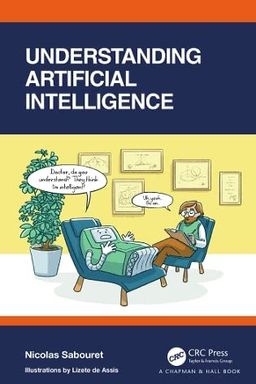
Can machines really think? That question has haunted philosophers, scientists, and ordinary people alike since the dawn of the computer age. In Understanding Artificial Intelligence, Nicolas Sabouret argues that artificial intelligence (AI) is not magic, nor is it about building machines that think like us—it’s about creating tools that help us think and act more effectively. He explains that AI is fundamentally a human invention: it encodes our logic, creativity, and limitations into machines that can perform specific tasks efficiently. What distinguishes AI from earlier tools isn’t autonomy—it’s adaptability.
Sabouret invites readers on a journey through history and methodology to unpack how these machines are built, how they ‘learn,’ and what that word actually means. Rather than succumbing to the myths perpetuated by Hollywood or alarmist media, he grounds AI in computer science and real-world examples—GPS systems, chess programs, self-driving cars, and even online recommendation engines.
Demystifying Intelligence Itself
At its core, the book argues that what we call ‘intelligence’—human or artificial—is not a single thing. We mistake AI’s computational speed and consistency for intelligence, but Sabouret shows that intelligence involves memory, learning, reasoning, and perception working together in organic, not mechanical, ways. He references historical foundations, such as Alan Turing’s theoretical models and his now-famous ‘Turing Test,’ emphasizing that even Turing never claimed machines truly understood—they simply performed well enough to appear intelligent under narrow conditions.
This distinction between simulation and understanding is central. Machines operate on algorithms: structured sequences of instructions written by humans. Intelligence, by contrast, emerges in living beings through experiences and context. In other words, computers obey syntax but lack semantics—they can apply rules but not ‘mean’ anything by them (a point echoing John Searle’s ‘Chinese Room’ thought experiment).
From Calculators to Cognitive Tools
Sabouret traces AI’s history from mechanical calculators and Charles Babbage’s analytical engine to modern neural networks. Computing began as a way to mechanize mathematics, but as programs became capable of writing new programs (machine learning), we entered a new stage: computers started to generate patterns based on data instead of explicit instruction. This transition, he explains, mirrors human learning in structure but not in substance—it’s optimization, not imagination.
He also situates AI’s modern success stories, like Google’s AlphaGo or deep learning image recognition, within this lineage. These aren’t signs of machines achieving consciousness, but of algorithms refined by enormous increases in data and processing power (via GPUs). The lesson is that every AI innovation still rests atop centuries-old computational logic.
The Three Pillars: Data, Algorithms, and Human Intent
Throughout the book, Sabouret returns to one simple triad: AI is driven by data (examples), algorithms (rules), and design (human choices). These elements define all AI—from rule-based systems of the 1950s to modern machine learning. If the data are biased, or the algorithm incomplete, the resulting ‘intelligence’ mirrors those flaws. The supposed magic of learning machines is, ultimately, a reflection of the human programmers who created them.
This perspective also clarifies why AI’s limitations are not failures but natural boundaries of its design. A chess-playing program can’t drive a car. A medical classifier can’t write poetry. Each model excels narrowly because it focuses computational power where human intuition falls short. That, Sabouret insists, is what makes AI valuable: its ability to complement human intelligence, not replace it.
Why This Matters to You
AI is changing the world: from the way we navigate cities (A* algorithms in GPS) to how we shop, diagnose disease, and interact with media. Yet misunderstanding it breeds both unwarranted fear and misplaced awe. Sabouret’s conversational tone reminds readers that AI’s future depends less on superintelligence and more on our ability to use ethical design, interpret outputs responsibly, and prevent misuse. Like the printing press or industrial machinery before it, AI is transformative not because it’s alive, but because it amplifies our reach.
“Artificial intelligence is simply a tool—one of the best we’ve ever invented—but it has no will of its own.”
By the book’s end, you realize that understanding AI means understanding ourselves. Every algorithm whispers back our assumptions about intelligence, efficiency, and control. Sabouret’s real message is less about machines and more about human agency: if AI appears intelligent, it’s because we’ve encoded a fragment of our own thinking into it. What we do with that fragment determines whether AI becomes a creative partner—or just another mirror reflecting our limitations.