
Idea 1
Collective Life and the Superorganism
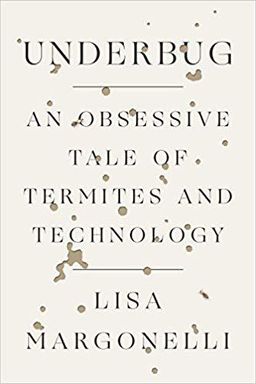
Why do scientists, poets, and engineers keep returning to termites? Because they represent one of nature’s most astonishing paradoxes—millions of small, seemingly mindless creatures acting together to build elaborate homes, maintain environments, and even display collective intelligence. In Underbug, Lisa Margonelli uses the termite as her lens to explore a question that is both biological and philosophical: how does intelligence emerge from collectives?
The book moves between termite biology, robotics, genomics, and ethics, showing how the idea of the superorganism—a colony functioning as a single body—became both a scientific tool and a cultural metaphor. From Eugène Marais’s mystical “soul of the white ant” to E. O. Wilson’s formal models of ant evolution, Margonelli traces how the superorganism concept framed debates about cooperation, altruism, and evolution. It continues to invite excitement and caution: it is evocative science wrapped in social storytelling.
The rise, fall, and return of the superorganism
Early thinkers like William Wheeler and Marais saw colonies as new life forms—living bodies whose parts were specialized castes and whose mounds were organs. The metaphor inspired generations, linking social cohesion in insects with human political order. But after World War II, biology’s turn toward reductionism and genetic models—genes rather than colonies—made the superorganism seem unscientific. E. O. Wilson called it a poetic distraction. Yet Margonelli shows how, by the late twentieth century, new data on collective systems, robotics, and microbial communities revived it. The superorganism now serves as both guiding concept and warning label: useful, but never the final word.
The colony as a machine and computation
When Scott Turner studies termite mounds in Namibia, he describes them as living machines—architecture fused with physiology. You see how air flows, fungus gardens grow, and soil chemistry combine to create a system that regulates temperature and gas exchange. Margonelli’s reporting turns biology into systems thinking: each mound operates like a dynamic feedback machine, adjusting to environmental change through termite activity. It’s not magic, but an evolved computation of air, water, and heat—millions of movements that collectively approximate solar geometry and climate stability.
A bridge between natural and artificial collectives
The termite metaphor crosses disciplines. Roboticists such as Radhika Nagpal and Kirstin Petersen borrow termite-like principles—local signals, redundancy, and error tolerance—to design swarms of machines that can build without supervision. Their TERMES and Kilobot projects show how simple rules can yield coordinated results, while revealing that “decentralization” is not pure chaos: engineers must still sculpt the environment to make local rules produce global order. Margonelli uses these laboratories to compare biological and artificial systems, showing that our fascination with termites masks deeper desires to understand autonomy, cooperation, and the limits of control.
The scientific chorus
Margonelli blends science narratives—Turner’s mounds-as-minds, Hugenholtz’s metagenomic “jazz,” Keasling’s synthetic biology pipelines, and long-term ecological restoration—into a meditation on scale and interpretation. You move from microscopic symbioses in termite guts to kilometer-wide vegetation patterns shaped by mound spacing. In each case, complexity resists reduction: from genomes to landscapes, interactions matter more than blueprints.
The ethical mirror
Finally, Margonelli asks you to see how the termite becomes moral metaphor. Distributed decision-making, whether in mounds or drone swarms, reveals a tension between efficiency and empathy. Technologies inspired by insect cognition—from autonomous robots to AI weapon systems—test our capacity to retain human values in nonhuman forms of intelligence. Throughout the book, you learn that the termite is not just a scientific specimen—it is a mirror for how humans imagine intelligence, cooperation, and moral responsibility in complex worlds.