
Idea 1
The Anatomy of a Pandemic Failure
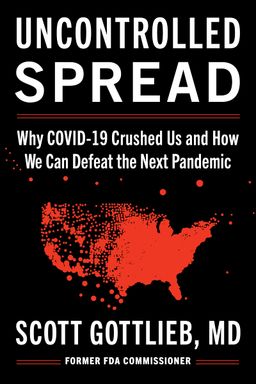
When COVID-19 reached American shores, the United States possessed unrivaled scientific and industrial capacity—but bureaucratic rigidity, fragmented data, and decades of flu-centric planning turned those strengths into liabilities. In Uncontrolled Spread, Scott Gottlieb argues that the pandemic’s devastation was not inevitable. It was the result of a system built for yesterday’s threats: a fragmented public-health apparatus that prioritized precision over speed, a surveillance network that looked backward rather than outward, and supply chains optimized for efficiency rather than resilience. Understanding those failures provides a blueprint for building a twenty-first-century architecture of biodefense.
A System Built for Flu, Not for the Unknown
The CDC’s pandemic playbook, forged in the shadow of H5N1 influenza and refined after H1N1, assumed a visible, symptomatic disease that could be tracked through hospitalizations and flu-like illness metrics. COVID-19, with its silent spread, longer incubation, and aerosol transmission, defied every assumption. Agencies clung to models that worked for influenza, emphasizing droplet spread and surface cleaning over ventilation and airborne mitigation. As the virus raced invisibly through asymptomatic carriers, the CDC’s reliance on influenza-like-illness (ILI) surveillance gave false reassurance, delaying broader testing and masking early outbreaks.
Blind Spots Born of Bureaucracy and Idealism
The same institutional habits that make the CDC peerless in long-term epidemiologic analysis crippled it in crisis. Officials sought perfect data, peer review, and central control at the very moment they needed rough, real-time intelligence. When its COVID test kits proved contaminated, the CDC resisted decentralization; it re-manufactured faulty reagents instead of empowering outside labs. By the time private firms like Integrated DNA Technologies stepped in to produce reliable kits, the window for containment had closed.
Gottlieb illustrates how rigid adherence to process stifled initiative. Academic projects such as Helen Chu’s Seattle Flu Study were blocked from reporting positive results because their authorizations covered only influenza research. Chu’s team discovered community spread weeks before official confirmation, but regulatory constraints kept her findings from guiding action—a vivid symbol of how legalism overtook flexibility.
Missing Foundations and Fragile Supply Chains
When testing finally expanded, the nation ran into physical bottlenecks: swabs from an Italian manufacturer trapped behind lockdown, pipette tips in short supply, and a Strategic National Stockpile reduced to expired masks and broken ventilators. The supply chain for cheap, low-margin goods—those no executive boasts about—proved the most fragile link. The book argues for vendor-managed inventories, domestic production incentives, and contractual surge capacity so that the next outbreak doesn’t depend on frantic airlifts or miracles of improvisation.
Innovation and the Glimmers of Success
Despite institutional inertia, pockets of innovation showed what could work. South Korea’s drive-through testing, born from post-MERS reforms, combined speed, industrial coordination, and regulatory agility. Its lesson: pre-authorize manufacturers, establish reimbursement, and practice the mechanics of mass diagnostics before the crisis. Meanwhile, the mRNA revolution demonstrated the power of scientific preparedness—a platform that could move from sequence to vaccine in weeks because it had been built and tested in parallel for years.
A Blueprint for Integration—Public Health as National Security
Underlying Gottlieb’s argument is a simple redefinition: pandemics are not public-health emergencies alone but national-security threats. That means intelligence agencies must complement epidemiologists. Surveillance abroad should not depend exclusively on the goodwill of other nations or the World Health Organization; it requires independent verification, genomic sequencing capacity, and diplomatic leverage to access samples. Within the U.S., operational data pipelines—real-time hospital admissions, positivity rates, sequencing—must feed decision-makers directly, not wait for publication.
Trust, Equity, and Leadership
Finally, Gottlieb examines the ethical and political dimensions: the uneven burden borne by nursing home residents, essential workers, and communities of color; the politicization of masks and vaccines; and the corrosive effect of regulatory capture. Trust, he argues, is as critical as technology. Public-health commands must pair authority with empathy, balancing independence from politics with accountability to the public. The next pandemic will test not just our laboratories but our capacity to act collectively, with speed, clarity, and fairness.