
Idea 1
How the Unconscious Shapes Every Decision
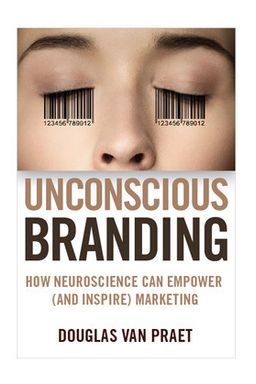
You think you decide consciously, but most of your choices are made before your conscious mind catches up. In his work, Douglas Van Praet blends neuroscience, psychology, and marketing to reveal that human behavior is largely driven by unconscious processes. He invites you to look beneath the visible tip of the iceberg—the rational narratives you tell yourself—and explore the deep mental machinery that actually governs choice.
Two Minds, One Decision
You live with two minds: System 1—fast, emotional, automatic—and System 2—slow, deliberate, rational. Neuroscientists like John-Dylan Haynes and Daniel Kahneman have shown that your brain makes many decisions seconds before 'you' are aware of them. This has major implications for persuasion, because people often act first, then explain later. You aren’t lying when you justify a purchase; you’re translating impulses into language.
Marketing that starts with logic assumes people are rational actors. But real influence begins deeper: in memory, emotion, and instinct. As Gerald Zaltman famously noted, about 95 percent of consumer thought happens unconsciously. Van Praet’s book argues that effective communication must speak this silent language of the brain.
The Brain as Prediction Machine
Your brain constantly predicts what comes next. When those predictions are right, you coast in autopilot; when they fail, attention spikes. This predictive pattern explains why surprise captures attention and novelty triggers dopamine bursts. Studies by Düzel and Bunzeck show that novelty activates hippocampal and reward regions, enhancing learning and motivation. The same circuitry fuels curiosity, risk-taking, and the instinct to explore.
Rather than simply “communicating,” great brands strategically violate expectations—then resolve the tension in satisfying ways. This neurological dance between surprise and comfort becomes the starting rhythm for persuasion.
Emotion, Memory, and Meaning
Read Montague’s Pepsi Challenge fMRI study demonstrated how expectations rewire sensory experience. When participants knew they were drinking Coke, brain regions associated with emotion and memory lit up differently, influencing taste preference. The brand rode on dopamine-driven anticipation, not flavor. This proves that brands live not just in the marketplace but inside neural circuits.
Such responses highlight Antonio Damasio’s concept of somatic markers: bodily sensations—racing pulse, warmth, excitement—that guide choices before thought intervenes. Brand cues such as colors, sounds, and textures attach themselves to these bodily markers over time, forming emotional shortcuts that drive behavior.
The Evolved Consumer
Beneath modern habits lies an ancient brain. Evolutionary psychologists Leda Cosmides and John Tooby describe our minds as a collection of adaptive programs built for survival in small tribes. That’s why status, reciprocity, and belonging still dominate social and commercial behavior. Free samples activate reciprocity circuits; exclusive access gratifies status needs; and communities around brands (Apple, Harley-Davidson) mirror ancestral tribes. Even online, we remain Stone Age minds navigating digital environments.
Recognizing these instincts reframes marketing as anthropology. You’re not persuading abstract “consumers”—you’re interacting with humans whose ancient motivations persist beneath modern veneers.
Research, Not Guesswork
Traditional market research often misleads because it measures verbalized opinion, not unconscious truth. People report personas, not impulses. Focus groups can identify rationalizations but miss emotional triggers. Neuromarketing tools—EEG, fMRI, galvanic skin response—help expose these hidden reactions, but Van Praet cautions they are tools, not rules. Data must serve intuition and creativity, not replace them.
When you combine neuroscience, ethnography, and observation, you build empathy for real decision processes. Instead of asking people what they think, watch what their bodies, eyes, and habits reveal. Those are the true signals of behavior.
The Book’s Core Framework
Van Praet structures change as a sequential journey—from interrupting attention to creating comfort, leading imagination, shifting feeling, satisfying logic, changing associations, and finally driving action. Each step maps to a stage of cognitive and emotional processing in the brain. Together, they explain how ideas become habits.
Key premise
Change doesn’t begin with argument—it begins with feeling. To move people, start where their mind already works: unconsciously, emotionally, and bodily.
By weaving together cognitive science and practical case studies—from Volkswagen’s “The Force” to Dove’s Real Beauty and Red Bull’s experiential events—Van Praet builds a model where marketing becomes psychology in action. You learn not just to sell, but to understand human decision-making at its core: what moves people is what feels right long before it makes sense.