
Idea 1
Winning by Design: Putting Service at the Core
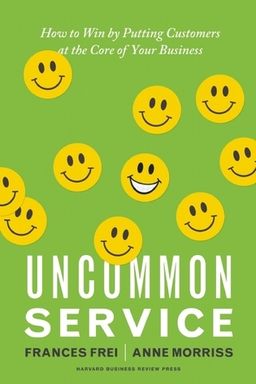
When was the last time you were truly delighted by a company’s service—so much so that you told everyone about it? Frances Frei and Anne Morriss open Uncommon Service: How to Win by Putting Customers at the Core of Your Business with this very question. Their answer is both provocative and practical: great service doesn’t happen by accident or sheer goodwill. It’s intentionally designed into every part of a company’s system. According to Frei and Morriss, service excellence isn’t about heroics or passion alone—it’s about making smart trade-offs, creating sustainable funding, empowering employees, managing customers, and nurturing a culture that ties it all together.
We live in a so-called service economy, yet many companies consistently disappoint us. The authors argue that this failure stems from two misunderstandings. First, most organizations try to be great at everything, spreading themselves thin instead of focusing where they can truly excel. Second, many leaders assume that good service depends solely on extraordinary employees, rather than on business models that make excellence inevitable. This book dismantles those myths by showing how service leaders—from Commerce Bank to Zappos—win by deliberate design, not by luck.
The Blueprint of Uncommon Service
Frei and Morriss introduce what they call the four essential “service truths.” These are the structural pillars of a high-performing service organization: (1) you can’t be good at everything, (2) someone has to pay for great service, (3) it’s not your employees’ fault, and (4) you must manage your customers. Together, these truths create a blueprint that turns the act of serving into a system, not a slogan. The authors insist that if you want every interaction to reflect excellence, you must design your company like an engineer—deciding where to invest, when to sacrifice, and how to make average performers succeed routinely.
This formula culminates in the authors’ simple but powerful equation: Service Excellence = Design × Culture. Design provides the framework—the operational consistency and structure. Culture injects humanity, purpose, and energy. When either is weak, excellence collapses. Together, they make outstanding service both scalable and natural.
Why Design Matters More Than Heroics
The authors argue that leadership should stop depending on extraordinary people performing heroic acts. Instead, great systems should make it easy for ordinary employees to behave extraordinarily well. Commerce Bank, for example, built its success by structuring operations so that joyful service was unavoidable. Employees were chosen for friendliness, not finance degrees, and the limited range of products simplified every customer interaction. Similarly, Southwest Airlines thrives because its design encourages equality, cooperation, and efficiency, allowing everyone—from pilots to baggage handlers—to focus on what matters most: fast turnaround and cheerful flights.
The Role of Trade-offs
At the heart of this design philosophy lies an uncomfortable truth: excellence requires being deliberately bad at something. Trying to please everyone only guarantees mediocrity. Companies that excel know exactly where they will underperform. Commerce Bank offered terrible deposit rates so it could afford extended hours and friendly staff. IKEA sells furniture that’s not built to last—but it makes buying and assembling it quick, affordable, and empowering. As the authors put it, “you have to be bad in the service of good.”
Service by Design, Not Accident
Throughout the book, Frei and Morriss illustrate that service success follows a pattern: clear trade-offs, transparent funding, smart employee management, and active customer engagement. They showcase companies across industries that have redesigned their operations to make excellence inevitable: Progressive Insurance turns fraud prevention into customer care, Shouldice Hospital turns patients into recovery partners, and Magazine Luiza trains illiterate rural shoppers to use virtual stores to buy their first refrigerator. In each case, the organization embraces human nature rather than fighting it—and designs around it.
By the end, you’ll see that Uncommon Service isn’t about service tips or quick fixes—it’s a framework for reimagining how organizations create value. If you’re willing to trade perfection for purpose, and complexity for clarity, you can build systems that let everyone—employees, customers, and owners—win together. That’s what it means to put customers at the core of your business.