
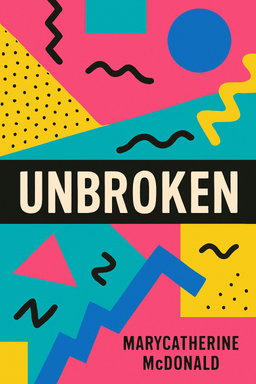
Unbroken cover

Unbroken

by MaryCatherine McDonald

Unbroken (2023) delves into the intricate world of trauma, blending modern neurobiology with personal stories to illuminate its mind-body impact. This groundbreaking exploration dismantles misconceptions, offering transformative insights and tools for resilience, healing, and self-discovery.

You Are Not Broken: The Truth About Trauma

Have you ever wondered why certain experiences seem to linger—why grief, loss, or fear sometimes feel like they’re stitched into the fabric of your being? In Unbroken: The Trauma Response Is Never Wrong, Dr. MaryCatherine McDonald proposes a radical shift in how we understand those moments of shattering. She argues that trauma isn’t evidence of our brokenness, but of our body’s strength and adaptability. The trauma response, she insists, is a natural biological mechanism designed to keep us alive, yet our culture has taught us to interpret it as dysfunction.

McDonald weaves together memoir, client stories, neuroscience, and social critique to reveal how shame—not trauma itself—keeps us stuck. For her, healing isn’t about erasing pain or pretending nothing happened; it’s about trading shame for science, seeing our responses as ingenious rather than flawed, and building a toolbox of techniques to help the nervous system recalibrate.

Reframing Trauma from Weakness to Strength

Most of us absorb cultural narratives that paint trauma as a sign of weakness—a crack in our mental armor. McDonald traces this idea through the history of psychology, showing how early theories blamed women (“hysteria”) or weak soldiers (“shell shock”) for their symptoms. Modern science, however, shows trauma responses are the opposite of weakness: they’re the body’s evolutionary defense mechanisms. Fight, flight, or freeze aren’t flaws; they’re nature’s parachutes, pulled automatically to protect us. The problem isn’t the response—it’s that we’ve misinterpreted it.

When we attach shame to the trauma response, we add a secondary wound that keeps healing out of reach. As McDonald writes, if your body shakes, goes numb, or floods with panic after trauma, it’s not betraying you—it’s saving you. The shame you feel afterward comes from bad science and social misunderstanding, not biology.

The Core Argument: The Trauma Response Is Never Wrong

McDonald’s central claim is elegant and groundbreaking: the trauma response is never wrong. It always functions to protect survival, even if its lingering aftermath becomes painful. The body doesn’t overreact; it adapts. Problems arise when the mechanism doesn’t get the chance to turn off—when we lack what she calls a “relational home,” someone safe to help us process what happened. Trauma turns chronic when our brain’s emergency systems stay switched on indefinitely. Healing begins when we learn how to toggle them off with support, grounding, and compassion.

She uses both personal stories—like her own grounding discovery of lying on the floor to calm panic—and composite client narratives to illustrate this truth. A veteran joins a fight club to feel alive; a heart patient panics when his defibrillator malfunctions; a first responder dismisses emotional pain as trivial compared to others’ tragedies. In every story, the trauma response isn’t broken—it’s doing its job. What’s broken is our understanding of it.

Trading Shame for Science

The book’s first major mission is to exchange cultural shame for scientific understanding. Through an accessible primer on the brain—introducing the amygdala (the smoke alarm), the hippocampus (the file cabinet), and the hypothalamus (the puppeteer)—McDonald teaches readers that emotions are biological events, not moral failings. Our nervous systems aren’t fragile; they’re brilliant. If we could see the trauma response as strength rather than weakness, she argues, we’d start teaching coping tools as standard life skills instead of leaving people to discover them by accident.

These tools, spread throughout chapters two through seven, are practical and experiential: diaphragmatic breathing to activate the vagus nerve, grounding techniques for panic and anxiety, narrative therapy to reorganize memories, and playful neural exercises like “Tetris” to redirect blood flow and electrical activity back to the prefrontal cortex. Each tool embodies her thesis: you’re not broken—you’re adaptive. And you have agency in your own healing.

A Call to Reeducation: Healing Through Humanity

McDonald’s tone is deeply compassionate yet fierce. She calls out the clinical and societal misunderstanding that has turned trauma into an anathema—a forbidden subject that makes people feel defective. The antidote is reeducation: understanding what trauma really is through science and story, stripping away shame, and finding others who can help metabolize unbearable emotion. She offers a new definition of trauma: any emotional experience that becomes unbearable and lacks a relational home. When we restore that home with empathy, trust, and safety, healing begins.

Her message touches philosophy (“thorns in the spirit” echoing William James), psychology (Freud’s repetition compulsion revisited without blame), and spirituality (“tiny little joys” as anchors for survival). The book is part scientific study, part memoir, and part manifesto—a reclamation of trauma’s rightful place within human biology and compassion.

Why This New Understanding Matters

Reframing trauma changes everything. When you stop treating your symptoms as proof of brokenness, you begin to relate to them as messages from your survival systems. This perspective allows self-compassion where shame once thrived. It’s not your fault that you hyperventilate, freeze, or struggle with connection after trauma. It’s your biology trying to keep you safe. By understanding this, you can begin to trust your body again.

“Trauma does not equal brokenness,” McDonald writes. “That’s a myth. What traumatic experiences reveal is that though we can be bent, dented, or bruised, we cannot be broken. We are unbroken.”

This is not naïve optimism—it’s science-informed empowerment. By viewing the trauma response as a sign of life rather than failure, McDonald invites readers back to wholeness. Her book’s heartbeat is hope: the kind that’s gritty, biological, and defiant—the hope of continuing to breathe, adapt, and love in the aftermath of overwhelm. If you’ve ever felt shattered by tragedy and wondered if you were beyond repair, Unbroken insists the opposite: you are designed to survive, and you have never been broken to begin with.


Trading Shame for Science

In the opening chapters, McDonald dismantles centuries of misunderstanding about trauma and mental health. She argues that society has internalized a poisonous myth: to suffer after an overwhelming experience is shameful, and to express pain is weakness. Through historical storytelling and neuroscience, she shows how this myth took root—and how wrong it is.

The Origins of a Broken Definition

The story begins with hysteria in ancient Egypt and Freud’s abandonment of his own patients. Early psychologists, McDonald explains, feared what trauma revealed about the human condition. When Freud realized his “hysterical” female patients were victims of sexual abuse by reputable men, he dropped the theory rather than confront society’s hypocrisy. Later, when soldiers exhibited horror after warfare, science called it “shell shock” and declared them failures at masculinity. Over time, this bias fused trauma with weakness.

Understanding the Biology Behind Overwhelm

McDonald brings readers intimately into the brain’s mechanics to prove the opposite. The amygdala, she says, is the alarm system; the hypothalamus is the puppet master controlling bodily survival; and the prefrontal cortex is the rational decision-maker. During trauma, the brain floods with stress hormones, prioritizing protection over recording memories. This isn’t malfunction—it’s evolution in action. Your body isn’t forgetting on accident—it’s staying alive on purpose.

When traumatic activation doesn’t get turned off, you may feel like you’re constantly in danger because your body hasn’t found safety again. The tragedy isn’t that your body failed; it’s that you were never taught how to help it reset. Shame floods in where science should have been.

Why Shame Blocks Healing

Shame acts like mold—it thrives in darkness. McDonald recounts her own experience discovering “grounding” firsthand when lying on a floor during panic, thinking she was crazy. Her therapist, instead of judging, recognized it as wisdom: her body was instinctively calming itself. When she reframed this act from oddity to biology, healing started. Shame tells us “you’re weird or broken”; science replies “you’re adaptive.”

From this realization springs her entire philosophy: the trauma response—panic, flashbacks, vertigo, dissociation—is functional. It’s not a sign of weakness but proof of human durability. A migraine after loss is not moral failure; it’s the nervous system trying to protect you.

Repairing Language and Diagnosis

Much of McDonald’s critique targets the DSM, psychology’s diagnostic manual. Its narrow definition of trauma—restricted to death, injury, or sexual violence—leaves millions excluded and shamed. Emotional neglect, betrayal, or chronic stress don’t “count,” so sufferers internalize guilt for feeling broken. Expanding our collective definition, she argues, is essential. Otherwise, clinicians misdiagnose survival symptoms as pathology and miss the opportunity to validate human adaptability.

“Shame,” McDonald writes, “is both metastatic and highly contagious.” It spreads socially and keeps people isolated. Science, by contrast, is antiseptic—it sterilizes the shame and brings it into light.

The Invitation: Learning to Trust Your Biology Again

Trading shame for science means learning to work with your nervous system rather than against it. Ground when your body wants to collapse. Breathe diaphragmatically to trigger the vagal response. Understand that flashbacks are neurobiological echoes, not moral failures. When you view each symptom through the lens of biology, you respond with compassion, not judgment—and that shift alone rewires neural pathways toward calm.

McDonald’s goal is revolutionary and simple: replace shame with understanding. When you do, your biology transforms from enemy to ally. You stop asking, “What’s wrong with me?” and start asking, “What amazing thing is my body trying to do for me right now?” That question, she says, is the first note of healing.


Triggers and the Body’s Memory

What happens when your body starts living in the past? In one of her most powerful sections, McDonald decodes the mystery of triggers—the moments when you suddenly react as if danger from long ago is happening again. Using the story of Gabe, a young man born with a heart defect, she explores how the body literally remembers trauma.

Reliving, Not Remembering

Gabe inherited his father’s heart condition and nearly died of a heart attack at 27. His implanted defibrillator saved him—but sometimes malfunctioned and shocked him awake. Even after recovery, Gabe lived in constant terror. His panic attacks weren’t imagined threats; they were triggered by the rhythm of his own heartbeat. McDonald explains that a trigger isn’t a memory—it’s reliving. The amygdala doesn’t differentiate between past and present. When it detects a sensation associated with danger—like Gabe’s heart flutter—it reactivates survival mode. You’re thrust through a portal into the past, flooded with hormones, unable to tell time.

The Portal Metaphor

McDonald calls triggers “portals.” They’re gateways where fragments of unintegrated memories live—smells, colors, sensations. When triggered, these fragments yank you backward in time. This is why traumatic recall feels instantaneous and uncontrollable. It’s not your imagination—it’s your nervous system replaying history to teach vigilance. Unfortunately, most of us respond by avoiding triggers, assuming they mean we’re fragile. McDonald insists avoidance only deepens the fracture; integration is the goal.

Retelling and Reeducating

Her twofold solution involves retelling and reeducating. Retelling—the “talking cure” first noted by Freud’s patient Anna O.—helps reorder fragmented memories into coherent narratives. By speaking about trauma while feeling its emotions in safety, the brain reorganizes chaotic impressions into structured stories, allowing the hippocampus to store them properly. Reeducating is the second step: teaching the body that it is no longer in danger. This happens through techniques like diaphragmatic breathing and grounding exercises, which flip the parasympathetic switch. The body learns, “You survived. You’re safe now.”

Triggers aren’t enemies, McDonald reminds us—they’re messages. They exist “so that we don’t forget.” The task isn’t to eliminate them; it’s to walk through them slowly and come out the other side.

Bottom-Up Healing

In contrast to purely cognitive approaches, McDonald emphasizes “bottom-up regulation.” This means using the body—breath, movement, temperature—to influence the brain. By activating the vagus nerve through diaphragmatic breathing, you can downshift from fight-or-flight to safety. She teaches a simple pattern: inhale for four, hold for two, exhale for five. Within minutes, heart rate lowers, and anxiety dissipates. The genius of this method lies in its accessibility—it requires no therapist, only your respiration and awareness.

The truth about triggers reveals McDonald’s full philosophy: the body remembers so that it can protect, not punish. Integration, not avoidance, is how you reclaim calm. As with Gabe, each time you breathe through the portal of panic, you teach your body something new—it can still guard you without needing to set the world on fire.


There Is No Small Trauma

In chapter four, McDonald challenges a dangerous hierarchy embedded in both clinical practice and culture—the idea that some traumas are big (‘capital T’) and others are small (‘lowercase t’). Through the story of Grace, a first responder who dismisses her heartbreak as trivial, McDonald shows that pain doesn’t care about our categories.

The Fallacy of ‘Big T’ vs. ‘Little T’

Grace’s breakup left her anxious, sleepless, and ashamed. As a disaster worker, she told herself others suffered more—“a mother lost four sons in a terrorist attack, and I’m crying over a breakup?” McDonald identified Grace’s symptoms as referred pain: the psychological equivalent of a heart attack disguised as a toothache. The breakup wasn’t “just” heartbreak; it was a collapse of her map of meaning. Her vulnerability box—her belief that life was predictable—had fallen off the shelf. Trauma, McDonald explains, doesn’t depend on an external scale. It’s defined by internal overwhelm.

Why Hierarchies of Suffering Harm

By labeling trauma as big or small, we create shame instead of solidarity. People invalidate their own pain, thinking it doesn’t qualify. McDonald traces the “big T/little t” debate to Francine Shapiro’s invention of EMDR therapy. Shapiro meant the distinction to include more experiences in treatment, not rank them hierarchically. Over time, society twisted it into a moral ladder. McDonald insists this distinction must be dismantled: the amygdala doesn’t know scale—it just registers threat. Whether you lose a loved one or a dream, your brain’s biology reacts the same way.

Tools for Recalibration

McDonald teaches “top-down regulation” through EMDR and other mind-focused techniques. This process redirects blood flow to the prefrontal cortex, allowing rational thought to reconsolidate memories. One accessible form of this recalibration is playing the video game Tetris. Studies show that engaging your visual-spatial cortex for 20–60 minutes daily reduces intrusive memories—proof that even digital play can rewire trauma circuits. It’s a lighthearted yet profound metaphor: rearranging shapes to restore order.

“There is no such thing as big-T or little-T trauma,” McDonald writes. “The amygdala is too primitive to even learn the alphabet.”

Why Equalizing Trauma Frees Us

Recognizing all trauma as trauma restores empathy—to yourself and others. It removes shame from your healing journey and replaces judgment with curiosity. Grace’s recovery, aided by EMDR and self-compassion, proves this. When she finally accepted that her breakup counted, her nightmares ceased. The key isn’t to compare pain, but to honor it. That reframe alone puts the box of vulnerability back on the shelf—secure, but visible.

In rejecting the trauma hierarchy, McDonald democratizes healing. Every wound, she says, deserves care. Trauma isn’t measured by magnitude; it’s measured by how deeply it unsettles our ability to stay present. If you can’t stay in your body, it’s trauma. Period.


Loss, Grief, and the Hourglass of Time

Loss may be inevitable, but McDonald insists it doesn’t have to mean annihilation. In her story of Max, a woman overwhelmed by grief and chaos after the death of a friend, she explores how traumatic loss distorts time, identity, and control—but also how it opens the door to meaning.

When Pain Speeds Up Time

Max describes her life as sand racing through an hourglass, faster and faster, slipping away. Her incessant talking, risky choices, and affair reveal a classic trauma response: when everything feels like loss, we scatter ourselves to avoid connection. McDonald identifies this as grief’s survival mechanism—if you commit to nothing, you can’t lose it. But that safety also empties life of depth. The more Max tries not to lose, the more lost she becomes.

Loss as Traumatic Overwhelm

McDonald challenges the notion that grief is just sadness. Sudden loss is traumatic because it overwhelms the nervous system—the same biology as fight or flight. The brain stops recording normally. Max’s disorientation isn’t pathology; it’s the body still protecting her from the shock of mortality. Healing begins when loss integrates into memory. This process, guided by reflection and mourning, mirrors Emerson’s stair metaphor: we find ourselves mid-step, between worlds, learning how to keep climbing.

The Work of Integration

Through therapy and reflection, Max reclaims coherence by facing her friend's death directly. McDonald helps her turn grief from scattered panic to reverence—recognizing that fear of loss signifies love. She teaches a tool called “What Remains”: listing what endures from a loved one’s life—memories, lessons, laughter. This reframes mourning from emptiness to legacy, inviting gratitude alongside sorrow.

“What remains,” McDonald reminds us, “is proof that the loss isn’t the whole story.”

Reverence Instead of Resistance

We don’t heal by resisting grief; we heal by respecting it. McDonald quotes Derrida and Emerson to remind readers that loss and human connection are intertwined—“to have a friend is to know one of you will see the other die.” This awareness doesn’t curse us; it connects us. Traumatic loss reveals life’s fragility, yes, but also its brilliance. The hourglass eventually slows when we stop running from the sand and start appreciating each grain.

By reframing grief as an ongoing dialogue—a conversation between love and impermanence—McDonald transforms pain into presence. You don’t need closure, she says; you need companionship in loss. Only then does the hourglass become less of a countdown and more a reminder: every grain is a heartbeat that remains.


Repetition and Trauma Bonds

Why do we keep choosing people who hurt us? McDonald tackles this painful question through the story of Erica, a survivor of domestic violence who wrote to her abuser even after surviving an attempt on her life. Society branded her irrational, but McDonald saw her biology and psychology at work—a trauma bond, not a character flaw.

The Science of Attachment and Abuse

A trauma bond forms when intermittent abuse intertwines with love. The cycle of threat and comfort triggers the same opiate rush babies experience when soothed after crying. McDonald traces the concept back to researchers Donald Dutton and Susan Painter: when power imbalances combine with emotional whiplash, the brain becomes addicted to relief. Victims don’t seek pain—they seek connection that temporarily anesthetizes pain. Both partners in a trauma bond are destabilized, their identities swallowed by the relationship’s magnetic pull.

Repetition Compulsion: Freud’s Daemonic Force

McDonald next explores Freud’s “repetition compulsion”—the eerie human tendency to reenact trauma despite suffering. We repeat, she explains, because our nervous system seeks mastery. A disorganized memory pushes forward for reconsolidation; facing the same pattern offers a chance to rewrite the ending. Yet sometimes people repeat to avoid mastery—because facing the original wound feels unbearable. Repetition isn’t stupidity; it’s survival. It’s the body’s desperate attempt to complete unfinished processing.

Learning Hope After Helplessness

McDonald reframes the infamous “learned helplessness” theory. Originally, psychologists believed people stuck in abuse learned passivity. Later research by Seligman and Maier proved the opposite: helplessness is biological, not learned. When the fear circuit stays on too long, we literally lose access to the brain’s hope circuit. But toggling small acts of agency—making tea, adjusting light, petting the dog—reactivates hope. This restores energy to the medial prefrontal cortex, the seat of selfhood. Each act of choice reignites your ability to feel like you again.

“The trauma response is never wrong,” McDonald reminds. “It’s our shame about the response that keeps us stuck.”

Shards and Hope

She closes this section with a striking metaphor: rare earth magnets that shatter upon collision, scattering shards. These shards—our fragmented selves—can still reflect light beautifully. Healing means collecting them without shame, recognizing that even broken pieces shine. Trauma bonds teach what not to dim: the force that once latched onto pain can later latch onto purpose. The same magnetism can attract hope instead of harm.

By dismantling shame and teaching biological empowerment, McDonald redefines relationship healing. You cannot manifest abuse away—but you can reclaim your circuitry. Recognize the magnet, redirect its pull, and step away from the collision toward coherence and light.


Healing, Identity, and Subverting Fear

In the book’s emotional crescendo, McDonald shares the story of Lily—later revealed to be her mother—who faces cancer and a lifetime of fear rooted in childhood abuse. Lily’s journey embodies McDonald’s final thesis: it’s never too late to heal. Even dying, she’s learning to reclaim her identity from trauma’s grip.

Subverting Power: The Rope-a-Dope

To explain Lily’s awakening, McDonald draws from Muhammad Ali’s “Rumble in the Jungle.” Ali didn’t fight power head-on; he used his opponent’s force against him. Lily, hiding from her violent father as a child, realizes decades later she wasn’t cowardly—her submission was survival. The mechanism that made her flee saved her life. Recognizing this reframes her trauma response from shame to strategy. She was Ali all along—finding endurance beneath dominance.

Healing Identity from Labels

McDonald teaches that trauma often leaves us trapped in labels—‘broken,’ ‘too sensitive,’ ‘unworthy.’ Fighting the label still keeps you bound to it. Her tool, “One Hundred Other Things,” asks you to list every positive fact about yourself—tiny or grand—to prove you are more than your wounds. Lily’s realization that her cancer lived in her liver, like her alcoholic family’s poison, wasn’t cosmic punishment—it was poetic irony. McDonald responds by quoting Emerson: “I am a fragment, and this is a fragment of me.” Trauma doesn’t define you; it’s one shard in a greater mosaic.

Reclaiming Control and Grace

McDonald’s guiding principle of resilience—“small agency fosters hope”—comes alive here. Lily reclaims her sense of self through meaning-making: accepting reality, showing curiosity toward fear, and redefining identity beyond survival. Even as her body deteriorated, her spirit grew lighter. “I’ll mine my memory,” Lily said. “I’ll find the piece.” And she did—right before her death. It’s a striking testament to McDonald’s belief that healing and dying can coexist.

Healing isn’t about fixing what’s broken; it’s about reclaiming what’s always been unbroken within you.

In revealing Lily as her mother, McDonald transforms the book’s philosophical inquiry into a devotional truth: trauma and love are intertwined, both engines of growth. Even our final breaths can be acts of reclamation. Subverting fear is life’s last, and greatest, rope-a-dope.


A New Definition of Trauma and Homecoming

In her final chapter and epilogue, McDonald unites science, psychology, and poetry into a single principle: trauma is any unbearable emotional experience that lacks a relational home. Healing, therefore, comes from restoring connection—both within yourself and with others. The trauma response may isolate, but love re-bonds the system.

Trauma as Unbearable Emotion Without Relationship

Borrowing from philosopher Robert Stolorow, McDonald defines trauma as twofold: unbearable emotion and lack of a place to process it. This redefinition cuts through clinical confusion and social stigma. If you’ve felt emotions too heavy to bear and had no one to help hold them, you’ve experienced trauma. Finding connection creates homecoming; it allows those emotions to settle—like memories finding their dwelling place in the psyche.

Relational Homes and Therapeutic Alliance

McDonald dismantles the myth that only therapists can provide healing spaces. A relational home can be built through friendship, empathy, or even text messages exchanged in an elevator after a cruel session. Healing is less about credentials and more about attunement—the act of “stretching toward” another person with care. We are hurt through relationship, she writes, and therefore healed through relationship. Trauma is relational disconnection; recovery is reconnection.

Tiny Joys as Anchors of Survival

In her epilogue, McDonald turns tenderly autobiographical, recounting how after her father’s death she lay on the floor and rediscovered sanity through tiny joys—the way sunlight pooled across her rug, the diagonal rainbows on the floor, the fizz of ginger ale shared with her dad in childhood. These moments are biological anchors, keeping the nervous system tethered to life. Healing isn’t a grand transformation but small reattachments to the present world.

“Joy,” she writes, “is an anchor—heavy, solid, reliable. It sinks to the ocean floor and tethers us so we are not unmoored.”

The Dream: A World Without Shame

McDonald dreams of a future where trauma isn’t hidden or pathologized but taught and normalized in schools. Where every person knows their biology’s brilliance. Where labeling someone “broken” becomes cultural anathema, replaced by recognition of resilience. She ends on a philosophical note: human existence itself is traumatic, but also profoundly adaptive. “Always, love!” she quotes Hölderlin. Trauma opens the spirit to the necessity of compassion.

Ultimately, Unbroken is a roadmap returning us to ourselves—a homecoming to the body, empathy, and joy. It teaches that there’s nothing wrong with your trauma response; it’s proof you survived. And when you find your relational home—in another person, in breath, or in the glimmer of sunlight on the floor—you rediscover what McDonald calls the great paradox of healing: you have always been unbroken.

Dig Deeper

Get personalized prompts to apply these lessons to your life and deepen your understanding.

Go Deeper

Get the Full Experience

Download Insight Books for AI-powered reflections, quizzes, and more.