
Idea 1
Building Unbreakable Teams in a Breakable World
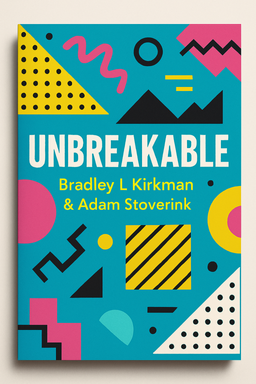
What happens when everything goes wrong—the plan unravels, the team fractures, the pressure mounts—and it feels like there’s no way out? In Unbreakable: Building and Leading Resilient Teams, Bradley L. Kirkman and Adam C. Stoverink pose this urgent question to anyone who leads people in today’s uncertain world. Drawing from decades of research, consulting, and teaching, they argue that the most successful teams aren’t just high-performing—they’re unbreakable in the face of adversity.
The authors contend that true resilience requires more than raw talent or rigorous systems. It’s about cultivating four powerful team resources—confidence, teamwork roadmaps, capacity to improvise, and psychological safety. These resources enable teams to bounce back from setbacks stronger than before. Whether you’re managing software developers, first responders, or remote collaborators scattered across continents, Kirkman and Stoverink offer a blueprint for thriving under pressure.
The Fire That Changed Everything
The book begins with a gripping retelling of the 1949 Mann Gulch tragedy—a wildfire that killed thirteen smokejumpers in Montana. Team foreman R. Wagner Dodge tried to lead his crew to safety by igniting an “escape fire,” a desperate, innovative maneuver that could have saved their lives. But the team, confused and fearful, splintered instead of uniting. Only Dodge and two others survived. This real-world disaster sets the stage for the book’s core argument: resilience is not about rugged individualism, but about collective coherence under pressure.
Kirkman and Stoverink analyze the smokejumpers’ failures through lenses like psychologist Karl Weick’s concept of sensemaking—the process of interpreting and responding to chaotic situations. The Mann Gulch crew lost their ability to make sense, coalesce, and persist, revealing timeless lessons for teams in any industry.
Defining Team Resilience
Resilience, the authors explain, is a team’s capacity to bounce back from setbacks. It’s not just enduring hardships or preventing failures—it’s recovering rapidly and positively when the inevitable happens. Kirkman and Stoverink define it as the ability to regain performance after critical team processes such as coordination, monitoring, or backing up behavior have broken down. In their words, “teams can’t demonstrate resilience if nothing tries to break them.”
Resilient teams make sense of adversity, unite as one, and persist through challenges. These three actions—sensemaking, coalescing, and persisting—differentiate resilient teams from those that perform well only in calm waters. As Stoverink and Kirkman put it, “high performance is not resilience.” Many teams thrive when conditions are optimal, yet crumble in crisis. Resilience is about movement and recovery, not static excellence.
Why It Matters in the VUCA Era
Modern organizations face environments that are volatile, uncertain, complex, and ambiguous—often abbreviated as VUCA. COVID-19 underscored how rapidly teams can be thrown into chaos and how few are prepared for it. In these landscapes, adaptability matters more than precision. Kirkman and Stoverink’s research from hundreds of organizations—from biotechnology firms to government agencies—shows that teams equipped for resilience can recover faster and even outperform their previous benchmarks.
The book invites you, as a leader, to view resilience not as a personality trait but as a collective team capacity. You’ll learn how to build it intentionally by strengthening the four resources that help teams perform those resilient actions. These resources act as reservoirs from which teams draw when adversity strikes. The authors emphasize that “resilience isn’t luck—it’s engineered.”
A Blueprint for Unbreakable Teams
The book’s eight chapters unfold like a manual for constructing resilient teams. After analyzing the Mann Gulch disaster and its four team pitfalls—overconfidence or underconfidence, missing teamwork roadmaps, lack of improvisation, and absence of psychological safety—the authors dedicate individual chapters to mastering each of these areas.
You’ll encounter vivid stories of teams across industries: software developers debugging catastrophic crashes, medical professionals making split-second triage decisions during Hurricane Katrina, and airline crews saving lives with wordless coordination during the Miracle on the Hudson. Each case illustrates resilience in action—or its devastating absence. Kirkman and Stoverink weave these narratives into actionable frameworks leaders can apply immediately.
Their message is clear: resilient teams don’t happen by accident. They are built through deliberate leadership choices—empowering autonomy, promoting trust, cultivating psychological safety, and rehearsing adversity before it strikes. These practices are even more vital in remote and hybrid work, where miscommunication and isolation pose new threats to cohesion.
From Crisis to Continuity
By the book’s end, Kirkman and Stoverink guide leaders through resilience cycles: minimizing adversity through preparation, managing adversity through action, and mending afterward through reflection and learning. Their blueprint encourages leaders to conduct team “roses and thorns” debriefs—celebrating successes and learning from mistakes—to transform past hardships into future strength.
Ultimately, Unbreakable isn’t just a book about surviving crisis—it’s about thriving because of it. Kirkman and Stoverink’s research-driven, story-rich insights remind you that adversity isn’t an obstacle to avoid; it’s the ultimate test of leadership and teamwork. In cultivating resilience, you build teams that can withstand any storm—teams that bend but never break.