
Idea 1
Performance, Consciousness, and the Modern Epic
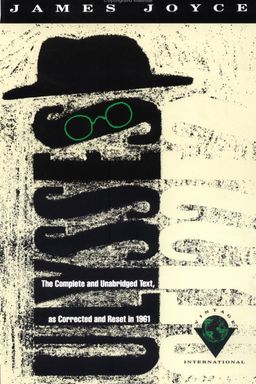
How can an ordinary day express the spiritual and civic pulse of an entire civilization? In Ulysses, James Joyce transforms June 16, 1904, into an epic of consciousness. He argues that modern life — with its rituals, appetites, prejudices, and hopes — can generate the grandeur of classical heroism, if you attend closely enough to its details. The book’s central claim is that identity, art, and morality are enacted through performance: every prayer, joke, and errand becomes part of a human theatre that mirrors both myth and modern disorder.
Joyce splits this argument among three main consciousnesses — Stephen Dedalus, Leopold Bloom, and Molly Bloom — whose movements through Dublin model artistic, humane, and sensual ways of comprehending experience. Across eighteen episodes, you watch private memory mingle with public ritual so that Dublin itself becomes a living stage. (Note: Joyce deliberately aligns each episode with Homer’s Odyssey but modernizes the epic through human interiority.)
Modern Life as Ritual Performance
The novel opens in the Martello Tower with Buck Mulligan’s mock mass — a parody that defines the book’s method. Ritual and parody interlock: Mulligan’s shaving bowl becomes chalice, his chant “Introibo ad altare Dei” turns faith into farce. You realize from the first pages that Joyce treats religion, politics, and friendship as ceremonies through which power is negotiated. The gestures are comic but wounding, and Stephen Dedalus’s sullen withdrawal marks the psychic cost of living in a culture where every act is performance.
Joyce asks you to see everyday Dublin — the pubs, markets, tramcars and chemists — as a stage where each participant plays several roles: believer and skeptic, lover and citizen, colonized and rebel. Public ritual and private thought interpenetrate, creating an ironic, densely textured portrait of social life.
The City as Organism
Dublin functions as a protagonist. Its trams, butcher shops, and newsrooms interconnect bodies and information; its smells, songs and newspaper headlines give rhythm to the day. You witness a city that memorializes itself through speech, rumor, and advertisement. (In this sense, Dublin is both the medium and the message — much like modern global cities where media and gossip define identity.) This civic density replaces mythic geography: Bloom’s journey through the capital equates to Odysseus’s return to Ithaca, proving that modern heroism lies in surviving the ordinary.
Art, Thought, and the Burden of Belief
Stephen Dedalus embodies intellectual rebellion, haunted by Catholic guilt and his mother’s dying image. He believes art can offer salvation where religion failed, yet his aestheticism often isolates him. In contrast, Bloom enacts a secular ethic: he finds meaning not in dogma but in daily care — feeding the cat, helping strangers, comforting the drunk Stephen. Joyce sets up this moral counterpoint to show that thought and compassion must coexist for civilization to persist.
Throughout the day, religious and civic authority (priests, schoolmasters, editors) speak in inherited formulas while Stephen and Bloom seek new languages of sincerity. You learn that doubt itself can be devotional: Stephen’s refusal to kneel at his mother’s deathbed and Bloom’s quiet tolerance of insult both become acts of integrity.
Desire, Gender, and the Democratic Body
When you arrive at the Ormond bar and Sandymount Strand, performance becomes erotic. Women like Miss Douce, Miss Kennedy, and Gerty MacDowell manipulate attention to assert limited control within patriarchal gazes; men — Bloom, Lenehan, Boylan — oscillate between lust and embarrassment. Sex is not just private pleasure but public negotiation: glances replace sermons, and the body becomes political language. Later, in the brothel, that dynamic explodes into cruelty and spectacle as power and commerce fuse in scenes of humiliation and gender inversion. Here Joyce reveals the economic undercurrent of desire: even shame can be sold.
Molly’s closing monologue overturns the male-centered drama. Her unpunctuated stream of consciousness claims sensual and psychological authorship, ending with her resonant “yes.” That affirmation redeems the novel’s chaos with acceptance — not naive optimism but an embodied consent to life itself.
Narrative Innovation and Interior Flow
Joyce revolutionizes narration by blending free indirect discourse, monologue, parody, and encyclopedic lists. Thought, dialogue, street noise and print blur into one current, teaching you how consciousness genuinely works. The “stream of consciousness” technique does not mimic chaos; it orchestrates the simultaneity of perception, memory, and sound. Repetition of motifs — the bell, the jingle, the tuning fork — serves as rhythmic anchor. As you read, you are trained to think polyphonically, to accept that truth is distributed among many registers, from newspaper headlines to private sighs.
Humanism in Practice
Underneath its technical bravado, Ulysses is a handbook of empathy. Bloom’s ordinary kindnesses, Stephen’s struggles toward articulation, Gerty’s brief assertion of self, and Molly’s inward sovereignty all point toward a democratic idea of soul: every life, however minor, contains infinite value when seen with full attention. The funeral of Paddy Dignam, the barroom chatter, the marketplace gossip — all become evidence that compassion and comprehension are civic acts.
By the end, you grasp Joyce’s wager: that modern redemption lies not in divine revelation but in sustained perception — seeing others truly, without prejudice or sentimentality. Through the intertwined performances of thought, body, and language, he builds a modern epic that teaches you how to live alertly inside the noise of the world.