
Idea 1
Majorities, Losers, and Minority Rule
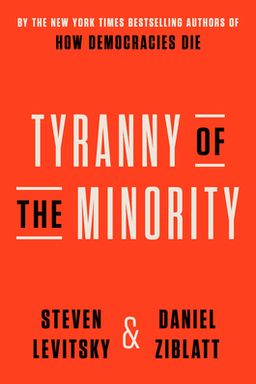
How do you keep a democracy both free and functional when politics is a relentless fight for power? Steven Levitsky and Daniel Ziblatt argue that modern democracies endure not because winners always behave, but because losers do. The ability to concede, regroup, and compete again is the quiet skill that sustains democratic life. Yet that skill erodes when losing feels existential and when minority-protecting institutions allow parties to cling to power without broad consent. The book’s core message is stark: democracies falter when the stakes of losing feel like annihilation and when institutional scaffolding lets actors reject majorities with impunity.
The democratic bargain: losers live to fight another day
You can think of democracy as a bargain: if you lose today, the system guarantees you a fair shot tomorrow. This bargain has two ingredients. First, you must believe you can win again. Second, losing must not threaten your group’s status, livelihood, or survival. When those conditions hold, losers accept results, return to organizing, and improve their pitch. Argentina’s Peronists did this after 1983, recovering under Carlos Menem. In the fraught U.S. election of 1800, Federalists worried Thomas Jefferson would upend the republic, but negotiated protections (notably packing the judiciary) and ultimately accepted the transfer of power.
When the bargain fails, you see denial, violence, or legal sabotage. In Thailand (2013–2014), urban middle-class elites who once championed democracy felt displaced by Thaksin Shinawatra’s rural base. They boycotted elections, escalated street protests, and helped trigger a military coup. The pattern repeats across history: when elites fear social or cultural demotion—what Barbara Ehrenreich called the “fear of falling”—they radicalize and turn against the rules.
How democracies break today: not tanks, but ties and tactics
Coups are rarer than before. Today, democracies more often degrade through “constitutional hardball”—lawful-looking moves that violate the spirit of fair play. Leaders exploit gaps, stretch powers, selectively enforce rules, and redesign electoral laws to entrench themselves. Viktor Orbán’s Hungary shows this playbook in full: court-packing, media capture, and gerrymandering—all legal on paper, all destructive in practice. The chilling part is that mainstream politicians often enable it. Semi‑loyalists—respectable insiders who tolerate or excuse extremism—normalize rule-bending and shield radicals from accountability. France’s right-wing semi‑loyalists did this in 1934; many U.S. Republican leaders did it after January 6.
The American exception: powerful minority vetoes
Among rich democracies, the United States stands out for retaining deeply counter‑majoritarian institutions. The Electoral College can award the presidency to popular-vote losers (2000, 2016). The Senate’s equal-state design overrepresents small, rural populations; the filibuster further adds a routine minority veto; and lifetime Supreme Court tenure lets narrow coalitions cement decades-long control. Article V’s extreme rigidity then blocks democratic updates most peer countries have made. Combine these with party strategies like gerrymandering (REDMAP) and you get frequent “manufactured majorities” and policy drift from public preferences (abortion, gun safety, wage floors).
Party identity: when polarization locks in minority rule
Institutions don’t act alone; they amplify party incentives. Over decades, the GOP’s “Long Southern Strategy” (Barry Goldwater’s 1964 states’ rights, Richard Nixon’s law-and-order, Ronald Reagan’s evangelical alliance) attracted voters threatened by civil-rights advances and social change. As white identity and Christian nationalism gained salience (see Ashley Jardina, Michael Tesler), the party grew dependent on a radicalized base that punished moderation. Donald Trump capitalized on this, culminating in election denial and semi‑loyalist defenses of January 6. Because counter‑majoritarian rules kept the party competitive without national majorities, it had fewer incentives to broaden its coalition.
Core claim
Democracy survives when losers accept defeat and try again. It fails when losing feels existential—and when institutions let organized minorities win despite broad opposition.
A comparative roadmap to repair
Other democracies show a way out. Norway transformed a restrictive 1814 charter into a top‑ranked democracy through 316 amendments that broadened suffrage, empowered elected governments, removed religious establishment, and modernized rights (Sami protections, environmental rights). Europe tamed aristocratic chambers (UK’s 1911 Parliament Act), adopted proportional representation, imposed judicial term limits, and introduced cloture rules to end obstruction. These reforms did not end liberty; they anchored it in responsive majorities (compare Arend Lijphart’s work on consensus democracies).
What you can do: defend now, reform for tomorrow
The book urges a two‑track strategy. In the short term, contain extremists (cross‑party pacts), prosecute violence (but beware overreach), and enforce basic rules (Section 3, Fourteenth Amendment, when warranted). In the long term, democratize the system: protect the right to vote, make outcomes reflect majorities (end partisan gerrymanders; consider PR and a national popular vote), and empower elected majorities to govern (end the filibuster; adopt judicial term limits; modernize Article V). If you lower the existential stakes and restore the payoff to coalition‑building, you renew the democratic bargain that lets losers live to fight another day.