
Idea 1
The Human Quest to Break the Two-Hour Marathon
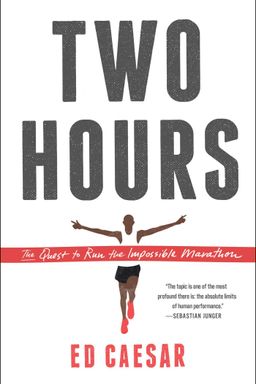
What drives human beings to chase the impossible? Why do we pursue feats that defy both common sense and biology—like running a marathon in under two hours? In Two Hours, Ed Caesar invites you to explore that question through the gripping story of Geoffrey Mutai, a Kenyan runner whose life becomes a lens through which we can understand courage, ambition, pain, and the mysterious limits of the body and spirit. Caesar argues that the marathon isn’t just a race; it is a mirror reflecting our most primitive drive—to push beyond what we think we can do.
At its heart, this book is about possibility. Caesar contends that the two-hour marathon is not merely a statistic waiting to be broken by evolution or technology—it’s a threshold that demands a new kind of human understanding. He explores the anatomy of endurance through Mutai’s physical and psychological preparation and situates it within a broader history: from ancient Greek messengers to Victorian pedestrians to modern city marathons and the billion-dollar industries surrounding them. It’s a story about transformation—of running from a survival skill into an art form, then into a global profession.
A Marathon as a Metaphor for Human Aspiration
Caesar opens with a vivid description of Mutai on the start line of the Berlin Marathon, the day he chased a world record. But as Mutai waits for the gun, the author zooms out. He wants us to see the marathon as more than just distance—it’s democracy in motion. Everyone runs toward the same finish line, from elite athletes to middle-aged amateurs. Each marathon, Caesar suggests, is a microcosm of our universal struggle: ordinary people and extraordinary bodies moving through pain, doubt, and fatigue toward self-overcoming. In that way, the book is not only about elite runners but about you—how your limits are set less by physiology than by imagination.
The Science and Spirit Behind Two Hours
Caesar draws heavily from exercise physiologist Mike Joyner, whose pioneering paper in 1991 calculated that the perfect runner could complete a marathon in 1 hour, 57 minutes, and 58 seconds. This theoretical limit haunts every chapter, functioning as a scientific prophecy and a spiritual challenge. Caesar interweaves Joyner’s research—with VO2 max, lactate thresholds, and running economy—with Mutai’s mystical idea of the “Spirit,” the transcendent feeling that comes only through pain and total exertion. If Joyner represents reason and data, Mutai embodies instinct and faith. Their triumvirate—science, suffering, and spirituality—captures why the marathon matters beyond sport.
Why East Africa Holds the Key
Central to Caesar’s argument is an exploration of Kenyan and Ethiopian dominance. The book carefully dissects the world that produced Mutai: the muddy roads of Kapng’tuny, the austere training camps, and the complex mixture of genetics, culture, and environment that shapes these champions. But Caesar resists easy biological determinism. He shows that running success isn’t inborn—it’s cultivated by social history, upbringing, and hunger. He recounts how Mutai, from poverty and abuse, learned to equate running with survival. Through stories of physiologists and local coaches like Brother Colm O’Connell, Caesar maps how an entire region became a factory for endurance through community resilience.
Marathon’s Evolution: From Myth to Market
Caesar also positions the marathon as a historical and cultural phenomenon. He travels from the myth of Pheidippides in 490 BC to Bill Rodgers’s professionalization of city marathons in the 1970s, showing how a ritual of gods and heroes turned into big business. The transformation from amateur purity to global sponsorship—Adidas, Nike, and the elite appearance fees—represents both the democratization and commercialization of endurance. For Caesar, this evolution mirrors humanity’s broader story: we constantly professionalize what was once spiritual, turning quests into industries. Yet, the heart of the marathon remains the same—a solitary struggle against one’s own humanity.
Why This Story Matters
When Caesar asks whether we’ll ever see a two-hour marathon, he’s not just asking about a number. He’s asking whether humans can break their own psychological walls. Through Geoffrey Mutai’s triumphs and heartbreaks—his record-setting runs in Boston and New York, his stoic humility despite fame—Caesar offers a model for endurance beyond sport. He connects Mutai’s physical drive to our emotional endurance: how we face obstacles, tragedy, and self-doubt with courage. Ultimately, the book contends that the marathon is the perfect metaphor for survival—the act of suffering well in pursuit of meaning.
In this sweeping narrative, Caesar blends coaching science, Kenyan anthropology, sports ethics, and global economics to reveal the modern marathon’s beating heart. You’ll see how technology, psychology, and character converge; why greed and glory coexist; and how running, at its core, brings us back to what makes us human—our need to move, suffer, and overcome. Each chapter invites you to contemplate your own two-hour challenge: not to run faster, but to live better within your limits and dare, sometimes, to break them.