
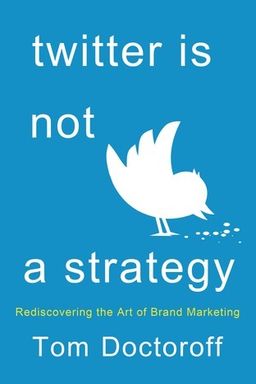
Twitter Is Not A Strategy cover

Twitter Is Not A Strategy

by Tom Doctoroff

Twitter Is Not A Strategy reveals the enduring principles of brand marketing, emphasizing the importance of a strong brand idea over fleeting digital trends. Tom Doctoroff guides readers through effective branding strategies that build lasting consumer relationships, demonstrating that traditional marketing still matters in the digital age.

Rediscovering the Art of Brand Marketing

How can you make your brand matter in an age when everyone is obsessed with algorithms and tweets? In Twitter Is Not a Strategy, advertising veteran Tom Doctoroff argues that brand marketing has lost sight of its true purpose: connecting human truths with creative ideas that endure. Doctoroff contends that while digital technology has transformed how brands and consumers interact, it hasn’t changed the timeless essence of marketing—the art of crafting long-term emotional relationships grounded in insight and consistency.

Doctoroff—CEO of J. Walter Thompson Asia Pacific and one of advertising’s most influential thinkers—warns that marketers today are seduced by technological razzle-dazzle: apps, analytics, and algorithms. The result? Disjointed campaigns chasing short-term clicks rather than cultivating brand loyalty. His central argument is simple yet provocative: data should inform creativity, not replace it. True branding marries the clarity of top-down ideas (crafted by the company) with the dynamism of bottom-up engagement (driven by consumers).

A World of Digital Disorder

The book opens with Doctoroff’s description of the marketing industry in chaos—a “new world disorder.” From social media revolutions to big data, brands now live in a world of 24/7 conversation. But this disorder masks an opportunity. Doctoroff insists that enduring brand success comes from mastering both paradigms: the traditional, top-down model rooted in clear messaging and the modern, bottom-up model of engaging empowered consumers. As he puts it, brands must allow people to participate without surrendering control of the message.

Using vivid examples—from Apple’s “Think Different” campaign to Nike’s “Just Do It”—Doctoroff shows how timeless brand ideas become religions of identity, inspiring loyalty across generations and cultures. The challenge for marketers today, he argues, is to unify the strategic discipline of branding with the boundless possibilities of digital engagement.

Human Truths in a Machine Age

At its heart, the book is a call to re-center marketing on people, not platforms. Doctoroff likens the modern marketer’s obsession with data to a scientist who has forgotten human emotion. The real power of branding lies not in analytics but in empathy—the ability to understand why people behave the way they do. He draws heavily on psychology and anthropology, especially Abraham Maslow’s hierarchy of needs, to illustrate that brands succeed when they resolve tensions within our hearts: between freedom and belonging, indulgence and restraint, ambition and fear.

Doctoroff explains that human truths are universal, but their expression varies by culture. In America, individuality is sacred; in Confucian Asia, harmony and ambition reign. A strong brand idea bridges these truths. For instance, Nike’s global mantra of self-actualization adapts across cultures—from rebellious empowerment in the U.S. to social recognition in China. Great marketing, he argues, does not flatten cultural differences—it transforms them into creative nuance.

The Framework for Modern Brand Building

Doctoroff’s framework unfolds in four interlocking parts: (1) insight into consumer behavior, (2) the brand idea, (3) engagement ideas, and (4) engagement planning. These modules—two conceptual, two executional—form the book’s backbone. They unify human psychology and technological possibility into one disciplined process. Insights expose emotional conflicts; brand ideas define long-term relationships; engagement ideas convert attention into participation; and engagement planning embeds ideas into daily life through carefully orchestrated media strategy.

Each part builds on the other. Insight reveals motivation. The brand idea translates that insight into meaning. Engagement ideas express that meaning through creativity. And engagement planning turns those ideas into measurable behavioral change. Together, they provide marketers with what Doctoroff calls “freedom within a framework”—the ability to innovate without losing coherence.

Why This Matters Now

This isn’t just a book for advertisers—it’s a manifesto for anyone building influence in a noisy world. Doctoroff reminds you that brands are not just logos or slogans; they are relationships. A brand that connects deeply with people can charge higher prices, attract loyal customers, and inspire advocacy. In an age obsessed with metrics, his message is refreshingly human: loyalty is emotional before it is measurable.

“Technology may change how we speak—but not what we yearn for.”

Doctoroff’s reassertion of emotional insight and conceptual precision gives marketers permission to rediscover the art of persuasion. Twitter Is Not a Strategy ultimately argues that amidst the digital clamor, timeless principles—clarity, consistency, and authenticity—remain the guiding lights of great brands.


The Power of Strong Brands

Doctoroff begins by asking why consumers fall in love with certain brands—Apple, Nike, Coca-Cola, Harley-Davidson—while others barely register. The answer, he says, lies in how these brands deliver more than utility; they deliver identity. A strong brand provides not just functional benefits but emotional ones, helping you feel part of something greater than yourself. In other words, brands are modern tribes.

Emotional Connection and Social Value

When Apple invites you to “Think Different,” it isn’t selling technology—it’s selling self-expression. Doctoroff recalls how Apple’s 1997 campaign, celebrating “the crazy ones,” transformed the company into a movement. Nike’s “Just Do It” created a religion of empowerment. These brands make you feel “understood.” According to research he cites from the Journal of Marketing, consumers describe such brands as companions that reflect their values and forge social belonging. Owning a BMW becomes a badge of achievement; sipping Starbucks signals worldly sophistication.

Why Loyalty Pays

Doctoroff dives into the economics of loyalty. Winning new customers is expensive; retaining them is priceless. He distinguishes between passive loyalists—those who buy from habit—and active loyalists—those who advocate passionately. The latter build your business through word-of-mouth and emotional attachment. Apple’s customers, for example, camp outside stores not for discounts but for identity reinforcement.

The Financial Edge of Emotional Brands

Strong brands outperform the market. Doctoroff references WPP’s BrandZ study, showing that companies with clear brand identities appreciated 58 percent faster than the S&P 500 between 2006 and 2013. Coca-Cola’s trademark contributes half its total market capitalization. Even in crises—like Johnson & Johnson’s Tylenol poisoning scandal—brand trust brings recovery. Loyalty cushions downturns and magnifies booms.

Price Premiums and Efficiency

Strong brands charge more because people believe quality justifies cost. In Asia, a Rolex or a Starbucks coffee doubles as a declaration of social status. This willingness to pay more increases margins while reducing dependence on discounts. Doctoroff cites McKinsey’s finding that a 1 percent price rise can boost profits by 8 percent if loyalty holds. Indeed, brand power lets you spend less on advertising—once the relationship is built, you don’t need to shout as loud. Apple spends a fraction of Samsung’s budget yet earns far more loyalty.

Cultural Context and Brand Cynicism

Doctoroff warns Western brand maturity breeds cynicism. In Australia and the UK, many consumers believe store brands match big names in quality. Meanwhile, emerging markets like China and India remain fiercely brand-focused, equating global names with trust and aspiration. These cultural contrasts shape where brands must focus their energy: authenticity in the West, assurance in the East.

“Loyalty is emotional before it is rational. The numbers follow the love.”

The lesson? Build emotional connection first; the financial rewards will follow. Strong brands are not born—they’re built, patiently, by resolving human tensions and delivering consistent meaning across time.


Insights into Consumer Behavior

Doctoroff believes true marketing begins in the soul of the consumer. Forget the algorithm; start with anthropology. Insights into consumer behavior are not surface observations but psychological excavations of why people buy, want, or believe. They expose inner conflicts—pleasure versus guilt, ambition versus fear, freedom versus conformity—and show how brands can resolve them.

Human Truths: What We All Share

Doctoroff uses Maslow’s hierarchy to simplify human motivation into levels: survival, safety, love, esteem, and self-actualization. Brands succeed when they help people climb upward. Safeguard soap promises safety; Dove offers love and self-care; Nike delivers esteem and transcendence. Regardless of geography, the human yearning for security and meaning is universal.

Cultural Truths: What Sets Us Apart

Human truths may unify us, but cultural truths define us. In America, independence drives consumption—Playtex sells bras encouraging women to “be uniquely you,” while Dr Pepper celebrates individuality with its “One of a Kind” campaign. In Confucian Asia, ambition and harmony dominate. Every Chinese wants to “be an emperor of a small corner,” as Doctoroff puts it. He contrasts Western self-expression with Asian filial duty, explaining how culture reshapes motivation without altering emotion. In spiritual Southeast Asia, religious devotion amplifies trust and optimism—Catholic Filipinos say “Diyos ang bahala” (Leave it to God), shaping faith-driven brands.

Tensions That Sell

The richest insights emerge from tension. Unilever’s OMO detergent resolves the universal parent’s conflict between wanting kids to explore and hating messy laundry: “Dirt is good.” De Beers’ diamonds reconcile love’s passion and pragmatism across cultures. In Thailand, cosmetics brand Oriental Princess liberates women from societal conformity with campaigns asking, “Why not trust yourself?”

Emerging Versus Developed Markets

Consumers in developing economies behave differently, Doctoroff explains. With limited institutional protections, they crave reassurance and status. Trust comes from scale—megabrands like Samsung inspire confidence. They pay premiums for public consumption (Starbucks cups) but save privately. Marketing in these markets must emphasize protection, pragmatism, and proof. In the West, however, emotional resonance and ethical authenticity matter most. The difference isn’t wealth; it’s worldview.

Doctoroff’s insight framework demands empathy and curiosity. He urges marketers to become cultural anthropologists, not simply statisticians—walking streets, listening to conversations, and asking “Why?” until no why remains.


The Brand Idea as a Life Force

The brand idea is Doctoroff’s cornerstone. It’s not a tagline; it’s a long-term relationship between consumer and brand—a conceptual marriage that evolves but endures. A brand idea fuses two elements: a deep insight into consumer motivation and a unique brand offer (UBO) that fulfills it. Together they create meaning that guides every action the brand takes.

From Function to Relationship

Doctoroff illustrates this through Sofy, a Japanese feminine hygiene brand he helped revive. After years of focusing on functional claims (

Dig Deeper

Get personalized prompts to apply these lessons to your life and deepen your understanding.

Go Deeper

Get the Full Experience

Download Insight Books for AI-powered reflections, quizzes, and more.