
Idea 1
Emotional Intelligence as the New Skillset for Success
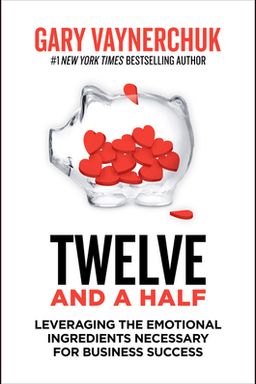
Have you ever wondered why some wildly talented people struggle to lead while others, seemingly less qualified, inspire teams effortlessly? In Twelve and a Half, Gary Vaynerchuk lays out an urgent message for every entrepreneur, manager, and human being in business: emotional intelligence—not raw intellect or hustle—is the true competitive advantage. He argues that mastering twelve and a half human ingredients is what separates sustainable success from burnout, resentment, and poor leadership.
Vaynerchuk contends that traditional business thinking, rooted in spreadsheets and quarterly numbers, ignores the softer skills that shape culture, trust, and creativity. Without empathy, gratitude, or accountability, organizations get toxic—even when they look successful from the outside. His core claim is that the future of leadership depends on a balanced mix of emotional ingredients, each essential yet incomplete on its own. You can’t just be ambitious or optimistic; you must know when to deploy humility, empathy, and patience, and when to counter those traits with conviction and candor.
The Shift from Hard Data to Human Data
According to Vaynerchuk, modern society values analytics over humanity. Business leaders obsessed with short-term metrics often overlook the emotional foundation of long-term success. This shift causes managers to tolerate toxic behavior from high performers and to prioritize profit over people. In the author’s view, this is not just bad ethics—it’s bad business. Emotional safety in a workplace accelerates innovation and execution when fear is removed. Leaders must design environments where empathy and kindness coexist with accountability and ambition.
Vaynerchuk’s own story showcases this balance. When a client once demanded that he fire an employee who had tweeted something offensive from the client’s account, he refused—even though the deal represented 30 percent of his company’s revenue. That decision, rooted in empathy and accountability rather than fear, became a cornerstone for his company’s culture. He didn’t choose profit over people; he chose trust over temporary comfort.
The Twelve and a Half Ingredients
Across his book, Vaynerchuk identifies twelve emotional ingredients—gratitude, self-awareness, accountability, optimism, empathy, kindness, tenacity, curiosity, patience, conviction, humility, and ambition—plus one “half”: kind candor. Each of these represents a different flavor of emotional intelligence. “Kind candor,” his personal weakness, blends honesty with empathy; it’s about telling the truth in a way that preserves relationships. By admitting that candor is his half, he shows readers that nobody is fully baked. Awareness of your own halves is the starting line for growth.
Vaynerchuk’s model isn’t prescriptive—it’s contextual. Different life and business scenarios require different combinations. Gratitude and optimism might guide you through failure, while accountability and ambition push you to take action. Empathy heals relationships, and conviction sustains belief during criticism. More importantly, these traits aren’t opposites—they complement one another when mixed carefully. He likens leadership to cooking: every ingredient matters, but the flavor depends on proportion and timing.
Business as a Human Art
Vaynerchuk sees business as an art form—an expression of empathy and creativity, not just a set of transactions. Success, he argues, comes from understanding humans, not hacking systems. Like Daniel Goleman’s framework of emotional intelligence, his take broadens beyond self-improvement to organizational design. Empathetic leaders cultivate environments of kindness and candor, turning communication into trust and trust into speed. When people feel safe, they execute faster and smarter. The “emotional infrastructure” becomes the invisible engine behind great companies.
Why This Matters for You
Vaynerchuk asks you to question not only how you work but why you work. If you’re chasing success through fear, resentment, or insecurity, you may feel outwardly successful but inwardly miserable. His message is to build peace of mind—the “ultimate privilege”—through self-awareness and kindness. The strongest entrepreneurs are not the loudest but the most emotionally balanced. This book serves as a map to lead with compassion in a noisy world and to replace burnout with purpose. As he reminds readers, emotional intelligence isn’t a luxury—it’s survival practice for the century ahead.
“When you actually understand how unimportant business is in the grand scheme of your life, it allows you to enjoy it and potentially get better at it.” — Gary Vaynerchuk