
Idea 1
Seeing the Internet as a Place You Can Visit
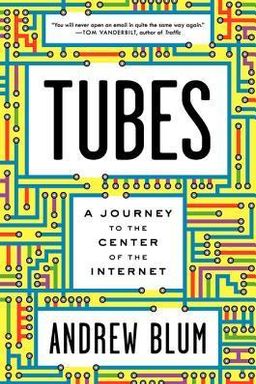
What if you could actually see the Internet? Not the glowing icons, search bars, and endless scrolls on your screen—but the real, physical places that make it work? This is the question Andrew Blum asks in Tubes: A Journey to the Center of the Internet, a book that turns the invisible architecture of our digital lives into a vivid, human-scale geography. He argues that the Internet is not an abstract cloud floating above us but a tangible, intricate web of machines, cables, and buildings. Once you know where to look, the Internet stops being magic and becomes something you can touch.
Blum’s journey began with a humble event: a squirrel chewing through a cable in his Brooklyn backyard, cutting his Internet connection. That absurd incident opened his eyes to how real the Internet’s infrastructure is—how it depends on physical systems vulnerable to rodents, geography, politics, and human hands. From that moment, he set out to track the Internet down—not as a user, but as an explorer. He wanted to climb into data centers, walk along undersea cables, and talk with the engineers who keep those blinking boxes alive.
The Internet as Geography, Not Metaphor
Blum dismantles the myth of the Internet as a nebulous, immaterial 'cloud.' The term suggests smoothness, ubiquity, and detachment from material constraints. But that idea, he insists, is dangerously misleading. The Internet has borders, choke points, and landmarks. It relies on massive hubs like Equinix in Ashburn, Virginia; DE-CIX in Frankfurt; AMS-IX in Amsterdam; and Telehouse in London. Its arteries—fiber-optic cables—line railroad tracks, highways, and the ocean floor. Its nodes are data centers humming with light and heat. The Internet is, quite literally, a city of light—vast, mechanical, and surprisingly earthbound.
What Blum discovers is a pattern as old as human civilization: where information flows, geography still matters. Just as ancient ports and trading posts once served merchants and sailors, today’s Internet exchanges connect engineers and algorithms. Frankfurt is a hub because it has always been a meeting point of Europe’s trade routes. London’s Docklands still draw network traffic because of the same global arteries that carried ships centuries ago. Technology didn’t replace geography—it rediscovered it.
From Invisible Wires to Human Hands
Behind every packet of data that travels across the Internet is a chain of relationships—a handshake between engineers, companies, and governments. Blum introduces us to this world of what he calls “network people”—the operators, cable layers, and peering coordinators who make sure your Google search reaches its destination. These are the unsung wizards who gather at operator meetups (like NANOG in Austin) not to dream up new gadgets, but to share beers, routes, and peering agreements—the social fabric behind the world’s digital connectivity.
This is not the 'disembodied' Internet we imagine. It’s a system maintained through friendships, rivalries, deals, and trust. The engineers talk about “peering,” the physical and moral pact that allows networks to exchange data freely. They speak of “cables” the way sailors once spoke of rope and rigging. By showing us this communal, competitive, occasionally secretive tribe, Blum humanizes the abstraction we call global connectivity.
Why Physical Reality Still Matters
Why does knowing where the Internet is matter to you? Because understanding its geography helps you understand its fragility and power. When Blum visits Equinix Ashburn—one of the network’s busiest intersections—he realizes that if a handful of buildings in Virginia were destroyed, huge parts of the world’s Internet traffic would slow or even stop. In an age obsessed with data privacy, speed, and dependency, realizing that the Internet has real doors, locks, and guards changes how you understand security. If your emails, videos, and personal memories live 'in the cloud,' they actually sit in a warehouse somewhere, powered by local electricity and cooled by fans humming in the dark.
Blum invites us to rethink the Internet as part of our physical environment—an infrastructure as awe-inspiring and as vulnerable as the power grid. He points out that the world connects through choke points: a handful of undersea cables, a few key exchanges, and a surprisingly small number of technicians. This realization reframes the Internet not as a boundless universe but as a fragile, handmade quilt stitched together by real people.
A Journey from the Edge to the Center
Over the course of the book, Blum travels from his local network in Milwaukee, through historic switching points in Virginia and California, to global Internet exchanges in Europe, and ultimately to the undersea cables that bind continents. Along the way, he discovers that the Internet is both shockingly robust and astonishingly intimate—a network built from thousands of small decisions by engineers across decades. His odyssey ends where much of our data is stored today: in enormous data centers in rural Oregon and North Carolina, places where digital clouds meet concrete and steel.
By the end of Tubes, you realize that understanding the Internet’s material world changes how you perceive your own. Every click, upload, or video call traces a route through real terrain, shaped by geography and human will. Blum’s mission—to teach us to see the invisible—becomes a moving reminder that even in an age of silicon and photons, place still matters.