
Idea 1
The Architecture of Competing Truths
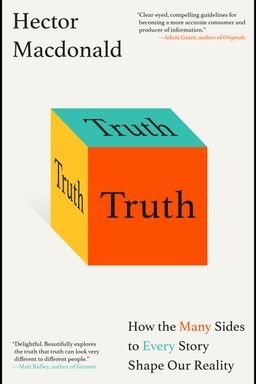
What happens when almost every statement you hear is technically true but potentially misleading? In Truth: How the Many Sides of Every Story Shape Our Reality, Hector MacDonald argues that you live amid a landscape of competing truths—partial, selective accounts of reality that are all true within their chosen frame but incomplete when taken alone. Because reality is complex, simplicity often distorts. The book’s central claim is both empowering and unsettling: truth is not singular; it is compositional, and whoever controls which fragments are told can steer perception, emotion and behaviour.
MacDonald builds a persuasive map of how truth functions across social life—from journalism to science, branding, and politics. He begins with perception and framing, moves through numbers, names, stories, morality and desire, and ends with how predictions and social constructs shape the future. The result is a kind of field manual for critical thinking in an age of information warfare.
Why complexity breeds competing truths
To show how easily truthful facts can diverge, MacDonald begins with an egg. You can call it oval, fragile, protein-rich, or potential life. Each description is true; none is complete. This everyday metaphor reminds you that even good-faith communicators must choose which truths to present. Every selection is an act of emphasis—and, therefore, of persuasion.
He identifies three recurring manipulative tactics: omission (leaving out relevant truths), obfuscation (burying one truth among many), and association (connecting unrelated facts to alter emotional tone). The examples stretch from Coca-Cola’s sanitized corporate history, which omits its wartime Nazi connection through Fanta, to Bell Pottinger’s campaign in South Africa deflecting corruption allegations by promoting distraction narratives about “White Monopoly Capital.” MacDonald reminds you that simplicity serves power more than accuracy.
Truth’s social and psychological scaffolding
Beyond surface persuasion, the book situates truth within human psychology. We simplify complex realities through frames and stories, assigning meaning based on the context supplied. A shore landing after space survival feels triumphant; the same shore, for a stranded tourist, signals danger. Facts need context to acquire sense, and communicators use framing to decide that sense for you before you even engage.
History and memory operate in similar ways. When states or corporations retell their pasts, they sculpt competing versions of identity. MacDonald shows how Coca-Cola, Ericcson and national governments use selective storytelling to manage reputation. Each narrative foregrounds certain strands and suppresses others, proving that history itself is a battleground of partial truths.
Numbers, definitions and other engines of persuasion
What about objectively measurable truth—numbers or legal definitions? MacDonald upends your confidence here, too. Numbers mislead when communicators choose convenient metrics. A labour-force statistic might imply mass joblessness but include retirees and students. A “3% abortion rate” sounds small until you realize the total counts all other services like pregnancy tests. Definitions likewise carry immense political and moral weight: the threshold for “famine” can open or withhold aid; the reluctance to define “genocide” can justify inaction.
MacDonald equips you to question such definitional sleights: ask what criteria are in play, who decides them, and who gains from their acceptance. Words and numbers may seem neutral; in reality, they are tools that allocate moral and material outcomes.
Why truth matters for values, desires and the future
Later chapters widen the frame from communication to conviction. Moral standards, cultural tastes and economic values are shown to be fluid constructs shaped by storytelling and social pressure. What society calls virtue or vice, fashionable or obsolete, valuable or worthless depends on narrative framing. From the moral panics surrounding narcotics to the social manufacturing of desirability and the subjective pricing of labour, MacDonald demonstrates that almost every shared value is a persuasive truth sustained by belief and repetition.
Even the future itself is framed in predictive truths. Forecasts, from economic projections to climate models, are not just guesses—they alter policy and expectation. Predictions can be self-fulfilling (as with central bank interventions) or self-defeating (when alarm provokes preventive action). The ethical communicator must acknowledge that truth claims about tomorrow can make—or unmake—that future.
The central lesson
Throughout the book, MacDonald calls for a practical virtue: curiosity over certainty. Rather than asking whether a statement is simply true or false, ask: “What other truths are possible here?” and “Who benefits from this version?” He insists that you can use the same tools of narrative, framing and naming ethically—to communicate honestly in a complex world instead of retreating into cynicism.
Core insight
Truth is plural and active. To live responsibly in the twenty-first century, you must learn to navigate competing truths—recognizing their power, questioning their purpose, and wielding your own honestly.