
Idea 1
Feeding the Media Monster
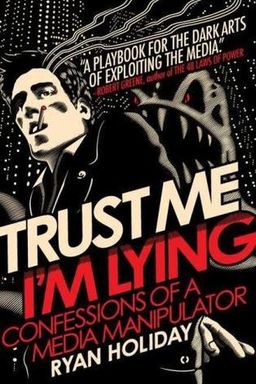
Why does so much of what passes as “news” feel manipulative, shallow, or even false? In Trust Me, I'm Lying, Ryan Holiday argues that you live inside a broken media ecosystem—a self-feeding monster driven by attention rather than truth. Every click you give it is food. Every view turns into revenue. Understanding this feedback loop is the first step toward escaping it.
The core economy of attention
Holiday explains the governing equation of modern media: advertisement × traffic = revenue. Whether it’s Gawker chasing pageviews or Huffington Post optimizing headlines for virality, outlets reward speed and controversy over accuracy. The system’s design forces journalists to publish quickly, inflate outrage, and privilege engagement metrics above public service. Your attention becomes the product sold to advertisers.
In this model, publishers are incentivized to maximize impressions, manipulators exploit those incentives, and readers—often unknowingly—serve both. The more clicks, shares, and comments a story gets, the more valuable it becomes, regardless of its truth. (Note: This is the same dynamic Shoshana Zuboff later describes as “surveillance capitalism,” where data and attention drive profit.)
How the system manufactures reality
Holiday reveals how “trading up the chain” turns small stories into national narratives. You start with a local blog or niche outlet—places with few editorial checks—and seed something provocative or fake. Mid-tier outlets aggregate those posts, and national sites, under pressure to chase trending topics, pick up the momentum. Once CNN or the New York Times echoes it, the rumor becomes “fact.”
He demonstrates this cycle with real examples: a fake billboard vandalized for Tucker Max’s film, small posts that snowballed into national coverage, and even his own quotes fabricated through Help A Reporter Out (HARO) that appeared in Reuters and CBS. One false seed can climb levels of authority until unreality becomes reality.
Perverse incentives and systemic rot
Because many writers are paid by pageviews, they consciously craft whatever spreads. Holiday recounts Gawker paying bonuses for traffic spikes and fashion bloggers accepting “soft bribes”—gift cards, event invitations, early access—that shape coverage without direct payment. Publishers chasing IPOs or acquisitions (like HuffPost’s $315 million sale to AOL) optimize for explosive growth at the cost of credibility. You can literally buy attention with perks, ad dollars, or traffic forecasts, and journalists respond because the transaction aligns with their paychecks.
From outrage to virality
Emotion powers the machine. High-arousal emotions—especially anger—travel fastest. Holiday cites Jonah Peretti’s research showing that outrage drives shares more reliably than sadness or calm reflection. That’s why Detroit ruin porn galleries circulate widely while compassion-focused, human-centered photo essays languish unseen. The internet rewards intensity, not empathy.
What’s lost—and what can be reclaimed
The result, Holiday warns, is an age of unreality: a pseudo-environment built from rumors, marketing campaigns, and ego-driven stunts. Political operatives, trolls, and even extremists (he points to Terry Jones’s Koran-burning incident that fueled deadly riots abroad) use the same mechanics. Journalism becomes iterative, constantly correcting but never restoring truth—the correction reaches fewer people than the original lie.
Holiday’s closing plea is simple but radical: stop feeding the monster. Pay for trustworthy journalism instead of chasing free outrage. Be skeptical of headlines, track the origins of every link, and slow your consumption. When you treat news as entertainment, unreality wins; when you demand context and accountability, the monster starves.
"You are living in a world where attention is currency and truth is optional." Holiday exposes that world not to exploit it, but to help you resist it.
Once you see the machinery behind modern media—the economics of clicks, the psychology of outrage, the manipulation of incentives—you begin to reclaim agency. Holiday’s book offers not cynicism, but a practical roadmap: understand the game, refuse to play by the rules that reward deception, and choose depth over distraction.