
Idea 1
Building Trust in a Digital World
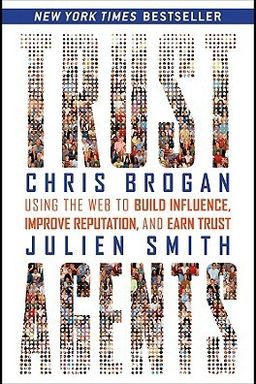
How can you earn people’s trust in a world where Google can expose every half-truth and social media can amplify every mistake? In Trust Agents, Chris Brogan and Julien Smith argue that the very fabric of business has changed: success now depends on how effectively you build trust and human connection in online spaces. They contend that traditional marketing and broadcasting models, shaped during decades of one-way communication, have collapsed. The new power lies with individuals and businesses that can cultivate genuine relationships, transparency, and influence across digital networks.
Trust, the authors assert, functions as social capital—a currency exchanged through generosity, credibility, and shared experiences. In earlier generations, trust was local: you bought from the storekeeper you knew or followed advice from the neighbor next door. Today, the Web demands a new form of humanized trust: one that spreads through transparent communication, reputation, and connection. Trust Agents teaches how you can become an influential, ethical connector who leverages technology to earn attention, community, and opportunities.
The Age of Transparency
Brogan and Smith begin by reminding you that there are almost no secrets online. Every post, comment, or video leaves a permanent trace, shaping how people perceive you or your organization. The Internet has made identity permanent and searchable. Companies that once relied on slick branding campaigns now face audiences armed with instant fact-checking tools and peer recommendations. In this environment, reputation isn’t manufactured—it’s earned through honesty and consistency.
This new transparency can be frightening. But for those willing to embrace it, it offers tremendous power. By sharing your values openly and responding authentically, you distinguish yourself in a landscape crowded with calculated marketing. Robert Scoble’s early Microsoft blog is a prime example: he became trusted not by defending the company line, but by admitting its flaws and engaging openly with developers and customers. He was “one of us”—not a faceless spokesman but a real person who cared.
Trust Agents as the New Influencers
The authors define “trust agents” as people who humanize the Web. They communicate sincerely, connect generously, and leverage their networks for mutual benefit. Instead of hard-selling, trust agents focus on providing value, empowering others, and listening actively. They stand at the intersection of human empathy and technological understanding. Figures like Scoble, Beth Kanter (who uses social media for nonprofit causes), and Gary Vaynerchuk (who reinvented wine marketing through online authenticity) embody this ideal.
Trust agents understand that influence spreads organically. They see the digital world as a form of social ecosystem—similar to Malcolm Gladwell’s “connectors” in The Tipping Point. Their actions—commenting, sharing, and helping—accumulate social capital, which later translates into opportunities. A simple favor or helpful blog post may seem small, but it builds credibility far more effectively than self-promotion.
The Six Pillars of Trust
At the heart of the book are six interlocking principles that describe how trust agents operate:
- Make Your Own Game – Redefine the rules of your industry by doing things differently. Innovators like Tim Ferriss (“The 4-Hour Workweek”) or Radiohead (with their pay-what-you-want album release) thrive by rewriting the script.
- One of Us – Embed yourself in communities genuinely. People trust those who share their language and culture.
- The Archimedes Effect – Use leverage—tools, networks, and time—to maximize impact. Social media allows small efforts to reach massive audiences.
- Agent Zero – Be the hub of connections, introducing people across networks to create shared opportunity.
- Human Artist – Master empathy, etiquette, and humanity online. Treat people as people, not metrics.
- Build an Army – Lead communities that multiply your reach through collaboration and shared goals.
Each principle amplifies the others: creativity leads to belonging; belonging fosters leverage; leverage enables connection; connection requires empathy; and empathy inspires collaborative movements. Together, they create a framework for influence built on trust rather than manipulation.
Why It Matters Today
The authors wrote Trust Agents during a time of economic upheaval—post–2008 recession—when society’s trust in institutions had collapsed. Their prescription remains strikingly relevant: when distrust runs high, individuals and organizations must rebuild credibility through transparency, reciprocity, and authenticity. Rather than hiding behind brands, you must engage openly, listen carefully, and give first.
Ultimately, Trust Agents shows that technology changes fast—but people change slowly. Human beings still crave connection, honesty, and belonging. The Internet simply magnifies those instincts. Whether you’re an entrepreneur, marketer, or leader, mastering trust online isn’t just about social media—it’s about rediscovering the timeless art of being both human and helpful in a digital age.