
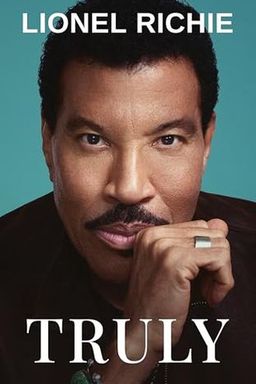
Truly cover

Truly

by Lionel Richie

The multiple award-winning musician shares moments from his early years, his time with the Commodores and other professional highlights.

From Other Side to World Stage

How do you build a creative life that lasts—across genres, decades, and public storms—without losing yourself? In this memoir, Lionel Richie argues that enduring success comes from a repeatable pattern: you cultivate a private creative refuge, you apprentice inside strong institutions and teams, you break boundaries with courage and care, you shoulder the costs of visibility, and you keep reinventing with purpose. He calls his inner sanctuary the "Other Side"—a space he used from childhood onward to receive melodies, test new selves, and turn liabilities into gifts.

At its heart, the book is a field manual for creators and builders: protect solitude, assemble reliable collaborators, seek rigorous mentorship, own your voice even when it crosses genre lines, prepare for backlash, and install recovery systems for when life inevitably breaks your rhythm. You see the entire arc—from Tuskegee’s Bubble and the Commodores’ DIY rise, through Motown’s craft school and the high-wire act of crossover hits, into the isolating glare of fame, the collapse that followed, and the long, grounded reinvention that made room for global activism and late‑career flowering.

The inner laboratory that starts it all

Richie’s Other Side isn’t mysticism; it’s disciplined privacy. As a dyslexic, shy, hyperactive kid, he learns to convert anxiety into rhythm, tap patterns on the table, and hold melodies in his head until he can capture them. That habit scales: decades later, hooks arrive as a hummed fragment at dinner ("All Night Long"), or as a feeling in a dark preview theater ("Endless Love"). You learn a practical truth: creativity begins when you build a protected room and keep returning.

Teams, mentors, and the assembly line of songs

The book shows how durable careers aren’t solo projects. At Tuskegee, Michael Gilbert recruits coachable bandmates and turns presentation into a product; in Harlem, the Commodores learn street codes and stagecraft. At Motown, Richie apprentices under Norman Whitfield, James Anthony Carmichael, and Marvin Gaye, absorbing an assembly-line model that treats songwriting as iterative craft. Roles, rituals, and feedback loops (think Motown’s Quality Control meetings) turn raw ideas into hits.

Crossing borders—musical and cultural

When ballads like "Easy," "Three Times a Lady," and later "Lady" (for Kenny Rogers) scale Pop, Country, and R&B, Richie collides with identity gatekeeping. Black radio programmers call his work "not R&B"; critics accuse him of pandering. Richie reframes the debate: emotion is universal, and genre policing can suffocate Black innovation. The lesson travels: when you expand audiences, expect friction—prepare your message, allies, and ownership.

The price of ascendancy—and how to pay it

Success magnifies fault lines. Inside the Commodores, flattening management (Benny Ashburn becoming the "seventh Commodore") removes the stabilizing veto and accelerates fracture. Externally, fame invites offers that can mortgage your future (Sammy Davis Jr.’s warning: say no more often than yes). Richie shows how grief stacks—mentors die, fathers decline, voices hemorrhage—and how technology (Dr. Steven Zeitels’s vocal surgery), therapy, and ritual rebuild a career one decision at a time.

Activation: when songs serve the world

"We Are the World" becomes a case study in moral clarity meeting ruthless coordination: Harry Belafonte frames the cause, Quincy Jones and team blueprint secrecy and parts, forty-five stars check egos at the door, and the record raises $80 million. Later, Richie uses festivals, residencies, and country collaborations (Tuskegee) to re‑enter culture on his terms. He treats gardening like songwriting—tend, prune, wait—and mentors on American Idol to extend impact.

Core thesis

Creativity is a habit housed in a refuge, scaled by systems and mentors, tested by culture wars, and sustained by reinvention and care.

If you’re building anything—songs, startups, movements—Richie’s map holds: protect an inner lab; pick teammates for reliability; apprentice where craft is systematized; cross borders with intention; expect backlash and plan your governance and health; and reinvent from roots, not trends. (Compare Rick Rubin’s The Creative Act for inner practice, Questlove’s Creative Quest for process playbooks, and Patti Smith’s Just Kids for the sanctity of artistic intimacy.) You finish the book with a paradox that becomes a principle: to go global, you must go inward first—and keep returning.


Making a Self

Richie’s early life in Tuskegee teaches you how family standards and private refuge combine to build a durable self. On one side stands an exacting community—Booker T. Washington’s legacy, George Washington Carver’s mythos, and the Tuskegee Airmen’s courage—raising the bar for character and achievement. On the other side sits a shy, dyslexic, hyperactive child tapping rhythms on desks, humming under his breath, and slipping into what he calls the Other Side. The fusion becomes his operating system: external excellence plus internal experimentation.

The Other Side: anxiety into melody

Instead of fighting distraction and shyness, Richie channels them. He holds melodies until he can capture them, builds grooves from foot‑tapping, and rehearses scenes in his head that later become lyrics. You can copy this move: schedule a daily window where output doesn’t matter, only play. Record fragments—hummed lines, chord shapes, phrases—without judgment. Over time, those bits become a catalog you can draw on under pressure (as he later does with "Lady" and "All Night Long").

Parents as toolkit: polish and grit

His mother, Alberta, drills grammar, manners, and presentation; his father, Lyonel Sr., supplies gallows humor and survival wisdom from Jim Crow America. That combination lets Richie move between drawing rooms and back rooms—able to charm, but also to deflate pretension. When a "Whites Only" fountain incident could have ended in violence, his father chose presence over pride.

A father’s ethic

“I chose to be your father rather than to fight someone at the fountain.” That line hardwires Richie’s later choices about survival, restraint, and the long game.

The Tuskegee Bubble: pressure and shelter

Growing up across from the university president’s house, Richie feels the prestige and the watchful eyes. The Bubble protects and polices. For you, the lesson is double-edged: tight communities gift you discipline and aspiration; they also create identity anxiety. Richie copes by leaning harder into the Other Side and by embracing mentors—grandmother Adelaide at the piano, neighbors like Mr. Jefferson—who open doors and reframe paternal resistance into support for music.

Turn oddities into assets

What teachers call "too hyper" becomes raw percussion; what critics frame as "slow learner" becomes a listening superpower—he translates table taps into melodies. If you’re neurodivergent or simply unconventional, Richie’s path offers a script: don’t sand off your edges; mine them. He doesn’t wait for perfect notation skills—he hums into tape and later relies on arrangers at Motown to translate voice into charts.

Practical moves you can make

  • Name your lab: call your private window something ("Other Side") to legitimize it.
  • Collect fragments: keep voice notes and a "tops of tunes" folder to pitch flexible beginnings.
  • Recruit allies at home: one inside advocate (Mr. Jefferson with Lyonel Sr.) can flip a family decision.

(Note: You’ll hear echoes of this in Patti Smith’s Just Kids, where private vows and tiny practices accumulate into voice; and in David Byrne’s How Music Works, where context—rooms, communities—shapes sound.) Richie’s self-making is simple and repeatable: build a refuge, accept your wiring, and let a high-standard community sharpen rather than crush you.


Bandcraft and Streetcraft

The Commodores form like a startup that prizes reliability over flash. At Tuskegee, Michael Gilbert sketches a vision: a clean, marketable show band with uniforms, choreography, and Top‑40 instincts. He recruits not the most dazzling soloists, but the most coachable: Milan Williams on keys, William "WAK" King on trumpet and dance, Ronald LaPread on bass, Clyde on drums and later vocals, and Richie on sax turned singer. They design roles and routines early—setlists, wardrobes, mic patter—so the product is recognizable wherever they land.

Smalls Paradise: the proving ground

A residency at Harlem’s Smalls Paradise in 1968 becomes their ignition point and street school. Robbed on night one, they recover gear by negotiating with hustlers who respect spine. They learn to hide money in socks, scan rooms for trouble, and work breaks like sales calls. The club’s rhythm—80% show, 20% survival—transfers later to arenas: if you can read a room in Harlem, you can read 20,000 people in Cleveland.

Stagecraft at scale: opening for the Jackson 5

On the Jackson 5 tour, the calculus changes: your job is to warm up a family crowd without burning out your stamina. Watching Michael Jackson’s rigor teaches process discipline; traveling nightly teaches logistics—banking, passports, and a sober respect for fatigue. Richie learns to say a simple, life-saving "Good night" when the party invites disaster. The meta-lesson: scaling requires operational maturity.

Rituals and roles beat raw talent

The Commodores win because they operationalize professionalism. They build scripts: a "Showtime!" intro, coordinated transitions, who speaks when. They treat every venue as a lab to test arrangements and banter. In your team, this means codifying who does what, under what standards, and how you adapt in real time. You don’t remove art; you build a chassis that protects it.

Community and patronage matter

Behind the stage stands a network: YMCA lodging, Benny Ashburn’s contacts, Harlem protectors like Big Ann and Cookie, and Tuskegee elders who open doors. Richie never frames success as solitary. If you’re building something, find your Benny—someone who believes, brokers, and occasionally bodyguards your dream. And repay that trust with reliability: show up on time, do the reps, and make the next gig easier to book than the last.

Operating rule

Coachability beats virtuosity in the early stage. You can teach chops; it’s hard to teach reliability and grace under pressure.

Practical playbook for your team

  • Recruit for temperament: pick people you’d trust with your wallet and your worst day.
  • Design repeatable rituals: intros, handoffs, and debriefs that keep quality high.
  • Build a local case: dominate one room (Smalls) before chasing the world.

(Compare Steven Pressfield’s notion of turning pro—rituals that make art inevitable.) Bandcraft earns the right to be seen; streetcraft keeps you alive long enough to matter.


Motown Method

Motown is Richie’s graduate school in hit-making—a place where inspiration meets an assembly line. The company borrows from Ford: writers and producers draft the core, arrangers sculpt the harmonics, engineers capture and polish, and artists deliver with identity. Surrounded by Norman Whitfield, James Anthony Carmichael, and Marvin Gaye, Richie learns that great records are team sports, not solo heroics.

From hum to record: a system

Feeling insecure about notation, Richie leans on a simple loop: hum ideas into a cassette, pitch "tops of tunes," then co‑develop with arrangers who translate voice into charts. Carmichael helps Richie build records around the singer—cutting clutter so the melody breathes. Norman Whitfield teaches the soul of production: what to layer, when to strip, how to get the take.

Quality Control: rejection as data

Motown codifies feedback: songs face rigorous Quality Control meetings where even good tracks get sent back. Richie learns to rewrite without ego ("Truly" comes back three times). In your work, this translates to building checkpoints and language for critique—what problem is the song solving, what emotion is the center, what line breaks the spell?

Deadlines and engineering saves

Assignments arrive like sprints. For the film Endless Love, Richie watches a rough cut, hums a theme, writes a verse in two days, and then must produce a duet with Diana Ross in Reno. When separate reels need syncing, engineer Reggie Dozier reconstructs SMPTE code so vocals align—a quiet miracle that saves a global #1. You learn to respect the invisible hands; engineers and arrangers can rescue your masterpiece.

Mentors who push at the right moment

Carmichael reads Richie’s face and says, "Brother Richie, you came out of the room too fast. Go back in, you’re almost there." Quincy Jones offers the producer’s creed: say yes first, feel later—lead when the moment demands it. Marvin Gaye reframes listening: if you hear a song in a table tap, you’re a songwriter.

Craft doctrine

Treat inspiration as raw ore. Systems, mentors, and patient rewrites refine it into a record people can live inside.

Your Motown, wherever you are

  • Build a feedback ritual: schedule QC-style reviews with trusted ears.
  • Keep fragments handy: pitch small, finish only when greenlit.
  • Secure a copilot: one arranger/producer who knows your voice as well as you do.

(In Ed Catmull’s Creativity, Inc., Pixar’s Braintrust mirrors Motown’s QC: candid notes, no authority to mandate, but power to sharpen.) Richie’s Motown years prove a simple equation: vision × system × mentorship = durability.


Crossing and Leaving

Richie’s breakthrough hinges on two related decisions: cross genres unapologetically and step from group identity into a solo voice. The first invites cultural friction; the second triggers internal fracture. Navigating both requires clarity, allies, and governance that can survive success.

Crossover as a conviction

Songs like "Easy" (soft ballad), "Three Times a Lady" (a waltz inspired by his father’s toast and first aimed at Sinatra), and "Sail On" (Country‑Soul) expand what Black pop can be. Black radio gatekeepers push back—some label the ballads "white shit" and refuse airplay. Richie hits back at a Black Radio Entertainment convention: if Mozart were Black, would we deny him for not fitting a box? Skip Miller, a Motown exec, goes to bat—calling Richie "our Mozart"—and fights for spins that change charts.

When giving away a song changes everything

The Commodores vote "no more ballads." Richie, still writing, has a scat piece called "Baby." Kenny Rogers asks for a Lionel ballad; in a Vegas suite, Richie adapts "Baby" into "Lady," promises to produce it himself, and delivers a cross‑format #1. The public draws a conclusion: Lionel is the hit engine. Inside the band, envy and power questions sharpen. Money follows publishing, and publishing follows authorship—the economics now favor Richie outside the group.

Governance failure and the human bill

Benny Ashburn surrenders his managerial veto to become the "seventh Commodore"—a fairness move that removes the tie‑breaker and turns decisions into stalemates. David Geffen’s blunt read—"If you know what you want, the way to get there is to line up behind Lionel"—lands like prophecy. Tension escalates; then Benny dies suddenly. Grief compresses time; reconciliation windows close. Richie later admits: he would have stayed if he hadn’t felt pushed out before the paperwork said so.

Leadership lesson

Flattening a hierarchy without replacing its conflict‑resolution mechanism often turns fair intent into leaderless drift.

Allies, advocacy, and the right messenger

When Richie fears asking Berry Gordy to greenlight Diana Ross for "Endless Love," Brenda (his then‑partner) confronts Gordy directly. Instead of bristling, Gordy respects her clarity and calls Diana. The session proceeds—separately recorded reels later synced by Reggie Dozier—and the song becomes one of the era’s biggest duets. The meta‑lesson: know who can ask whom; advocacy is a craft.

Your playbook for crossing and leaving

  • Define your why: cross genres for emotion, not novelty; have language ready for critics.
  • Protect ownership: publishing and production credits shape power when the hits land.
  • Fix governance: if a stabilizing leader steps into peer status, install a new decision mechanism.

(Note: You see similar arcs in bands like The Police or Genesis—when one member becomes the public face, structures must adapt or crack.) Richie’s transition from Commodore to soloist is not betrayal; it’s an evolution made inevitable by the songs themselves.


Pressure Makes Hits

Richie demystifies hit-making: it’s fragments, fast pivots, and production courage. The songwriter’s miracle doesn’t arrive finished; it emerges as you adapt ideas to collaborators, deadlines, and technology. Across "Lady," "Endless Love," and "All Night Long," you watch a playbook you can copy.

Keep beginnings small and flexible

Inside the Commodores, Richie pitches "tops of tunes" so the group can vote without sunk-cost drama. When Kenny Rogers asks for a ballad, Richie reshapes "Baby" into "Lady" overnight and takes the producer’s chair—backed by James Carmichael and Quincy Jones’s advice to say yes first. Titles change, lyrics tighten, arrangements serve the vocalist. Flexibility keeps momentum alive.

Write to the clock, not to comfort

For Endless Love, Richie watches a rough cut, hums a theme that matches the film’s ache, and returns with a verse two days later. Logistics threaten to wreck the session (Diana Ross in Reno, Lionel elsewhere), but engineering ingenuity—Reggie Dozier reconstructing SMPTE code—syncs separate reels. The record ships on time and becomes a global standard. The hidden rule: production is as creative as melody.

Hook-first can be culture-first

"All Night Long" starts as a throwaway line at a Jamaican dinner—"I gotta get back to the studio all night long, mon." Richie follows the vibe, blending Calypso feel, Jamaican patois flavor, and invented chant syllables ("Tam bo li de") to create instant communal singability. He’s careful to acknowledge invention over authenticity, but he trusts the global ear. Hooks can be cultural bridges when you design for chorus participation.

Mentors as accelerants

James Carmichael’s "go back in" pep talks and Quincy’s permission to lead unlock Richie’s producer self. Marvin Gaye reframes listening as composition: if a table tap sings to you, you’re already writing. These mentors lower psychic friction so Richie can finish under pressure without losing the song’s heart.

Execution creed

Fragments + fast decisions + the right copilot + technical respect = songs that travel the world.

Your deadline toolkit

  • Carry a fragment bank: phrases, melodies, titles you can rename and reshape on demand.
  • Pre-wire engineers: loop in technical partners early; they’ll spot time bombs and save days.
  • Mentor check: when stuck, ask a Carmichael-type coach to push you back "into the room."

(In advertising and product design, this mirrors the sprint ethos: prototype quickly, test the core hook, and let specialists harden the system.) Richie’s method proves that pressure doesn’t have to warp art; with the right supports, it can refine it.


Fall, Serve, Renew

After the mountaintop comes the bill. Richie threads together the moral hazards of fame, the crashes that follow, and a blueprint for recovery—anchored by service and roots-based reinvention. His late‑career chapters read like a resilience course you can adapt.

The five Ds: know your storms

His father’s framework—Divorce, Disease, Disaster, Death, Disgrace—turns prophetic. While charts stack #1s, losses pile up: John Lennon murdered, Bob Marley gone, Marvin Gaye killed, Benny Ashburn dies suddenly, Lyonel Sr. declines and passes. Richie’s voice hemorrhages; early laser fixes risk scarring. Depression and ADHD patterns surface as the touring grind strips routine. The spotlight hides pain rather than healing it.

Medicine plus retraining

Enter Dr. Steven Zeitels with a cool laser technique that repairs Richie’s vocal cords without destructive heat. Surgery is step one; step two is relearning how to sing, pace, and trust the voice. Therapy joins the plan, alongside grounding practices: time in Tuskegee, smaller rituals, and eventually gardening—tending fragrances and trees as a daily act of patience and presence.

Service as re-centering: We Are the World

One of the most instructive episodes is "We Are the World." Harry Belafonte reframes charity: Black artists must show up for Black suffering. Quincy Jones posts "Check your egos at the door," builds a floor plan for forty‑five stars, and with Richie and Michael Jackson writes fast, demos fast, and records in secret after the American Music Awards. The line Quincy fights for—"There’s a choice we’re making / We’re saving our own lives"—turns a fundraiser into a covenant. The record raises ~$80 million, builds infrastructure for aid, and models cross‑genre solidarity.

Reinvention from roots, not trends

When Richie returns to recording, he doesn’t chase charts; he reframes his catalog through the South he came from. The Tuskegee album pairs him with country collaborators—Willie Nelson, Darius Rucker, Shania Twain—and reintroduces classics to new audiences while honoring home soil. He curates stages that suit his energy: Vegas residencies for intimacy, festivals like Glastonbury and Bonnaroo for scale. TV mentorship (American Idol) turns private craft into public service.

Boundaries that save you

Sammy Davis Jr. warns, "Your answer to everything they offer you is no," teaching Richie to protect future freedom. Quincy reminds him that worry is a by‑product of indecision—say yes to the right things decisively, and say no to the rest. Logistics become emotional safety nets: passports copied, cash stashed, routines honored.

Renewal formula

Name the storm, accept medical and technical help, pair therapy with daily tending, serve a cause bigger than your career, and re‑enter on stages that fit your voice now.

(Compare Springsteen’s accounts of depression and ritual in Born to Run, or Rick Rubin’s focus on sustainable practice.) Richie’s late chapters close the loop: the Other Side is still there, but now it’s joined by gardens, choirs of peers, and the calm of a man who knows when to leave the party—and when to step back on stage.

Dig Deeper

Get personalized prompts to apply these lessons to your life and deepen your understanding.

Go Deeper

Get the Full Experience

Download Insight Books for AI-powered reflections, quizzes, and more.