
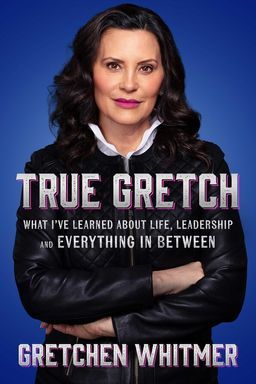
True Gretch cover

True Gretch

by Gretchen Whitmer With Lisa Dickey

The governor of Michigan recounts defining moments from her life and time in office.

Leading with Grit, Humor, and Heart

When life hands you a bully, a blizzard, or a breaking-news chyron with your name on it, how do you stay steady—and even find a way to laugh? In True Gretch, Michigan governor Gretchen Whitmer argues that modern leadership—at home, at work, and in public life—hinges on three deceptively simple muscles you can build: grit (do the next right thing), humor (find light even in dark places), and heart (listen, empathize, and stay kind). Whitmer contends that you don’t need to be a governor to practice these—she learned them from her grandmothers, honed them through personal trauma, and stress-tested them through a once-in-a-century pandemic, armed protests, and an apparent assassination plot. Her core claim: your toughest moments can become your strongest tools if you refuse to let others define you, if you turn pain into purpose, and if you show up—again and again—for people.

From the first chapter, Whitmer models how to turn insults into armor. When President Trump dubbed her “That Woman from Michigan,” she flipped it into a rallying cry, merch, and momentum—much like she’d done with childhood nicknames (“Greedy Gretchen,” “Gravity Gretchen”). This isn’t a quirk; it’s a playbook for facing bullies: take their weapon and make it your shield. She brings the same approach to policy fights—like a cynical 2011 anti-bullying bill with a “religious belief” loophole—which she and allies reframed as a cartoon “License to Bully,” pressuring Republicans into adopting a straightforward prohibition on bullying. The idea is clear: identify the pressure point, reframe the narrative, and move people.

What You’ll Learn

This summary explores nine big ideas you can apply anywhere. You’ll learn how Whitmer transformed a private trauma—her college sexual assault—into a catalytic act of public courage that helped repeal Michigan’s notorious “rape insurance” law a decade later (a case study in converting pain into policy). You’ll see how a single hospital conversation with a mom named Bridget Bonds birthed a winning statewide slogan—“Fix the Damn Roads”—and, more importantly, a listening habit that changes how you diagnose problems (think Toyota’s “Five Whys”). You’ll watch a new governor navigate a polar vortex by asking a whole state to drop thermostats to 65—and watch them actually do it—because asking for help works when people trust you.

We’ll also unpack how to build a team that expands your reach—right down to a Barbie-sized communications masterstroke (“Lil’ Gretch” educating millions on a state budget) and a potato-filtered governor who lets staff stretch creatively without fear. You’ll see why “take nothing personally” is a survival skill (remember the dress flap, the body commentary, and Grandma Gretchen’s mischievous wink), and how gallows humor functions as resilience fuel (a family that texts a funeral-home drive-by after an old sibling spanking incident). And we’ll spend time in the crucible: armed protests at the Capitol, a foiled 2020 plot to kidnap and kill her, and a mass shooting in Oxford—moments where Whitmer models running toward the fire, not away from it.

Why This Matters Now

We’re living through what Whitmer calls a “damn dark time”: social fracture, disinformation, and escalating dehumanization. Her book reads like a field manual for staying human and effective when the volume is turned to 11. If Michelle Obama’s Becoming gives you a philosophy for “when they go low, we go high,” True Gretch gives you a toolkit for the next 24 hours: how to respond to an attack without amplifying it, how to listen your way to the beating heart of an issue, and how to mobilize people when everything feels on fire. It also models vulnerable leadership—akin to Brené Brown’s Daring Greatly—where sharing your story becomes service, not spectacle.

There’s a throughline here that echoes Doris Kearns Goodwin’s Leadership in Turbulent Times: crises don’t create character; they reveal it—and they refine it if you let them. Whitmer’s story traces that arc from a young, klutzy kid with a big laugh and bigger braces to a governor who has never lost an election, not because she’s bulletproof but because she’s relentlessly learn-it-all over know-it-all (an Adam Grant Think Again sort of stance). Her “three-beat” leadership cadence—listen closely, act clearly, and laugh when you can—translates across contexts: neighborhoods, companies, classrooms, and yes, capitols.

Key Idea

“Don’t mess with American women. We’re tough and we fight back and we will win.” Whitmer’s refrain isn’t just bravado; it’s an ethic: turn hurt into help, turn outrage into organizing, and turn fear into forward motion.

How to Read This Summary

Each section stands alone so you can dip in as needed: defusing bullies, using your story, listening as strategy, building teams, running toward the fire, seeking understanding in polarized spaces, choosing kindness and apologies as power moves, and embodying the “Happy Warrior” mindset (yes, there’s a Shark Week mantra). Expect names, dates, hospital rooms, cold basements in the UAW hall, pink ink on a repeal bill, and a tiny Barbie governor schooling the internet on line items.

If you want a leadership book that doesn’t flinch from darkness but refuses to live there, True Gretch is your (fuchsia-clad) guide. The promise is not that things get easier. It’s that you get sturdier—and more useful—when you practice grit, humor, and heart on purpose.


Flip Insults into Armor

Whitmer’s first rule for bullies is disarmingly simple: don’t feed their frame—flip it. As a fifth grader, she endured “Greedy Gretchen” after a Three’s Company character made her body a punchline. Later, after a brutal spill at church camp knocked out her front teeth, her dad’s nickname—“Gravity Gretchen”—turned mortification into a family joke. By the time President Trump dismissed her as “that woman from Michigan,” she had decades of practice alchemizing mockery into momentum. She printed the phrase on shirts, wore one on The Daily Show, and watched an Etsy economy spring up around a putdown she had repossessed. The lesson for you: the fastest way to neutralize a bully is to grab the mic, rename yourself, and make the insult do your work.

Reframe or Be Framed

When Trump told Mike Pence, “Don’t call the woman in Michigan” (March 27, 2020), Whitmer could have fired back in pure defense. Instead, she tweeted, “Hi, my name is Gretchen Whitmer… I’ve asked repeatedly and respectfully for help,” redirecting the narrative to action items—PPE, ventilators, masks. When he labeled her “Gretchen ‘Half’ Whitmer,” she stashed the zinger on her family cookbook—Half-Whits—defanging it with humor. This strategy echoes Michelle Obama’s “go high,” but with a tactical twist: she metabolizes the hit into an organizing banner. You can do the same in conflicts at work or online—restate the slight as a mission or meme that advances your goal.

Turn Spectacle into Substance

Whitmer doesn’t stop at merch; she pushes reframing toward policy. In 2011, Republicans advanced “Matt’s Safe School Law” honoring a student who died by suicide after hazing—then carved a loophole for bullying based on “sincerely held religious belief.” On the Senate floor, Whitmer blasted it as a “license to bully,” and her team literally printed a “License to Bully” placard with the GOP leader’s face. The visual shamed the majority into adopting a loophole-free House version. This is classic narrative jiu-jitsu: name the harm in language that voters feel, and force power to see what it has done. (Compare to Saul Alinsky’s “make the enemy live up to its own book of rules.”)

Laughter as Leverage

The Whitmer family’s gallows humor is more than charm; it’s leverage. From joking about a funeral-home spanking to texting sibling “dark jokes” at the worst moments, they practice lightness without trivializing pain. It’s the same move she pulled in 2022, walking onstage to Elton John’s “I’m Still Standing” months after an apparent assassination plot was foiled. When you respond to intimidation with laughter, you starve it of oxygen and remind onlookers there’s a future worth fighting for.

Key Idea

Don’t let a heckler set the headline. Rename the gesture, redirect the crowd, and recruit the bystanders. A nickname can become a movement if you own it first.

How to Use It

Next time you’re mischaracterized—by a snide email, a meeting ambush, a social post—resist the defensive thread. Instead: 1) extract the kernel, 2) reshape it into a positive rally line, 3) attach a concrete ask. For Whitmer, “That Woman from Michigan” became: we’re fighting for PPE and ventilators—join us. For you: “too junior” could become “closest to the customer—here’s the data.” The point isn’t spin; it’s service. Flip the focus from you to the work.


Turn Pain into Purpose

Some books preach vulnerability; True Gretch practices it in public. In December 2013, on her grandmother Nino’s 100th birthday, Whitmer rose on the Michigan Senate floor to oppose a measure forcing women to buy separate abortion riders—even for pregnancies from rape or incest. Mid-speech, she made a decision she’d avoided for 23 years: she told the chamber she had been raped in college. “Thank God it didn’t result in a pregnancy,” she said, voice breaking as she thought of her daughters. The chamber went silent. The bill passed anyway. It could have ended there, with a loss and a headline. Instead, Whitmer converted that pain into a decade-long campaign that culminated, on December 11, 2023—ten years to the day—in signing the Reproductive Health Act and repealing the “rape insurance” law she’d fought.

The Courage to Go First

Right before that 2013 speech, Whitmer asked a colleague—Senator Jim Ananich—if he’d share the story of his wife’s miscarriage to show how the law harmed families trying to have children. He couldn’t; the grief was too raw. Walking back to her desk, Whitmer realized she was asking him to do what she herself was avoiding. She decided to go first. (This mirrors Brené Brown’s claim that vulnerability is not oversharing; it’s truth-telling in service of values.) Her revelation didn’t sway the vote, but it unlocked something else: hundreds of messages from survivors, and a galvanizing clarity for the long fight ahead.

From Hollowing Out to Holding Space

A therapist once told Whitmer, “Everyone is a lump of clay… when a lump of clay is hollowed out, it becomes a cup, a vessel.” That’s how she reframed the despair of that day: the hollowing makes you useful. Over the next decade, Whitmer and allies did the slow work that made repeal possible: passing an anti-gerrymandering ballot initiative, building turnout infrastructure in 2018 and 2020, backing a 2022 constitutional amendment to protect abortion rights, and winning unified control of Michigan’s government for the first time since 1984. Pain didn’t shortcut the work; it fueled it.

The Power of Specific Dates and Symbols

Signing the repeal on the tenth anniversary wasn’t theater; it was testimony. Whitmer wore fuchsia—the color her late mother called her “power color”—and even signed with pink ink. Ritual and symbolism matter because they mark communal memory and anchor purpose to place and time. (Think of John Lewis returning to the Edmund Pettus Bridge; symbols teach and tether.)

Key Idea

Your story is not a prop; it’s a promise. Tell it when it can advance the work and protect others. Then do the organizing that keeps the promise.

Try This

If you carry a private wound that can help your team or community, set two guardrails: 1) intention—naming why sharing serves others; 2) infrastructure—mapping concrete steps your story will energize (policy, culture, or process change). Then claim an anniversary or milestone to check progress. The point isn’t catharsis; it’s cause.


Listen Like It’s Your Job

A winning slogan saved Whitmer’s 2018 campaign. But it didn’t come from a pollster; it came from a mom in a hospital lounge. Touring Detroit Children’s Hospital, Whitmer asked Bridget Bonds—whose son Cory had undergone spinal surgery—“If I’m the next governor, what could I do to make your life better?” Bridget didn’t mention healthcare, schools, or taxes. She said, “Fix the damn roads.” At first, Whitmer was surprised. But Bridget explained a pothole had busted her rim en route from Flint, costing a day of visits and childcare back home. That single story reframed roads from “infrastructure” to “time, money, and motherhood.” Whitmer adopted the phrase, wrapped buses in it, and won by nearly 10 points. More importantly, she rewired her approach: ask, then ask why.

The Five Whys in Real Life

Whitmer and her sister Liz use a version of Toyota’s “Five Whys”—keep probing until you find the root cause. Early in her legislative career, Whitmer asked why the governor proposed cutting free cervical cancer screening. Answer: “low usage.” Why low usage? Because uninsured women feared discovering cancer they couldn’t afford to treat. Solution: amend the bill to guarantee treatment if screening uncovered cancer. Result: screenings finally made sense to use. (This is classic systems thinking—see Donella Meadows.)

Listening as Dignity

Whitmer learned to listen in second grade, when teacher Sylvia Buie noticed she seemed withdrawn at lunch. Her parents were divorcing; Whitmer, then seven, was terrified her little sister Liz wouldn’t make it home alone at midday. Ms. Buie sat, listened, and arranged for Gretchen to walk Liz home once so she could see she’d be okay. That tiny act of care became a leadership pattern: look people in the eye, don’t scan for “more important” faces, and solve the problem behind the problem.

Backyard Roundtables and Combines on Two-Lanes

In 2021, Whitmer launched “Fix the Damn Road Ahead” backyard roundtables in counties across Michigan. Farmers in Midland didn’t open with Covid grievances; one began with sorrow that drivers used to slow and wave as he drove his combine—now they honked and flipped him off. The point wasn’t policy; it was decency lost. When you host listening spaces without podiums, people surface human aches, not just policy asks. That, in turn, sharpens your messaging and your manners.

Key Idea

Listening isn’t a prelude to your talking points; it’s the work. Ask what hurts. Then ask why. Then fix that.

What You Can Do

Run a 60-minute “five whys” huddle on any nagging team issue. Start with one person’s story (your Bridget), then ladder down with open questions until you hit a root constraint. Commit to one testable change within two weeks. Treat the room like a backyard—no slide decks, just circle chairs, eye contact, and notes by hand (Whitmer is a pen-and-legal-pad evangelist, a habit she got from her dad).


Build the Team, Ask for Help

Crisis reveals whether you’ve built a team or just hired titles. Three weeks into Whitmer’s term, a polar vortex plunged Michigan to windchills near -50. A compressor station fire put a million people at risk of losing heat—deadly in those temps. The fix? Not a hero move. A collective one. At 10:30 p.m., the state pushed an emergency alert: lower thermostats to 65 through Friday. Enough people did it to stabilize the grid. The governor asked for help—and trusted citizens to say yes. Lesson: in real crises, the simplest good ask beats the flashiest hard power.

Hire for Difference, Not Echo

Whitmer staffs for skills she doesn’t have, then gets out of the way. She jokes that in the interstate “governor Olympics,” Michigan’s social media wins gold—because she lets a young creative lead. Digital director Julia Pickett pitched “Lil’ Gretch,” a hot-pink Governor Barbie with a custom-built podium and a toy Corvette, to explain the state budget during the Barbie movie frenzy. The New York Times covered it; the campaign earned five million impressions and a Shorty Impact Award. The meta-lesson: give your people room to be silly-smart in public; modern trust is built on humanity, not polish.

Armor Up—With Leather or Potato Filters

Whitmer’s preferred armor is a leather jacket; her team’s is play. They’ve turned her into a talking potato on TikTok and posted bloopers with abandon. That’s not frivolous—it’s strategic vulnerability that creates approachability without sacrificing authority (see Adam Grant on “pratfall effect”). It also inoculates you against gotcha moments; when you’ve already laughed at yourself, critics have less to land on.

Ask Early, Ask Often

The thermostat alert wasn’t a one-off. During Covid, Whitmer coordinated with other governors across parties to source PPE and ventilators. And internally, she leans on long-tenured aides—like executive assistant Nancy Bohnet, with her since 2000—to gut-check hard calls (Nancy advised against disclosing Whitmer’s assault; Whitmer listened, then chose differently, because that’s what trust allows: honest counsel and personal agency).

Key Idea

Build a crew that complements you, empower them to take creative risks, and normalize the sentence, “I need your help.” That’s not weakness; it’s how big things move.

Action to Try

Do a team “stretch sprint”: for 30 days, greenlight one creative, slightly goofy tactic to explain a dry topic your audience avoids. Set a single success metric (reach, replies, or actions taken). Celebrate the learning more than the likes.


Don’t Take It Personally—Laugh Anyway

If you’re a woman in public, your body will get reviews you never asked for. Six weeks into Whitmer’s governorship, she delivered her first State of the State in a rented cobalt dress. The next night, a TV segment breathlessly recited Facebook comments about her “tight” dress and “cans”—even questioning if her breasts were “real.” Whitmer’s reaction had two beats: first, a gut punch as a mom of teenage girls; then, a laugh when a man in a hoodie opined she “looked pregnant.” The laugh didn’t minimize the sexism; it helped her keep it from colonizing her headspace. Her grandmother Gretchen’s favorite gag—whisper “you’re my favorite child” while mouthing the same to others—taught the same thing early: inside jokes are armor against outside nonsense.

Gallows Humor as Glue

The Whitmers practice a deep version of humor that doesn’t deny pain. When her mom, Assistant Attorney General Sherry Whitmer, was diagnosed with glioblastoma, she and Gretchen lay together in a hospital bed and laughed until they cried after Mom flubbed which office her daughter was running for. Later, they riffed on Schwarzenegger’s “It’s NAHT a TUMAAA!” line—“Oh wait—it actually is!” That wasn’t trivializing; it was oxygen. Years later, after an apparent plot to kidnap and kill her, Whitmer walked out to Elton John’s “I’m Still Standing” and joked, “What doesn’t kill you makes you stronger. So I guess I’m strong as hell now!”

Own the Embarrassment First

“Gravity Gretchen” is a recurring character because Whitmer keeps falling—literally. She once slipped and ate pavement in front of her high school principal (then vomited on him). Years later, she wiped out on the ice as the governor stepped out of an SUV to see old friends at a tailgate. She also spent a whole pregnancy with a flipper—false front teeth on a retainer—after an implant failed, and used to pop it out in caucus meetings for laughs. You can’t humiliate someone who’s already told the story on herself. That’s freedom.

Choose Kind Truth Over Clapping Back

When confronted with dumb or rude comments (“You look much bigger on TV”), Whitmer defaults to “Thank you.” That’s not passivity; it’s triage. Save your fire for the fight that matters (e.g., repealing bad laws), not a stranger’s mouth. (This echoes the Stoic move: control what you can—your response—not the world’s noise.)

Key Idea

Don’t carry every comment home. Laugh when you can, label the sexism when you must, and keep moving. Your energy is a budget—spend it on the work.

Tool You Can Use

Create a “humor bank” with three personal stories you can deploy when tension spikes (a pratfall, a parenting mishap, a silly family ritual). Practice telling them lightly but precisely. Then keep a gratitude journal—like Whitmer’s nightly list of three or four—so your brain constantly scans for light, not just threat.


Run Toward the Fire

Leadership means moving fast toward pain while others freeze or flee. In March 2020, before Michigan had a single confirmed Covid case, Chief Medical Executive Dr. Joneigh Khaldun (Dr. J) told Whitmer, “It’s already here.” When the first two positives hit on March 10, Whitmer declared an emergency at 10:45 p.m. Within weeks, as Detroit’s hospitals overflowed, she issued a cascade of executive orders: limiting gatherings, closing schools, delaying nonessential procedures, and finally “Stay Home, Stay Safe.” She did it knowing it would spark backlash. When you face a fire, Whitmer argues, you have three choices: run away, stand and watch, or run toward it. She ran.

Lead with Data and Lived Reality

Even before formal data existed, Dr. J—Michigan’s first Black chief medical executive—saw disproportionate deaths in Detroit ERs. So Whitmer amplified Dr. J at press briefings, partnered with faith and community leaders, and rapidly deployed targeted outreach. Early deaths among Black Michiganders were 40% despite being 14% of the population. Action followed awareness—a template for equity beyond health.

Earn Support Where You Can

As partisan pushback intensified—protests, death threats, national mockery—unexpected allies emerged. Detroit rapper Gmac Cash dropped “Big Gretch,” praising her for “lookin’ out” and joking, “Throw the Buffs on her face,” a nod to Cartier buffalo-horn sunglasses as a Detroit status symbol. Fans crowdfunded Buffs for Whitmer; she declined and asked they donate to New Era Detroit instead. She embraced the nickname, tweeted “See ya at the cookout,” and kept urging people to stay home. Humor and humility built a backstop of trust while the noise raged.

Show Up in Other Fires, Too

After George Floyd’s murder, Whitmer joined a unity march in Detroit with Lt. Gov. Garlin Gilchrist, despite criticism about crowds during Covid. She chose solidarity over optics, saying, in effect, public health includes public trust. On November 30, 2021, after the Oxford High School shooting, she drove to the scene as soon as the area was secure. Before arriving, she called former Connecticut governor Dan Malloy (Sandy Hook) for advice: “Don’t talk about yourself. Show up and keep showing up.” At the mic, she thanked first responders and let her emotion show when a reporter said she seemed deeply affected: “This is every parent’s worst nightmare.” People didn’t see weakness; they saw a mom who understood.

Key Idea

In crisis, clarity beats consensus. Act fast on imperfect information, ground decisions in people’s lived experience, and communicate with candor and care.

Your Move

Define your “first five minutes” playbook for foreseeable fires (product failure, layoff rumor, community tragedy). Who’s your Dr. J (truth-teller), your Malloy (experienced peer), and your Bridget (person affected)? Precommit to calling them. Then practice one live drill per quarter.


Seek to Understand Your Critics

Understanding does not mean agreeing. It means refusing to flatten people into enemies so you can see the moving parts—and protect the people you love. On April 15, 2020, Whitmer watched “Operation Gridlock” protesters from her office window: swastikas, Confederate flags, AR-15s, a Barbie doll with a noose around its neck labeled as her. Signs called her “Adolf Whitler.” A week later, armed men stood outside her home; her family huddled behind closed blinds. By summer, FBI informants embedded in a militia had recorded talk of storming the Capitol, taking hostages, and “grabb[ing] the fuckin’ governor… just grab the bitch,” even “cap her” at her cottage. In October, 14 men were arrested. Through it all, Whitmer kept naming two truths: the orders were hard—and necessary to save lives; and the rage was real—and dangerous.

Safety First, Empathy Always

When the head of her security detail briefed her on the plot, Whitmer chose how to tell her daughters: casual tone, clear assurance—“It’s never going to happen”—so fear didn’t win their home. When the plotters cased the family cottage and discussed blowing a nearby bridge, she got her husband Marc out immediately. Later, she acknowledged publicly the pandemic’s toll on small businesses, moms juggling Zoom school, and graduates who missed rites of passage (including her own daughter’s prom). That wasn’t capitulation; it was an empathy mirror to lower the temperature for the persuadable middle.

Don’t Confuse a Hung Jury with Defeat

In April 2022, Whitmer learned mid–Tigers Opening Day that two defendants were acquitted and two faced a hung jury. She left gutted. But she refused to let the legal setback write the story. She supported continued prosecutions; ultimately, eight of the fourteen indicted ended up in prison (the two hung-jury defendants were later convicted). She also asked to sit down with a plotter who pled guilty—to understand. That meeting is pending while appeals resolve, but the instinct matters: learn how radicalization happens so you can prevent the next one (an approach aligned with public health models of violence prevention).

Key Idea

Hold two lines: protect your people without apology; humanize the broader public without naïveté. Curiosity is not complicity—it’s reconnaissance for solutions.

Practice

When you face vitriol, ask three questions: 1) What fear or loss is animating this? 2) What boundary keeps us safe right now? 3) What future conversation—when safe—could reduce repeat risk? Write down your answers before you respond so your reply reflects both spine and empathy.


Kindness, Apologies, and the Happy Warrior

“You’ll never regret being kind” is a cliché—until it becomes a strategy. In 2019, after a bruising budget battle, Republican Senate Majority Leader Mike Shirkey told a private audience that negotiating with Whitmer was like dealing with someone on the “batshit-crazy spectrum.” From Israel, Whitmer chose not to escalate. Two weeks later, she sent him a yellow cake iced with a bat and the words “Happy 65th BAT Day!” Shirkey tweeted thanks “to my friend @GovWhitmer.” In one confection, Whitmer took the oxygen out of an insult, restored working rapport, and reminded everyone what grownups do: get back to the people’s work.

Go Positive, Especially When You’re Behind

In her first 2000 House race, down 20 points in the primary, advisors urged Whitmer to go scorched-earth on opponent Mary Lindemann. Her dad—ever the legal-pad note taker—asked, “What would it take to stay positive and win?” The answer: a TV ad with beloved former Attorney General Frank Kelley. It cost triple. She won by 281 votes. She learned two things: positive can work, and even if it doesn’t, you live here tomorrow. (See Jon Huntsman’s “Never trade away your reputation for a short-term win.”)

Apologize Early, Move On

When Whitmer and friends pushed tables together at The Landshark bar—violating her own Covid rule—someone posted the photo. She didn’t spin. “I am human. I made a mistake, and I apologize.” Period. Like California governor Gavin Newsom’s French Laundry apology, the clean mea culpa stopped the bleeding. This echoes her mom’s lesson after a five-year-old Gretchen pocketed candy: march back in, confess, and make it right. “I’m sorry” won’t ruin you. It’s usually the cover-up that does.

Happy Warrior > Angry Avenger

An Emily’s List debate coach told Whitmer to draw a smiley face on her podium note page to remember to smile. Instead, she drew “SW, MF”—shorthand for a Na’im Lynn joke: “It’s Shark Week, motherf—!” It became her private trigger to channel playful confidence. During the 2020 DNC, a hot mic caught her mouthing the phrase; she leaned in, explained the origin, and sparked a wave of Shark Week merch, jokes, and a private shark tattoo. The upshot: joy is a competitive advantage. People prefer leaders who look like they like the work.

Key Idea

Kindness and apology are not soft—they’re force multipliers. They lower defenses, preserve coalitions, and keep the focus on outcomes, not egos.

How You Can Apply It

Identify one tense relationship that’s slowing your work. Send a light, generous gesture (a handwritten note, a small inside-joke gift) with no strings. Then, make a running list of your own flubs. When you slip, use the twelve-word script: “I did X. It affected Y. I’m sorry. Here’s how I’ll fix it.” That’s the Happy Warrior in action.

Dig Deeper

Get personalized prompts to apply these lessons to your life and deepen your understanding.

Go Deeper

Get the Full Experience

Download Insight Books for AI-powered reflections, quizzes, and more.