
Idea 1
Living in a Post-Fact Society
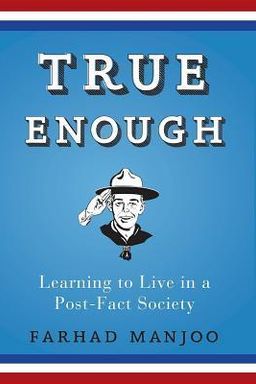
How can you tell what’s true when everyone seems to live in their own reality? In True Enough: Learning to Live in a Post-Fact Society, journalist Farhad Manjoo argues that technology and media have shattered our shared sense of truth. The more access we have to information, the more fragmented our understanding becomes. Instead of uniting us, the digital revolution has equipped each of us with tools to reinforce our own beliefs, no matter how unfounded they may be.
Manjoo contends that we are living through a dangerous transformation: facts are losing their authority, replaced by feelings, ideology, and clever manipulation. From conspiracy theories about 9/11 and AIDS denial movements, to partisan attacks like the Swift Boat campaign against John Kerry, our capacity to agree on basic reality is eroding. We no longer argue about what we should do — instead, we argue about what’s actually happening.
The Fragmentation of Reality
In the past, Americans tuned in nightly to trusted anchors like Walter Cronkite, who served as a gatekeeper of national truth. Today, everyone is a broadcaster, editor, and commentator. The Web, social media, and cable channels allow you to choose only the information that fits your worldview. This personalization feels empowering, but beneath it lies isolation. You’re not just consuming news — you’re curating your own version of reality. This creates what Manjoo calls “media fragmentation,” a condition in which competing versions of reality coexist without reconciliation.
The Psychology Behind the Split
Manjoo integrates psychological research to explain how people dismiss facts that challenge their beliefs. Concepts like selective exposure and selective perception show how humans filter information to avoid cognitive discomfort. Studies reveal that even nonpolitical topics, like travel or sports, trigger ideological bias: conservatives prefer the Fox News logo, while liberals trust NPR or CNN. This need to affirm your beliefs is deeply emotional, not rational. It’s why misinformation, once seeded, spreads with extraordinary persistence.
The Rise of “Truthiness”
Borrowing Stephen Colbert’s satirical term, Manjoo argues that we now value “truthiness” — ideas that feel true more than those that are true. In this post-fact culture, politicians, pundits, and corporations exploit our psychological quirks and technological habits to manipulate perception. The line between news and propaganda blurs. He explores how digital editing tools, PR tactics like video news releases, and partisan media infrastructures deliberately manufacture alternate realities that consumers eagerly internalize.
Why It Matters
Manjoo warns that a population unable to agree on basic facts cannot solve shared problems. From climate change to public health and elections, truth itself has become a battlefield. This book isn’t simply about deception — it’s about the psychology and economics of modern belief. By tracing case studies like the Swift Boat Veterans for Truth, 9/11 conspiracy theorists, and pseudo-experts in the 2004 election, Manjoo shows how entire communities now live inside “self-sealing realities” immune to evidence.
In the chapters that follow, you’ll explore how partisan tribes form through selective exposure, how even your senses can deceive you when watching video evidence, why fake experts wield such outsized influence, how objectivity has vanished from news media, and how “truthiness” became a cultural value. Ultimately, Manjoo asks a haunting question: if each of us now gets to decide our own truth, can democracy — or trust itself — survive?