
Idea 1
Performing the Self in a Networked Age
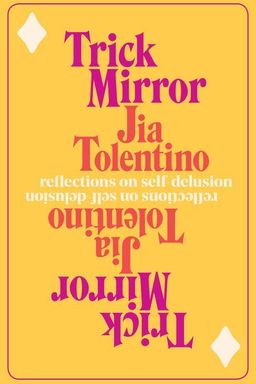
If you’ve ever felt that your life exists more vividly online than off, Jia Tolentino’s argument will strike home. Across her essays, she contends that modern life has turned you into both actor and audience, with platforms and institutions requiring a continuous performance of self. Identity, once fluid and private, is now a public asset produced through visibility, optimized labor, and moral display. The book’s recurring theme is that the internet, capitalism, and culture have merged to create a system where performance replaces authenticity and desire merges with exploitation.
Tolentino weaves memoir, cultural criticism, and philosophy to show how this structure infiltrates everything—from social media posts to yoga classes, from political outrage to wedding ceremonies. You are taught to perform your values, optimize your body, and brand your personality for consumption. But behind these performances lies exhaustion. The question she asks is simple: Can you be real in a system that rewards performance more than truth?
The Architecture of Performance
Drawing from Erving Goffman’s dramaturgical model, Tolentino explains how the internet turned you from a social actor into a constant performer. Where Goffman saw front-stage and backstage behavior, today’s surveillance capitalism eradicates the backstage. Algorithms, feeds, and archives make your image permanent—your LiveJournal confessions, MySpace selfies, and Instagram stories accumulate into an unending audition. The web’s evolution from Web 1.0’s static pages (your digital house) to Web 2.0’s interactive feeds (your public stage) means you are always “on.”
Online, your identity is not chosen but scored, quantified through likes and shares. The mirror and the panopticon converge: you see yourself seeing yourself, under the watch of systems that monetize that gaze. As Tolentino reminds you through her own career as a Jezebel editor, even sincerity becomes content—your outrage, humor, pain, or virtue become instruments for engagement metrics.
Moral and Economic Feedback Loops
When attention equals currency, speech replaces action. You can tweet a moral statement, receive digital applause, and mistake that for progress. This “opinion economy” rewards the swift and visible gesture over slow, systemic labor. Hashtag movements like #MeToo proved both transformative and limited: they made private harms visible but also flattened complex experiences into viral templates. Visibility, Tolentino suggests, is not the same as justice.
Similarly, outrage became its own commodity. Sites like Gawker or Twitter thrive on conflict because attention grows where antagonism does. Trolling, Gamergate, and conspiracies like Pizzagate reveal how digital opposition can mobilize real violence. The reward for outrage—follows, trends, identity formation—encourages repetition. As a result, the web becomes a perpetual theater of accusation and exhibition, blurring the boundaries between activism, cruelty, and entertainment.
Optimized Womanhood and the Market of the Self
Tolentino connects this to a distinctly gendered pressure: the demand that women optimize themselves into consumable perfection. Barre workouts, athleisure, Glossier’s “effortless” makeup, and the wedding industry all teach you that empowerment equals beautified labor. You are told to treat self-improvement as moral duty—burn calories, buy skincare, say yes to visibility—and yet the rewards flow upward to corporations that profit from your striving. Even marriage becomes performance art: a day-long coronation of the bride packaged by planners and photographers before returning to inequitable norms.
In these rituals of optimization, perfection is a moving target. You chase an image of freedom by mimicking the shapes the market loves: slim, productive, ethical-looking. The paradox is sharp—the claim of self-ownership masks structural capture. Tolentino asks whether “self-care” sometimes functions as capital’s gentlest leash.
Faith, Ecstasy, and the Desire to Disappear
The book’s later essays turn inward, searching for transcendence outside performance. Tolentino juxtaposes her childhood in a Houston megachurch with the ecstatic culture of DJ Screw’s music and MDMA use, showing how both religion and drugs meet the same yearning: to dissolve the self and feel whole with others. Through Simone Weil’s “decreation,” she connects mysticism to modern longing—to lose the burden of being watched, to be briefly unmeasured.
Yet even the wish to disappear becomes self-referential when written down. Every attempt to erase the ego resurrects it. Her desert trip on acid mirrors Weil’s paradox: wanting to see the world as it is when you’re not there, knowing the seeing reasserts you. That tension—between self and self-forgetting—anchors Tolentino’s deepest question: how do you remain human in a world that makes humanity a brand?
Scams, Spectacle, and Structural Fraud
The book broadens this existential critique to the economy itself. From the 2008 crash to Fyre Festival to startup hype, Tolentino reads modern capitalism as an ecosystem of scams. When institutions defraud citizens without consequence, small scams thrive as survival tactics. Billy McFarland’s Fyre Festival only dramatized what the market already teaches: that confidence and spectacle are worth more than substance. Whether in branding a fake paradise or selling disruptive startups built on underpaid labor, the same logic prevails—image first, ethics later.
Tolentino’s tone here is diagnostic but compassionate. She refuses cynicism, emphasizing that awareness is not escape but beginning. You can’t avoid the performance, but you can see it clearly enough to resist full absorption. Her essays move from systemic to spiritual, always circling back to personal complicity—the sense that even resistance becomes content in the age she describes.
Key takeaway
Tolentino’s work reveals a generation trying to locate authenticity amid performance, community amid visibility, and freedom amid optimization. The self, once private and mysterious, has become a managed spectacle—yet through awareness, empathy, and refusal, you might still construct moments of genuine connection under the lights.
In short, this book is a mirror held to your digital era: seductive, relentless, and sometimes unbearable. Tolentino doesn’t promise an exit; she offers recognition—the critical first step toward rebuilding your sense of truth in a world built to monetize your reflection.