
Idea 1
Building Great Tribes Through Leadership and Language
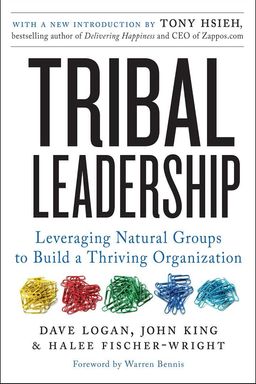
Have you ever wondered why some groups—whether in business, sports, or community—seem to achieve miracles together while others crumble into burnout, politics, and mediocrity? In Tribal Leadership, Dave Logan, John King, and Halee Fischer-Wright argue that the secret lies not in charisma, strategy, or paychecks but in the invisible DNA of human interaction: tribal culture and shared language. The authors, based on a decade-long study of 24,000 people, reveal that organizations are not just collections of employees but networks of tribes. Each tribe’s success depends on the stage of its collective culture, reflected in how people talk and relate to one another.
The central claim is simple yet powerful: leaders who intentionally upgrade their tribe’s culture—by shifting its language and relationships—can drive extraordinary performance and fulfillment. Culture isn’t just an atmosphere; it’s an engine. The authors contend that every group operates in one of five cultural stages, from despairing hostility (“life sucks”) to transcendent greatness (“life is great”), and that by focusing on how people speak and connect rather than on abstract psychology, any leader can transform their tribe one stage at a time.
Why Tribes Matter
According to Logan and King, humans naturally form tribes of roughly 20 to 150 people—small enough that everyone knows each other’s name. Inside large corporations are clusters of these micro-societies, each with its own values, tone, and internal politics. Like the “small towns” of old, every tribe has leaders, humor, traditions, and shared enemies. The authors note (drawing on anthropologist Robin Dunbar’s research and Malcolm Gladwell’s The Tipping Point) that this 150-person limit is wired into our social brain. In these tribes, leaders emerge not by position but by their ability to elevate language—from self-focused talk (“I’m great”) to collective identity (“We’re great”).
The Five Tribal Stages
The book divides culture into five predictable stages:
- Stage One – “Life sucks”: The language of despair and hostility, found in gangs and toxic workplaces with alienation and violence.
- Stage Two – “My life sucks”: Apathy and victimhood mark this stage, common in bureaucracies where people feel disconnected and powerless.
- Stage Three – “I’m great (and you’re not)”: The dominant culture of individual achievement, ego, and competition—the engine of many successful but stressful companies.
- Stage Four – “We’re great”: Collaboration, shared values, and tribal pride emerge; this is where true leadership blossoms.
- Stage Five – “Life is great”: A rare state of innocent wonderment, where tribes aim to change the world rather than beat competitors.
Each stage, the authors explain, creates a distinct reality. People literally see and act through their words. By altering language and the structure of relationships—from isolated individuals to interconnected triads—leaders can transform not only performance but meaning.
Language Creates Reality
The key insight is that language isn’t just descriptive—it’s generative. The way people talk shapes how they perceive life, success, and teamwork. Borrowing from rhetorical theorist Kenneth Burke and systems thinkers like Peter Senge, the authors show that when a tribe moves from “I” to “we” talk, the entire emotional atmosphere changes. Ego gives way to purpose; control yields collaboration. Tribal Leadership coaches leaders to listen for these linguistic patterns like a cultural anthropologist, spotting phrases that reveal a group’s operating stage.
Why This Framework Matters
Tribal Leadership challenges the conventional focus on individual motivation or personality. Instead of fixing people, leaders can upgrade tribes. The payoff is enormous: lower stress, genuine engagement, higher profits, and even better health outcomes (as seen in Griffin Hospital or Amgen). Modern workplaces, the authors argue, are stuck mostly at Stage Two and Three—zones of bureaucracy or ego—that cap innovation and morale. By guiding tribes to Stage Four and beyond, leaders unleash collective genius.
Preview of What You’ll Learn
Throughout the book (and the upcoming key ideas), you’ll discover how Stage Three stars like union leader Bob Tobias experience an epiphany that shifts focus from “I’m great” to “We’re great.” You’ll examine how companies like IDEO and Amgen sustain Stage Four and Five cultures through shared core values and a noble cause. You’ll also learn the mechanics of triads—three-person relationships that produce connected, self-aware organizations—and a five-step model for tribal strategy that keeps everything aligned with purpose.
Ultimately, Tribal Leadership gives you a map of human culture—a way to speak and lead that transforms both work and life. As Warren Bennis (who wrote the foreword) put it, this is not a book about management tips but about “touching the human heart.” By changing the words you use and the relationships you form, you can elevate your tribe into a vibrant culture where, together, “life is great.”