
Idea 1
The Hidden Power of Offshore Finance
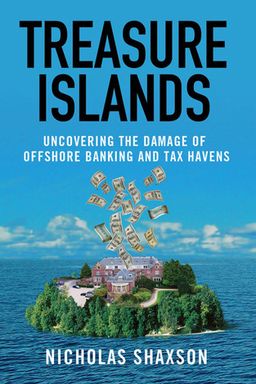
When you think of globalization, you might picture trade, technology, or travel—but the real engine of global inequality runs through offshore finance. In this book, the author argues that the offshore system is not a fringe network of palm-fringed havens, but a core architecture of modern capitalism. It allows corporations, billionaires, and political elites to escape accountability, move wealth invisibly, and shape national policies from the shadows.
The term offshore describes more than geography—it is a mentality of escape and secrecy. It builds legal and financial structures that help money slip beyond the jurisdiction of the state that created it. The result is a “world elsewhere” that exists everywhere and nowhere: trusts in Jersey, shell firms in the Caymans, Eurodollar accounts in London, bearer bonds in Luxembourg, and Delaware LLCs in the U.S. Each piece has a legitimate veneer, yet together they form an ecosystem that redistributes wealth and power upward.
From Keynes to the Offshore Age
To grasp what this system replaced, you have to revisit John Maynard Keynes’s postwar vision. At Bretton Woods, Keynes helped design capital controls and exchange-management systems so democratic governments could pursue full employment and social stability without fear of capital flight. But beginning in the 1950s, the City of London began unpicking that system. The creation of the Euromarkets—a space where U.S. dollars could be traded offshore, free of regulation—marked finance’s “great escape.” Banks discovered they could keep one regulated book onshore and another offshore, unleashing leverage and risk without oversight. By the 1970s, hot money was flowing freely, undermining Keynes’s entire framework.
That opening in London spawned the broader offshore network that now wraps the world like a spiderweb. Britain’s Crown Dependencies (Jersey, Guernsey, Isle of Man) and Overseas Territories (Cayman, Bermuda, BVI) became the “capillaries” feeding London’s financial heart. Each jurisdiction specialized: Jersey in trusts, the Caymans in hedge funds, Bermuda in insurance—all feeding profits back into the City while preserving legal distance from scrutiny. This imperial-era design remains a defining feature of the offshore system.
How the System Works
Offshore, you don’t break laws—you change which laws apply. A company or individual can incorporate in one jurisdiction, transact in another, bank in a third, and hold assets in a fourth. This fragmentation of accountability ensures that no single regulator sees the full picture. Tools like trusts and shell companies hide beneficial owners; transfer pricing and treaty shopping move profits to low-tax conduits; secrecy laws block investigation. Cases like the Elf scandal in Gabon, the Vestey brothers’ offshore trusts, or Angola’s oil-for-debt Abalone affair show how this infrastructure channels national wealth into private pockets.
In practical terms, offshore finance lets multinationals pay near-zero tax while local businesses and citizens fund the public realm. It drains developing countries: between 1970 and 2008, Global Financial Integrity estimated over $850 billion in illicit outflows from Africa, with similar losses across Asia and Latin America. The offshore economy thus becomes a reverse aid system—from poorest to richest.
Culture, Politics, and Capture
The machinery of secrecy is held together not only by laws but by culture and ideology. Inside havens, compliance officers and bankers internalize rules of silence—don’t ask, don’t reveal, don’t rock the boat. Whistleblowers face exile, harassment, or imprisonment, while regulators often depend socially or economically on the industries they oversee. This creates a moral vacuum where avoidance feels normal. Meanwhile, powerful lobby groups such as the Center for Freedom and Prosperity and think tanks like the Heritage Foundation construct an ideological defense around “tax competition” and “economic freedom,” reframing avoidance as virtue.
This propaganda pays off. In the early 2000s, U.S. opposition gutted the OECD’s initiative against harmful tax competition, watering it down to “on request” information disclosure—an almost useless measure. Offshore interests have learned to speak the language of liberty even as they erode collective welfare.
The Human and Systemic Cost
Behind every faceless shell lie ordinary costs: hospitals unbuilt, schools unfunded, and societies hollowed out. Offshore mechanisms enable capital flight that dwarfs aid flows—for every dollar of aid entering developing countries, roughly ten leave illegally. The result is not just economic inequality but democratic decay. When elites can remove their wealth from the polity, they lose incentive to build functioning states. Offshore finance thus becomes both an economic drain and a moral hazard that destabilizes nations.
Paths to Change
Yet the book insists reform is possible. The solutions are technical but political: country-by-country reporting so each firm discloses profits and taxes per nation; automatic exchange of information to end “on request” secrecy; robust laws on beneficial ownership; and reforms of the accounting profession to reduce capture. Onshore measures like land-value taxation and resource dividend models could help keep revenue grounded where value is created.
Ultimately, the greatest change is cultural. Tax should be seen not as theft but as investment in collective well-being. Finance must serve democracy, not the reverse. Offshore’s greatest illusion is that it is too complex or inevitable to fix. As the book shows, it was built by deliberate policy choices—and with equal deliberation, it can be unmade.