
Idea 1
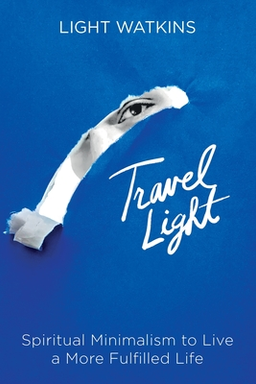
Travel Light: The Path of Spiritual Minimalism
What would happen if you measured your life not by the weight of your possessions, but by the lightness of your spirit? In Travel Light, meditation teacher and author Light Watkins invites you to do exactly that. Through stories from his own radical experiment—selling everything, living out of a backpack, and traveling the world—Watkins argues that true freedom and happiness are found not in decluttering your house, but in unburdening your heart and mind. He calls this practice Spiritual Minimalism—an inside‑out approach to simplicity that redefines what it means to live intentionally.
Where traditional minimalism begins with the physical—discarding clothes, furniture, or digital clutter—Watkins starts with the spiritual. The premise is simple yet profound: if you cultivate inner stillness, clarity, and value alignment, outer simplicity will take care of itself. The book grows out of his own initiation into minimalism in 2018, when he gave up his apartment, car, and nearly all belongings to live nomadically with only a daypack. What he found was that every layer of letting go brought him closer to joy, adaptability, and personal truth.
From Outer Decluttering to Inner Liberation
Watkins begins by challenging the common notion that happiness lies on the other side of getting rid of stuff. He recounts coming back to a dark Airbnb in Mexico City with no electricity and realizing that, thanks to his minimalist habits and spiritual resilience, the inconvenience hardly affected him. That small event reveals the essence of Spiritual Minimalism: it’s not what’s in your bag, but what’s in your heart that determines peace of mind. When your sense of fulfillment is self‑sourced, life’s disruptions lose their power.
This philosophy flips the minimalism conversation. Instead of emptying closets to create space for happiness, you cultivate happiness first, and from that state you naturally shed what no longer aligns. The Spiritual Minimalist listens to their “heart voice” rather than external logic. You can think of that voice as an internal GPS or what psychologists call self‑determination: the capacity to act from inner alignment rather than pressure or fear (similar to Eckhart Tolle’s “inner stillness” concept in The Power of Now).
The Seven Principles of a Spiritual Minimalist
The heart of Travel Light rests on seven interlocking principles, each supported by vivid personal stories and practical exercises. Watkins explains how he distilled these during his years of teaching meditation and living nomadically:
- Prioritize and cultivate inner happiness.
- Make decisions from the heart, not the head.
- Live as if there are no throwaway moments.
- Give what you want to receive.
- Follow curiosity as your north star.
- Find comfort in discomfort.
- Embrace the freedom of choicelessness.
Each principle functions like a breadcrumb leading you back to your true nature. In practice, it means trusting your intuition, seeing every daily encounter as significant, and releasing resistance to uncertainty. Watkins weaves these with stories of teaching meditation, performing random acts of kindness, and finding creative ways to do more with less—like using his meditation shawl as a blanket, robe, pillow, and mosquito net.
Why This Matters in a World of Excess
We live in a time of overstimulation and overchoice: endless content, products, and identities competing for our attention. Watkins argues that this “outer” clutter stems from our own “inner” distractions—fear, ego, the need to appear successful. By simplifying internally—through meditation, gratitude, generosity—we recalibrate toward presence, which then reshapes our outer life naturally. It’s an ancient idea dressed in modern clarity, echoing stoic philosophers and Eastern mystics alike: simplicity is not deprivation but liberation.
In essence, Travel Light isn’t a how‑to on packing minimalist luggage; it’s an invitation to repack your inner world. Watkins promises that when you stop striving to control life and instead align with your heart voice, you gain adaptability and peace. From there, you can travel through both airports and challenges with the same calm confidence. The result? A life that feels lighter—not because you own less, but because you carry yourself differently.
“The fewer options you have, the more freedom you have to make decisions, and the more present you become.” —Light Watkins
That sentence captures the paradox that runs through Travel Light: less choice can mean more peace; fewer possessions can lead to deeper connection; and emptiness, if cultivated consciously, becomes the spaciousness where joy lives. By the final chapters, Watkins is less a minimalist guru than a spiritual coach, reminding you that the ultimate journey isn’t across countries—it’s inward. To travel light is to come home to yourself.