
Idea 1
Human Potential as a Journey of Integration
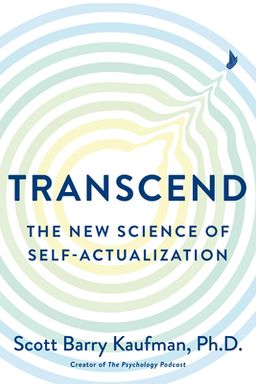
What does it mean to truly become whole? In Transcend: The New Science of Self-Actualization, psychologist Scott Barry Kaufman reinterprets Abraham Maslow’s humanistic vision for the 21st century. He argues that the path toward fulfillment is not a rigid climb up a hierarchy of needs but a living, dynamic voyage—a sailboat where security and growth work together. This metaphor unites psychological science, neuroscience, education, and existential thought into one coherent model for thriving.
Reclaiming Maslow’s Original Spirit
Maslow’s ideas were long simplified into a tidy pyramid, but Kaufman restores their original fluidity. Instead of static layers, he presents two integrated systems: the hull of security and the sail of growth. The hull includes safety, connection, and self-esteem—the stability you need to survive. The sail catches the winds of exploration, love, and purpose—the energies that move you toward transcendence. You patch the hull when life feels unstable and unfurl the sail when conditions permit growth. Development is cyclical, not linear, and people often move back and forth between survival and expansion.
The Foundations of Security
Safety, predictability, and attachment anchor psychological stability. Without them, your brain enters high entropy—the chaotic state that arises when basic predictions fail. Chronic insecurity or trauma reshapes the brain for vigilance rather than creativity. Bowlby’s and Ainsworth’s attachment theory explains how secure relationships produce exploration, while insecure patterns lead to withdrawal or clinging. Kaufman underscores that attachment styles can change through therapy, trust-building, and social policy—showing how societal and relational interventions can literally improve inner freedom.
Growth: The Sail Toward Actualization
Once the hull is stable, growth arises through exploration, love, and purpose. Curiosity and creativity expand cognitive range; B-love transforms relationships from need-based to being-based; and purpose connects personal mastery to collective good. Kaufman’s model is systemic—each need feeds the others. Exploration fosters learning; secure love deepens meaning; and purpose organizes talents into service.
Beyond the Self: Transcendence and the Sailboat’s Horizon
Maslow’s final insight was paradoxical: self-actualization prepares you to transcend yourself. A strong ego is not the end—it is the launch pad for humility, creativity, and compassion. Kaufman takes this further, exploring plateau experiences, awe, and the transcender profile. Through mindful awareness of mortality, moments of awe, and integrative practices—including psychedelic research and VR-induced wonder—the book shows that transcendence can be cultivated rather than waited for. The transcender doesn’t escape humanity but integrates the self with larger B-values like beauty, truth, and justice.
From Inner Growth to Social Design
Kaufman argues that personal growth mirrors and shapes societal growth. Humanistic education, compassionate leadership, and purpose-oriented politics produce self-actualizing environments. As Maslow noted in his Eupsychian Management experiments, virtue pays: workplaces that honor trust and autonomy yield both innovation and well-being. Similarly, public policy built on psychological safety nurtures collective flourishing.
Integration and Wholeness
Kaufman closes with practical principles for integration—accepting your shadow, trusting your growth tendency, and practicing deliberate challenges that stretch your comfort zone. His modern psychology of the whole person recasts Maslow’s hierarchy as a living ecosystem where security sustains growth and growth honors transcendence. You’re not climbing a pyramid—you’re learning to sail.