
Idea 1
Wilderness, Vanishing, Civic Search
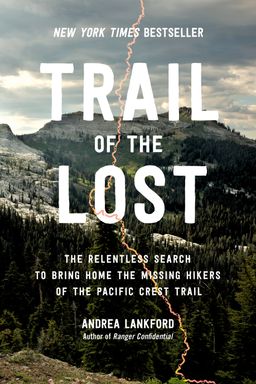
How do people disappear on a well-loved trail—and how do you find them when official systems stall? In Trail of the Lost, Andrea Lankford argues that you solve wilderness mysteries by blending two worlds: the PCT’s romantic culture of solitude and grit, and a pragmatic, citizen-driven search craft built on evidence, statistics, and community. She contends that modern disappearances on the Pacific Crest Trail (PCT) sit at the collision of ideals, popularity, and institutional limits—and that ordinary people can learn to search well without losing their souls to false hope.
You begin by meeting the trail itself as a cultural force. The PCT wasn’t designed like a commuter corridor; it grew from a 1920s wilderness ideal—Catherine Montgomery’s seed idea, Clinton C. Clarke’s crusade for a “primitive” footpath for hard souls (contrast the Appalachian Trail’s hut-friendly ethos). Then mythmakers like Eric Ryback (rugged test) and Cheryl Strayed (therapeutic rebirth) reframed why hikers walk. That tension—ascetic toughness versus inclusive healing—now shapes who shows up, what they expect, and how they behave when things go wrong. Add social media, permits, and “tramily” norms, and the PCT becomes both classroom and stage.
The cluster that changed the stakes
Lankford’s story lights up when three men vanish in consecutive years with no bodies recovered: Chris Sylvia (2015), Kris “Sherpa” Fowler (2016), and David O’Sullivan (2017). Each is young, idealistic, and comfortable with risk; each moves through remote sections; each leaves a vapor trail of small clues—books, register notes, hotel receipts—that refuse tidy conclusions. The lack of remains magnifies uncertainty and pulls volunteers into years of sleuthing across deserts, snowbound ridges, and bureaucratic silences.
From institutions to improvisation
Official Search and Rescue (SAR) has strengths, but capacity and jurisdictional seams leave gaps. Riverside County and Washington sheriffs juggle vast terrain and competing cases; footage gets overwritten; reports arrive redacted. Families like Sally and Mike Fowler, and Carmel and Con O’Sullivan, turn to social media and grassroots allies—Cathy Tarr, Morgan Clements, Jon King (SanJacJon)—to keep momentum. Facebook groups become operations centers and rumor mills at once, demanding curation and a thick skin.
A craft built on evidence
The book’s core lesson: treat every scrap as data. A paperback of Siddhartha in a hiker box at Mike’s Place matters if Min Kim gifted that exact edition to Chris; underlined passages might carry touch DNA if stored right (forensic scientist Dr. Monte Miller advises paper bags, cool, dry storage). Trail registers, gear IDs (Marine Digital camo pants), and ATM logs can anchor an Initial Planning Point (IPP). You learn the vocabulary—PLS (last sighting), LKP (last physical proof), containment, and the Rest-of-World (R-O-W)—because selecting the wrong anchor balloons your search and drains hope.
Hazards you must model
Natural force remains the most common killer: water, snow, cold, heat. Fuller Ridge and Saddle Junction, with late-season snow and hidden ice, have trapped skilled hikers before (John Donovan’s ravine). Wildlife bites (rattlesnakes with neurotoxic venom), mountain lions, feral cattle, and even aggressive bees add layers. Human risks—armed cannabis growers near Anza, fugitives who use trails as corridors, or predatory personalities like “Medic” (James William Parrillo)—complicate any neat theory of “just got lost.” And sometimes disappearance is voluntary: communal groups like the Twelve Tribes recruit hikers into off-trail lives.
Tools, traps, and discernment
Modern search blends Koester’s statistics (half of adult hikers found within two miles of LKP) with terrain literacy, scent dogs, and cameras at choke points. Drones and high-resolution aerials, paired with human “squinters,” can crack cold cases (Morgan’s team helped locate Paul Miller in Joshua Tree; WSAS aided in Rosario Garcia). But shiny tech isn’t a miracle. The book warns against pseudoscience dressed as innovation—Dr. Arpad Vass’s “quantum oscillator” claims cost money, time, and a broken fibula in one reconnaissance. Skepticism protects scarce resources and volunteer safety.
The weight of ambiguous loss
Families live in dual realities: grieving without a body, hoping without evidence (Pauline Boss’s “ambiguous loss”). “Hope hangovers” follow every promising lead that fizzles. Volunteers shoulder parallel costs—sleep lost to Facebook moderation, savings poured into flights, surgeries after search injuries—while bonds deepen into a found family. Meaning-making tools, from angel cards to psychic impressions, comfort some; the author treats intuition as hypothesis, never proof.
What the book delivers
“People don’t vanish into thin air—the environment keeps traces.” This is both a credo and a method: pair cultural literacy with disciplined search planning; privilege preserved evidence over alluring stories; and build volunteer systems sturdy enough to outlast hope’s swings.
By the end, you see a template for ethical, persistent, and smart civic search—one that honors wilderness, resists easy answers, and gives families traction when official gears grind slow. (Note: Readers of Jon Krakauer’s Into the Wild will recognize themes of idealism meeting unforgiving terrain; Lankford adds a 21st‑century layer of crowdsourced investigation.)