
Idea 1
Driving as a Mirror of Human Nature
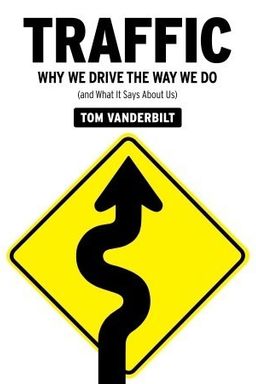
Why do otherwise calm, rational people become impatient or even hostile behind the wheel? In Traffic: Why We Drive the Way We Do, Tom Vanderbilt argues that driving is not just a mechanical task but a revealing social experiment—an everyday stage where psychology, design, culture, and technology collide. To understand traffic means to understand human behavior itself, from perception and risk to cooperation and moral judgment.
Vanderbilt shows that roads, like all social systems, reflect our evolved instincts and social rules. The car turns each of us into both actor and audience, hidden within metal shells yet part of a fragile collective flow. The book explains why roads can make polite people aggressive, why design intended to protect us can produce more danger, and why genuine safety depends less on gadgets or signs and more on shared understanding.
The car as social armor
Once inside a car, your identity changes. You are partially anonymous, shielded by glass and steel. That anonymity reduces empathy and accountability—a pattern dating back to Zimbardo’s deindividuation studies. Because signals on the road are limited (horns, lights, gestures), small misunderstandings can become moral dramas. A honk meant as apology may be read as insult. Like Goofy’s comic metamorphosis into ‘Mr. Wheeler,’ the same person becomes assertive, impatient, and territorial when filtered through the car’s isolation.
Seeing, believing, and misjudging risk
Driving depends on perception, yet your senses are unreliable. Vanderbilt draws on vision science to show how motion parallax, contrast, and adaptation distort speed and distance judgments. At seventy miles per hour, your neurons recalibrate; a thirty‑mile stretch feels glacial after high‑speed driving. Fog or curved mirrors corrupt contrast, while bright lights can literally draw you toward danger (the “moth effect”). The message: we are pattern seekers who trust vision too much, yet highway design exploits those very illusions to feel smooth and safe.
Traffic as an emergent social system
Vanderbilt connects the road network to biological analogies—ant columns, locust swarms, granular flow. Insects and humans both generate complex order from simple rules. Ants form symmetrical lanes by pheromone cues; drivers self‑organize through informal conventions like zipper merges. But when local rules conflict—when drivers chase individual gain—the whole system jams. The "slower is faster" paradox recurs: smoothing flow, not maximizing speed, increases total efficiency.
Culture, norms, and governance
Traffic reveals a society’s moral grammar. In Delhi’s horn‑driven weave or Copenhagen’s disciplined cycling lanes, you see cultural codes in motion. Vanderbilt blends Robert Cialdini’s work on descriptive norms with field observations: people follow what others do, not just what signs command. Governance magnifies these effects. Corruption, selective enforcement, or distrust in authority—as in parts of India, Cameroon, or Belgium—weakens compliance and raises fatalities. Where institutions are honest and predictable (as in Finland or the Netherlands), traffic improves without additional roads.
Technology, adaptation, and illusion of mastery
Modern safety devices—seat belts, ABS, stability control—save lives, yet rarely as much as predicted. Human adaptation cancels part of the benefit: drivers feel protected, drive faster, and take new risks (the Peltzman effect). Overconfidence magnifies the issue: most drivers call themselves "above average." Without accurate feedback, such biases persist. Tools like DriveCam—which records near misses for coaching—prove that behavior changes only when confronted with evidence. Reputation systems and “How’s my driving?” dashboards echo this idea: feedback restores accountability lost to anonymity.
From roads to relationships
Ultimately, Vanderbilt argues that traffic is a mirror of social trust. When designs invite attention and cooperation—narrow lanes, trees, visible pedestrians—drivers slow down and act responsibly. When designs separate, insulate, or forgive recklessness, behavior worsens. The real challenge, he says, lies not in inventing safer machines but in designing environments and incentives that rebuild communication and empathy. Every trip, then, becomes a small experiment in how societies balance freedom with responsibility, technology with judgment, and anonymity with humanity.