
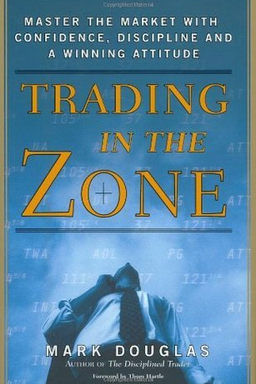
Trading in the Zone cover

Trading in the Zone

by Mark Douglas

Trading in the Zone delves into the psychological landscape of trading, revealing how overcoming emotional barriers like fear and overconfidence can lead to consistent profits. Mark Douglas offers a roadmap to mastering risk, developing discipline, and embracing uncertainty, transforming trading into a journey of personal growth and financial success.

Thinking in Probabilities: The Mindset of Trading Mastery

Can you make confident decisions in an environment where uncertainty rules? In Trading in the Zone, Mark Douglas argues that true trading success isn’t about perfect analysis—it’s about mastering your mental game to embrace uncertainty. According to Douglas, emotional reactions, fear of loss, and the need to be right are what sabotage traders more than bad strategies. Success comes not from knowing what the market will do next, but from believing, deep down, that anything can happen—and being at peace with that.

Douglas contends that most traders mistakenly chase more information or better systems, thinking that more knowledge will bring consistency. Instead, their lack of mental discipline—the inability to accept risk, manage emotions, and think in probabilities—is what undermines their decisions. He proposes that consistent trading results are primarily a psychological achievement, not an analytical one. To trade in the zone means developing absolute confidence in yourself and your edge, without fear or hesitation.

The Road from Analysis to Psychology

Douglas traces the evolution of trading approaches—from fundamental analysis (examining supply and demand and economic data), to technical analysis (reading market patterns), and ultimately to mental analysis: studying one’s own psychology. Fundamental analysis might tell you what should happen, and technical analysis may show patterns of what tends to happen. But only mental analysis reveals why traders fail to act on what they already know. Douglas emphasizes that the market doesn’t beat you—the inconsistency of your thoughts and emotions does.

He compares trading to a paradoxical sport: a simple, lucrative opportunity within reach, yet one that demands mastery of emotion and self-awareness. Trading looks deceptively easy—anyone can hit a few winners—but only disciplined traders achieve the consistency that marks professionals.

Freedom and Self-Responsibility

An open market gives traders extraordinary freedom—freedom to make any decision, at any time, with little external structure. Yet this unlimited freedom demands internal discipline, which most struggle to create. Douglas observes that childhood conditioning trains us to obey external rules and avoid mistakes through fear of punishment. In trading, there’s no teacher, parent, or boss to blame. The market provides no rules; only outcomes. To succeed, you must build your own mental structure—rules, boundaries, and standards that govern your behavior.

Key Insight: The market doesn’t reward or punish—it simply offers endless opportunities. Your results depend solely on how you choose to act on those opportunities.

The Traders’ Mindset

Douglas makes a bold claim: consistent winners are not smarter—they simply think differently. They treat losses as part of the game, not as personal failures. They accept that each trade has a probabilistic outcome. They don’t need to be right on every trade, because their confidence comes from the knowledge that the odds will favor them over time. This belief system frees them to act without fear, hesitation, or overconfidence—what Douglas calls the “carefree state of mind.”

For Douglas, trading mastery means achieving consistency through alignment between belief, attitude, and action. Each trade becomes an opportunity to express discipline and self-trust, not to prove intelligence or prediction skill. Building this mindset involves dismantling emotional reactions like hope, revenge, or fear—responses born from unresolved beliefs about self-worth and control. Only then can a trader make decisions fluidly and objectively, flowing with the market rather than fighting it.

Trading with Uncertainty

At the heart of Douglas’s message is the “uncertainty principle.” Anything can happen in the markets—at any time. Accepting this truth transforms trading from a guessing game into a probability game. Instead of predicting outcomes, traders focus on managing risk and executing edges consistently. Douglas likens the experienced trader to a casino: each hand (trade) is random, but the long-term results are predictable because the odds favor the house.

This probabilistic mindset shields you from emotional chaos. You stop defining losses as failures and start seeing them as natural costs of doing business. Every trade becomes a piece of a larger statistical process, leading to serenity rather than stress.

Why It Matters

Douglas’s framework reshapes not just how you trade, but how you think about success and control. Like meditation for the financial mind, it teaches patience, objectivity, and self-awareness. Trading success becomes a mirror for personal mastery: the ability to act with confidence regardless of external outcomes. By learning to “trade in the zone”—that intuitive flow state—you gain freedom from fear and the ability to perform at your peak when uncertainty reigns. Ultimately, Douglas’s book is about liberation: freeing yourself from the need to know and from the emotional traps that keep most traders stuck in self-sabotage.


Mastering Risk and Eliminating Fear

Mark Douglas insists that if you fear losing, you’ll never win consistently. The central paradox of trading is that it’s inherently risky—but to succeed, you must learn to love that risk. Risk isn’t the enemy; your reaction to it is. When you fully accept that uncertainty is unavoidable, fear disappears—and you begin to see every market movement objectively.

The Psychology of Risk

Douglas defines true risk acceptance as embracing the possibility of being wrong without emotional discomfort. Traders who “assume” they are risk-takers simply because they place trades are mistaken. They haven’t really accepted that each outcome is uncertain. Most of us, conditioned by school and society, were taught to equate being wrong with shame or punishment. But markets aren’t moral—they don’t care if you’re wrong.

He explains how fear distorts perception. When afraid, you literally can’t see clear opportunities; your mind blocks information that might contradict what you hope is true. The trader stuck in fear waits for confirmation that never comes, hesitates, and misses the move. Ironically, that avoidance of loss often leads straight to losses.

Neutralizing Emotional Triggers

Douglas identifies four major fears that disrupt performance: fear of being wrong, fear of losing money, fear of missing out, and fear of leaving money on the table. Each stems from confusing trading results with personal worth. To neutralize them, you must separate your identity from your trades. A losing trade says nothing about you—it simply shows the market's randomness.

He offers a practical strategy: define your risk before entering, then accept that amount as the price of admission. Once you’ve accepted the risk, there’s nothing left to fear. You can execute without hesitation, knowing that anything beyond your limit is simply part of probability. This predefinition creates an emotional buffer, turning uncertainty into structured possibility.

Trading Truth

"You can’t avoid risk in trading—you can only decide how to relate to it. When you embrace risk, you eliminate fear. When you eliminate fear, you eliminate errors." —Mark Douglas

Becoming Emotionally Neutral

Accepting risk leads to objectivity. When losses no longer provoke emotional pain, your mind stops rationalizing and overreacting. You become free to see the market as it is, not as you wish it to be. Douglas calls this “trading in the moment”—acting on what the market is offering, not projecting expectations. In practical terms, it means making decisions solely based on your predefined edge, not on fear or hope.

This principle echoes ideas from psychologists like Mihaly Csikszentmihalyi, who describe the “flow” state—a zone of effortless focus where action feels natural. Douglas applies this to trading: when you’ve accepted risk, you enter a calm, intuitive rhythm with the market itself. Every tic becomes information rather than threat.

Practical Discipline

Douglas’s approach demands a disciplined structure: define your stop-loss, position size, and profit target before entry. Commit to follow these rules no matter what happens. This removes emotion from decision-making. When done consistently, you teach your brain to equate discipline with safety—not spontaneity or prediction. Over time, discipline becomes habit, fear fades, and confidence emerges naturally.

In essence, Douglas’s insight is liberating: you can never know what will happen next—but you can always control your response. True confidence doesn’t come from predicting the future; it comes from knowing you’ll execute flawlessly regardless of what unfolds.


Taking Responsibility for Every Trade

Perhaps the toughest psychological leap in Douglas’s framework is learning that the market owes you nothing. Taking complete responsibility means accepting that every outcome—every win, loss, hesitation, or missed opportunity—is self-generated. Until you do, you’ll remain trapped in blame and frustration, convinced that markets are against you.

Blame vs. Ownership

Douglas recounts how traders blame software, brokers, or “bad luck.” But the moment you blame, you create an adversarial relationship with the market—imagining it as an enemy that harms you. In reality, markets are neutral. Prices move because of others’ beliefs, not to target you personally. The moment you accept this, you reclaim all power over your decisions.

Douglas describes the “zero-sum game” nature of trading: every transaction benefits one side and costs the other. But this isn’t personal—it’s simply interaction. He contrasts losing traders with winners, noting that professionals never fight the market. They see each movement as information, not betrayal. Emotional reactions merely mirror your own expectations—nothing more.

The Illusion of Control

Most traders try to manipulate markets through analysis, hoping to predict outcomes precisely. Douglas calls this futile. The only variable you truly control is yourself—your perception and actions. Trying to force certainty out of chaos causes emotional pain, leading to overtrading, revenge trades, and inconsistency.

He illustrates this with the story of a novice trader who, after early wins, feels invincible until a sudden loss crushes his confidence. Seeking revenge, he studies endlessly, believing that knowledge will shield him from pain. Instead, he amplifies his frustration, mistaking information for control. In Douglas’s words: “Learning about the markets to avoid pain simply multiplies the pain.”

Learning through Ownership

Responsibility enables growth. When you interpret losses as feedback rather than punishment, every trade becomes a lesson. A losing trade might reveal poor risk definition or emotional bias—but your reaction determines if you improve. Douglas advises traders to treat each outcome as perfect information about their current skill level: an accurate reflection of development. This mindset turns setbacks into progress instead of shame.

“A winning attitude means expecting positive results from your efforts while accepting that whatever happens is a perfect reflection of what you need to learn next.” —Mark Douglas

Taking full responsibility frees you to act without emotional baggage. You stop fighting losses and start embracing uncertainty. Responsibility transforms trading from a battleground into a practice ground—a way to refine yourself through feedback rather than judgment.


Building Consistency: A State of Mind

Consistency isn’t a technique—it’s a mental state. Douglas defines it as a steady, disciplined mindset unshaken by results. Successful traders don’t try to be consistent—they are consistent, because their beliefs and attitudes align perfectly with the nature of markets. You can achieve this by learning to think in probabilities and accept uncertainty completely.

Thinking Differently

Most traders chase markets with analysis and emotion, believing that knowledge equals control. Douglas shows that knowledge without psychological balance leads to erratic results. Consistency, by contrast, arises when you stop fighting reality—accepting risk, detaching from outcomes, and acting objectively.

He compares traders to athletes: great performers achieve flow when concentration overrides doubt. The same is true for “trading in the zone.” When you eliminate fear and restraint, your decisions become seamless. You act instinctively, not compulsively.

Complete Risk Acceptance

Douglas explains that true consistency comes when you no longer perceive market information as threatening. The moment fear exists, your mind distorts perception, aiming to avoid pain. This creates missed opportunities and unforced errors. When you have fully accepted the possibility of loss, nothing the market does feels dangerous. Each tick becomes neutral data.

Aligning Your Mental Code

Douglas likens mental patterns to software. Your thinking may contain “bugs”—contradictions such as wanting freedom but resisting discipline, or seeking certainty where none exists. These mental errors make trading exhausting. Mastery requires debugging your mental code: replacing faulty beliefs with functional ones that align with market realities.

Consistency happens when action feels effortless—when every trade is made without fear, overconfidence, or conflict.

Ultimately, consistency means functioning in harmony with the market’s uncertainty, like a surfer riding waves rather than resisting them. When your beliefs no longer fight that uncertainty, you experience ease, simplicity, and trust—the signature state of trading in the zone.


Perception and the Power of Belief

Douglas dives deep into how beliefs shape perception. You don’t see the market as it is; you see it through the filter of your expectations. Two traders can watch the same chart and perceive opposite signals—a reminder that perception depends more on mental conditioning than on price action. Learning to see objectively means reprogramming how your mind interprets information.

How Perception Works

Every experience creates mental energy structures—memories charged with emotion. When new market information resembles an old pattern, your brain links the two automatically. A past loss triggers fear; a past win creates excitement. These associations happen faster than conscious thought, distorting your decisions. The goal is to break the link between current events and old emotional charge.

Douglas illustrates this with the story of a child bitten by a dog. Afterward, any dog feels threatening—even friendly ones—because the mind associates them with past pain. Likewise, traders who’ve suffered from sudden reversals see every dip as danger. Until you de-activate those emotional associations, you’ll react defensively and lose objectivity.

Trading in the Now Moment

The solution is to operate in the “now moment opportunity flow,” focusing on the present situation rather than replaying past experiences. This requires detachment and mindfulness—skills similar to meditation or cognitive behavioral techniques. Douglas teaches that market signals are neutral; only your interpretation gives them emotional charge. When you experience fear, remind yourself: the market isn’t threatening—you’re projecting past pain onto neutral data.

Freedom from Conflicting Beliefs

Beliefs also explain why traders self-sabotage. You may desire wealth but hold subconscious convictions that money is bad or success is undeserved. These opposing forces create internal conflict, distracting you at key moments. Healing that split requires awareness and energy realignment—channeling belief energy away from limiting ideas and into empowering ones.

Every trader lives in two markets—the external market of prices and the internal market of beliefs. Only when they align do profits become consistent.

In essence, Douglas teaches that trading mastery is psychological pattern recognition. When your beliefs support clarity and acceptance, perception becomes pure—and the market’s opportunities reveal themselves effortlessly.


The Five Fundamental Truths

Douglas condenses his entire philosophy into five truths every trader must internalize. Together, they serve as a mental operating system that transforms uncertainty into confidence:

  • Anything can happen.
  • You don’t need to know what will happen next to make money.
  • There’s a random distribution between wins and losses for any given set of variables.
  • An edge is nothing more than a higher probability of one thing happening over another.
  • Every moment in the market is unique.

Transforming Expectation into Acceptance

These truths dismantle false expectations. When you stop expecting certainty, you neutralize disappointment and fear. Losses no longer define your skill—they simply reflect probabilities playing out. Accepting randomness brings serenity: if every loss moves you closer to the next win, then losses are progress, not punishment.

Trust and the Casino Mindset

Douglas urges traders to think like casinos, which thrive on probability. Each event (hand, roll, or trade) has random outcomes, but over time, the house edge guarantees profitability. Similarly, the trader who consistently executes their edge across many trades will profit despite inevitable losers. The key is discipline and sample size—focusing on process, not individual results.

Integrating the Truths

To internalize these principles, Douglas recommends working through conflicting emotions and practicing self-observation. Repetition and mindfulness slowly reprogram the subconscious. When you truly believe these truths—not just intellectually but emotionally—your relationship with risk changes forever. You stop fighting the market and start flowing with it.

“When you believe that anything can happen, the boundaries of fear dissolve—and the markets become infinite possibilities.”

Internalizing these truths transforms trading into a pure probability game, where emotion no longer clouds reason and every trade is a statistical opportunity rather than a personal test.


Becoming the Casino: Probabilities in Action

Douglas’s most practical teaching is found in his "Casino Exercise"—a step-by-step system for training your mind to think in probabilities. Just as casinos profit from randomness, traders can too if they treat each trade as one event in a large statistical series. The goal isn’t to be right—it’s to execute your process flawlessly.

Trading as a Game of Numbers

Casinos know they’ll win over hundreds of hands, even if some individual games lose. Douglas shows traders how to replicate this by defining a clear edge, setting risk parameters, and committing to a series of trades (a sample size of 20 or more). Each trade becomes like a coin flip—independent, random, yet profitable in aggregate.

He urges traders to scale out of winning trades gradually, paying themselves as profits appear. This reinforces confidence and balances emotion. More importantly, Douglas introduces the concept of the "risk-free opportunity": once your trade has moved in your favor and you’ve locked partial profit, you stop feeling stress. This moment of freedom reveals what it truly feels like to trade without fear.

Mechanical Discipline

The mechanical stage—executing rules without deviation—is crucial. It builds trust between your conscious plan and subconscious habits. Each perfectly executed trade adds energy to the belief that "I am a consistent winner," while draining power from doubt and fear. Over time, these experiences become your identity.

“Being consistent isn’t something you try; it’s who you become.” —Mark Douglas

From Discipline to Intuition

Once the fundamentals are internalized, traders evolve through three stages: mechanical, subjective, and intuitive. The mechanical stage ingrains discipline; the subjective stage uses self-awareness to adapt; and the intuitive stage transcends effort entirely—trading becomes flow. In this highest level, you act instinctively within uncertainty, guided by experience and emotional calm.

Douglas concludes that trading mastery is not about the market’s complexity but about self-simplicity. When you know yourself deeply and think probabilistically, you “become the casino”—an entity that profits steadily from randomness because its edge, discipline, and confidence are unbreakable.

Dig Deeper

Get personalized prompts to apply these lessons to your life and deepen your understanding.

Go Deeper

Get the Full Experience

Download Insight Books for AI-powered reflections, quizzes, and more.