
Idea 1
Toxic Empathy: When Feelings Eclipse Truth
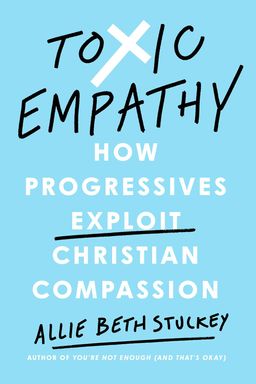
Where do your convictions come from when a painful story tugs your heart? In Toxic Empathy, Allie Beth Stuckey argues that in today’s culture wars, your empathy is being expertly weaponized. She contends that progressive narratives often demand you prove you’re a good person by affirming whatever feels compassionate in the moment—even if it contradicts Scripture, science, and common sense. The book’s core claim is stark: empathy is a God-given capacity, but it is a terrible guide when it’s detached from truth; real love always rejoices in the truth and sometimes says "no" to what a hurting person wants (1 Corinthians 13:6).
Stuckey frames her case through five cultural slogans—what she calls "lies"—that hook Christians via compassion: "Abortion is health care," "Trans women are women," "Love is love," "No human is illegal," and "Social justice is justice." Threaded throughout is her charge that Christians are being catechized more by viral anecdotes, euphemisms, and soundbites than by the Bible. She invites you to exchange feelings-first decision-making for a truth-first, love-shaped obedience to God.
What She Means by "Toxic Empathy"
Empathy, at its best, helps you pause, imagine another’s suffering, and move toward them with kindness. But Stuckey shows how empathy can be hijacked. You’re told: if you really care, you’ll support abortion access for tragic pregnancies; if you’re truly loving, you’ll affirm gender identities; if you’re compassionate, you’ll back open borders; if you’re Christian, you’ll endorse social justice crusades. The sleight of hand is subtle: feelings are conflated with love, and affirmation is presented as the only moral response. In this paradigm, disagreeing with the proposed solution becomes proof you lack compassion.
A Christian Counter: Truth-Filled Love
Against this current, Stuckey urges you to submit empathy to biblical love—which actively seeks another’s good according to God’s standards. That means testing slogans against Scripture and reality, even when the story is heartbreaking. She offers a practical toolkit of red flags to spot manipulation: euphemisms that sanitize harm ("gender-affirming care"), Christian words with new meanings ("equity" redefined as forced equal outcomes), emotional bullying ("if you were kind, you’d agree"), and calls for compassion that always terminate in specific political ends.
Five Flashpoints, One Throughline
Each chapter pairs a moving real-world story with a wider analysis. You’ll meet Samantha and Luis, whose baby Halo had a lethal diagnosis—a narrative used to justify late-term abortion. You’ll walk with Laura Perry Smalts, who transitioned to "Jake" and later detransitioned, discovering that hormones and surgeries didn’t heal her wounds. You’ll see how redefining marriage to "love is love" inevitably rearranges childhood itself via donor conception and surrogacy. You’ll weigh the pain of deportations against the mounting body count from sanctuary policies, fentanyl trafficking, and cartel control at the border. You’ll feel the grief over Elijah McClain’s death alongside the measurable surge in homicides where police were defunded and laws were relaxed.
Across these flashpoints, Stuckey brings in scholars like Thomas Sowell and Walter Williams on disparities and incentives, Nancy Pearcey on a holistic view of the body, and Heather Mac Donald on policing data. She also draws on Christian voices—Rosaria Butterfield, Christopher Yuan, Voddie Baucham—whose testimonies and arguments push back against therapeutic definitions of love (compare: Pearcey’s Love Thy Body and Sowell’s The Quest for Cosmic Justice).
Core Thesis
Empathy is a spark; love is the compass. When feelings rule, lies flourish. When truth leads, compassion protects the vulnerable—especially children.
Why This Matters Now
In a world that rewards outrage and edits complexity out of viral moments, it’s easier than ever to shame Christians into silence. Stuckey argues that muddled empathy is especially deadly for kids: abortion ends lives; gender medicine sterilizes minors; donor conception and surrogacy engineer motherlessness or fatherlessness; porous borders feed cartels and endanger families; soft-on-crime policies harm the very neighborhoods activists claim to serve. She wants you to recover the church’s historic vocation: defend the least of these with courage, clarity, and compassion.
By the end, you’ll have a map for resisting manipulation without growing cold. You’ll learn to test slogans, name reality, use precise language, and choose the reform that actually helps the person in front of you. Most of all, you’ll be equipped to pair tenderness with truth—so your empathy doesn’t become the lever that pries you away from love.