
Idea 1
Reclaiming Full Humanness: The Journey Toward Being
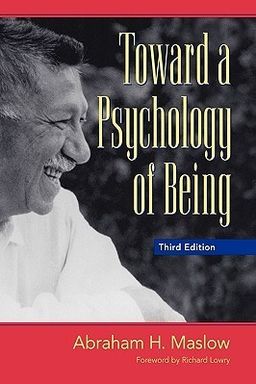
What would it feel like to be fully human—to live in a way that honors your deepest nature, your potential, and your capacity for love, creativity, and understanding? In Toward a Psychology of Being, Abraham H. Maslow argues that most of us live far below our possibilities. We are, he says, diminished or stunted humans, shaped by fear, culture, and habit to repress the best within us. His vision is not of perfect serenity or the end of all struggle, but of a life in which conflict leads upward—toward greater integration, meaning, and wholeness.
Maslow’s central claim is that human beings have an intrinsic, biologically based inner nature—weak but real—which tends toward growth, health, and self-actualization. When this nature is allowed to unfold, life becomes richer, more meaningful, and more fulfilling. When it is denied or thwarted, pathology sets in. Psychology, he contends, has spent too long studying what is wrong with people; it must now turn its attention to what is right with them, to their capacity for creativity, love, and wisdom. This means moving beyond the narrow focus on illness to a science of health and growth.
The Shift from Pathology to Health
Maslow opens by challenging traditional psychology’s obsession with neurosis and dysfunction. Why, he asks, should we define people by their pathologies instead of their possibilities? Just as we study disease to understand the body’s normal function, we should study the healthiest individuals to understand psychological well-being. This shift—toward what Maslow calls a “psychology of health”—is not naive optimism; it’s an attempt to build a science of human potential as rigorous as any study of disorder.
In this emerging view, self-actualization becomes the key concept. Maslow had introduced the hierarchy of needs in his earlier work, Motivation and Personality (1954). But here, he refines and expands it, distinguishing between two kinds of motivation: deficiency motivation (D-motivation), driven by the need to fill internal holes like hunger, safety, or love deficits; and growth motivation (B-motivation or Being-motivation), driven by the desire to become more fully oneself. D-motivation restores balance; B-motivation transcends it. The highest human experiences—creativity, insight, love, spirituality—spring from this latter mode.
The Inner Nature and Its Suppression
Maslow insists that deep within each of us lies an inner core: a biological blueprint of individuality and health. This core, though delicate, is not corrupt or evil—it is essentially good or neutral. Problems arise when culture, fear, or misunderstanding repress it. Evil, he says, is usually the by-product of frustrated good. When you stifle your natural yearnings for truth, creativity, or love, those energies twist into neurotic patterns. The cure is not obedience but authenticity—to rediscover and align with your inner call, what he describes as your “biological destiny.”
Unlike the Freudian picture, where instinct is something base to be controlled, Maslow’s instincts are growth-oriented—needs for meaning, identity, and connection. Each person’s task is to bring these impulses into the world, to express rather than suppress them. This shift from control to cultivation mirrors the difference between taming a wild animal and nurturing a living seed. When your environment supports growth instead of fear, “being itself” can unfold freely.
A “Third Force” in Psychology
At the time Maslow was writing, psychology was dominated by two great schools: psychoanalysis, with its emphasis on pathology and inner conflict, and behaviorism, with its mechanistic view of observable behavior. Maslow proposed a Third Force—humanistic psychology—that united the insights of both but aimed higher. This new approach would integrate science, phenomenology, and existential thought to create a full picture of human nature, one that includes “both the depths and the heights.” It embraces Freudian insight into unconscious drives, the scientific rigor of behaviorism, and the existentialist concern with meaning and choice.
Maslow calls for reconciling “the B-psychology with the D-psychology, the perfect with the imperfect, the ideal with the actual, the timeless with the temporal.” This synthesis reflects his belief that science must expand—not shrink—to address the great human questions: love, purpose, beauty, and joy. He bristles at the idea that these belong to poets or priests alone. Science, properly understood, can help humanity become more human.
The Promise of a Science of Being
Maslow’s “psychology of Being” goes beyond survival and adjustment to ask: What makes life worth living? He introduces concepts like peak experiences—moments of ecstatic unity and self-transcendence—and the cognition of Being, a way of perceiving the world in its wholeness, beyond fear or desire. These are not escapist reveries, he argues, but glimpses of reality seen more clearly. Such experiences reveal “Being-values”—truth, beauty, goodness, simplicity, justice—which define what it means to live fully human.
This vision redefines psychological health as more than adjustment or happiness. The healthy person is not one who is trouble-free but one who can face the “real problems” of life—death, meaning, responsibility—with courage and humor. As Maslow quips, a “self-actualizing person is a self-accepting and insightful neurotic.” Health is not the absence of struggle; it’s the capacity to turn struggle into growth.
A Map of Human Evolution
Maslow divided the book into sections mirroring a journey: from a new concept of psychology’s mission (“Toward a Psychology of Health”), through the mechanisms of growth and motivation, the transformation of cognition and perception in peak states, the power of creativity, the discovery of values grounded in reality, and finally the challenge of building a future psychology of Being. He ends by calling for a future “scientific ethics,” rooted not in arbitrary rules but in the nature of life itself—a natural value system discovered by studying humanity’s best exemplars rather than its failures.
In short, Toward a Psychology of Being invites you to understand yourself not as a bundle of problems to be fixed, but as a living process of growth and potential. It’s a call to become who you truly are, to listen to the quiet voice within that yearns for truth, beauty, and goodness—and by doing so, to help create a healthier world. Maslow’s humanistic vision remains radical: that science, far from diminishing the human spirit, can become its greatest ally in helping us grow—not just to survive, but to flourish.