
Idea 1
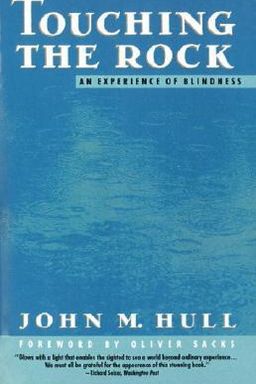
Touching the Rock: The Inner World of Blindness
What happens to your sense of self, space, and time when the world you once saw disappears? In Touching the Rock, theologian John M. Hull invites readers into the lived reality of blindness—not as a condition to be pitied, but as a transformation of perception and being. Hull’s chronicles, recorded on cassette tapes after he became totally blind, form a meditation on how a human mind and spirit can adapt to unimaginable loss and even find meaning within it.
Through vivid reflections—alternately lyrical, philosophical, and confessional—Hull shows that blindness is not simply the absence of sight. It is the construction of an entirely new world: a world of sound instead of vision, of time instead of space, and of vulnerability that reveals deep interdependence. The book’s fragmented structure, reflecting Hull’s daily recordings, makes the reading feel like entering his consciousness as it evolves from despair toward profound acceptance.
From Sighted Person to Whole-Body Seer
Hull begins by describing the gradual erosion of his vision, culminating in total blindness at age forty-five. He chronicles the dissolution of visual memory: faces become dusty portraits; landscapes lose dimension; even the memory of his own face fades. This loss strips away identity, forcing him to reconstruct what it means to be a person who exists in the world. Hull calls this journey “a passage from being a sighted person who cannot see to being a blind person.” In his final understanding, blindness is not just loss—it is rebirth. He becomes what he calls a “whole-body-seer,” experiencing through touch, hearing, smell, and time rather than light.
He discovers that space contracts but time expands. Each step demands concentration and cannot be hurried, giving his movements a ritualistic rhythm. Ordinary tasks stretch into meditations. For sighted people, time is something to be conquered; for Hull, time becomes the medium of life itself. The world comes to him in sound and sensation—fleeting, alive, and ever-changing. When he sits in a park, the bustle of footsteps, rustle of newspaper, and rhythm of wind form a landscape as vivid as any vista once seen.
Relearning Love, Fatherhood, and Work
Family grounds Hull’s reflections. He writes as a husband and father of developing children who are learning what it means to have a blind father. Through moments of confusion (“When I close my eyes, you can’t see me”) and tenderness (“Show Daddy”), blindness becomes a shared education in communication and empathy. His son learns to lead him with small tugs of the hand; his daughter asks why he can’t smile back. These encounters reveal how love adapts when vision vanishes—it moves through sound, touch, and ritual instead of sight.
In work, Hull refuses to surrender intellectual life. He continues lecturing at the University of Birmingham, devising new methods: dictating lectures from memory, navigating campuses by habit, and reorganizing teaching materials into tapes. Blindness forces efficiency of a different kind—a deliberate slowness that yields precision and depth. (Oliver Sacks, in his foreword, called this Hull’s “journey into deep blindness,” where the visual mind is replaced by other forms of awareness.)
Religion, Meaning, and Transformation
A theologian by training, Hull wrestles throughout with whether blindness has meaning. He rejects shallow comfort—faith healers promising sight or friends who call blindness “God’s punishment.” Over time, he comes to view blindness not as a curse but as a terrible gift, something that strips life down to its essence. “Faith,” he concludes, “is not seeing light in the darkness; it is knowing that darkness and light are both alike to God.” His reflections intertwine phenomenology and spirituality, showing that losing sight can paradoxically reveal new ways of seeing.
Through dreams, diaries, and meditations, Hull documents the transformation of a mind rebuilding its world from within. Like Helen Keller’s or Jacques Lusseyran’s works, his testimony transcends disability memoir—it becomes a study of consciousness itself. Touching the Rock challenges us to reconsider what it means to perceive, to know, and to love in a world where vision is not the measure of reality.